
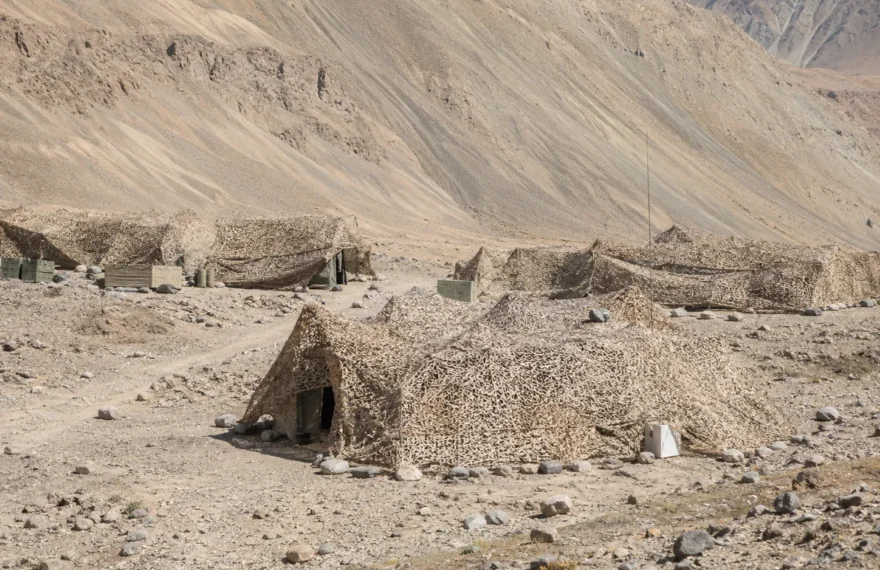
高地沙漠野外营地隐蔽措施
An expeditionary camp on a high-altitude plateau (arid, rocky) needed concealment. Camouflage engineers first arranged all tents and equipment with enough spacing. Then they stretched a sand-colored desert camouflage net over each shelter. The net’s irregular pattern mimicked the rocky ground. Along the edges, heavy stones and earth were placed on the net to secure it against the strong winds.
In areas of the camp where snow patches remained, the inner side of the reversible net was white to match the snow. That side was flipped outward there. This two-tone net covering ensured that from any aerial angle, the camp blended seamlessly. Field rations and gear were also hidden under smaller netting sections. Pathways and entrance flaps were carefully shielded so human activity didn’t catch the eye.
The nets used were specifically designed for wind resistance and UV exposure. They acted as a barrier to block direct sunlight and reduce sand accumulation around the site. After deployment, the camp’s location was effectively hidden from flank observation posts. Satellite images later confirmed that the camouflaged camp resembled natural terrain and did not stand out in the landscape.
最新消息
- 遮阳网是如何工作的?材料、结构、遮阳率及应用 2026年7月22日
- 如何选择和使用迷彩网:一份完整的购买指南 2015年7月17日