info@sjxincai.com

+86 199 5434 1252

  • en_USEN
    • zh_CNZH
    • es_ESES
    • arAR
    • pt_BRPT
    • ru_RURU
    • de_DEDE
    • fr_FRFR
    • id_IDID
    • tr_TRTR
    • ko_KRKO
    • jaJA
    • en_GBEN_GB
sjxincai.com
  • Contact Ussales@sjxincai.com
  • Call Us+86 199 5434 1252
  • Request a QuoteGet a fast quotation
MENU
  • Home
  • Products
    • Concealment & Camouflage Nets
      • Shijie CamoNet Single-Layer
      • Shijie CamoNet Lite 150D
      • Shijie CamoNet 3D 150D
      • Shijie CamoNet 3D 210D
      • Shijie CamoNet 3D 420D
      • Shijie CamoNet Dual 420D
      • Shijie CamoNet Pro 420D
      • Shijie CamoNet Multi-Band Y / W / G
  • Project
  • Blog
  • About Us
    • Manufacturing Capabilities
    • Quality Control
    • Order Sample
  • Contact Us

Product Insights
Category

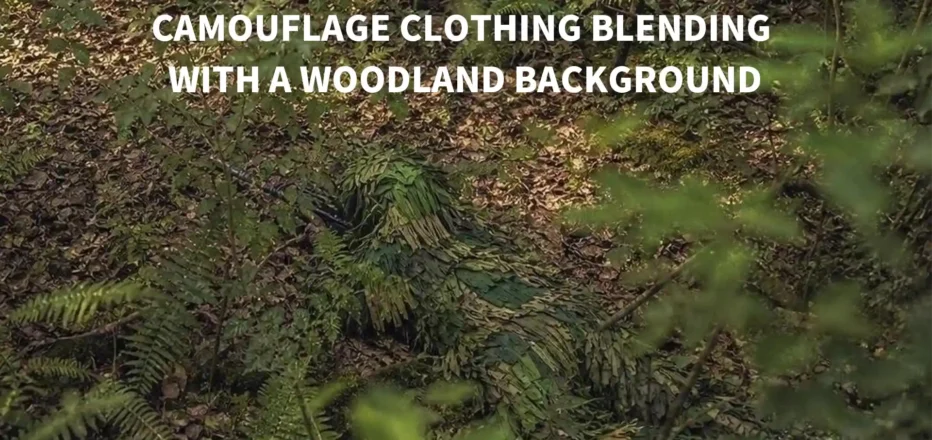
Person wearing woodland camouflage clothing among trees, leaves, and natural shadows

How Biomimicry Shapes Modern Camouflage Clothing and Pattern Design

Camouflage clothing is often described as fabric printed with green, brown, black, or tan patches. This description is visually correct, but it does not explain why a pattern works.

Modern camouflage design draws many of its basic ideas from nature. Animals have evolved colours, markings, surface textures, body shapes, and behaviours that make them more difficult to detect or recognise. Designers study these biological strategies and translate them into repeatable textile patterns.

This process is a form of biomimicry. It does not mean copying one animal directly. A pattern covered with leopard spots will not automatically work in a forest. Instead, designers identify the visual principles behind natural camouflage and adapt them to human proportions, textile production, operating environments, and expected viewing distances.

Three principles form the foundation of this approach: colour matching, texture matching, and shape disruption. More advanced camouflage also considers pattern scale, movement, shadows, fabric gloss, near-infrared reflectance, and the interaction between clothing and carried equipment.
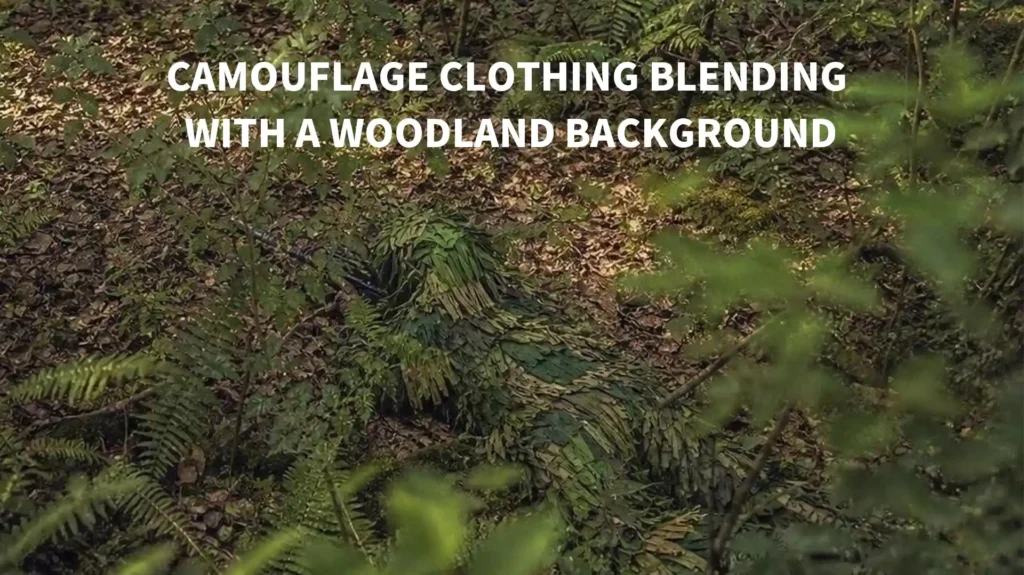
Person wearing woodland camouflage clothing among trees, leaves, and natural shadows

What Is Biomimicry in Camouflage Clothing?

Biomimicry is the practice of learning from biological structures, processes, and strategies to solve human design problems.

In camouflage clothing, the problem is visual detection and recognition. The designer asks how animals prevent their bodies from forming a clear signal against a complex background.

Nature provides several answers:

  • Match the general colours of the habitat.
  • Reproduce the background’s light and dark distribution.
  • Use markings that cross the body’s real edges.
  • Create false internal edges that confuse shape recognition.
  • Reduce the appearance of natural three-dimensional shading.
  • Use irregular textures that resemble nearby surfaces.
  • Change appearance when the habitat changes.
  • Remain still or move in ways that do not create a strong visual signal.

Some natural camouflage methods can be applied directly to printed textiles. Others are difficult to reproduce because a woven garment cannot instantly change colour like a cuttlefish or alter its body shape like an insect.

Therefore, camouflage clothing represents a practical compromise. It combines selected biological principles with the requirements of printing, sewing, comfort, durability, identification, and large-scale manufacturing.

Background Matching: Learning From Animals That Blend In

Background matching is one of the most familiar camouflage mechanisms in nature. An animal is harder to detect when its colours, brightness, markings, and texture resemble the background.

A moth resting on tree bark provides a simple example. If its wings contain similar grey, brown, and black areas, the visual difference between the moth and the bark becomes smaller. The observer must separate the animal from a field of similar visual information.

Camouflage clothing applies the same principle by using colours drawn from the intended environment.

A woodland pattern may include:

  • Leaf greens
  • Olive tones
  • Bark browns
  • Dark shadow colours
  • Light earth or dry vegetation tones

A desert pattern may use:

  • Pale sand
  • Beige
  • Light brown
  • Stone grey
  • Darker earth accents

An arctic pattern may combine white with light grey or muted irregular shapes. A completely plain white garment may become visible when rocks, vegetation, footprints, shadows, and exposed ground break up the snowfield.

Effective background matching is not based on one colour sample. Natural environments contain a range of colours and brightness levels. These also change with sunlight, weather, season, moisture, and viewing position.

Research into animal camouflage defines background matching as reducing the difference between an animal’s visible features and those of its surroundings. However, it is usually habitat-specific. An appearance that matches one background can stand out against another.

The same limitation applies to camouflage clothing. No fixed pattern can produce the same result in every environment.
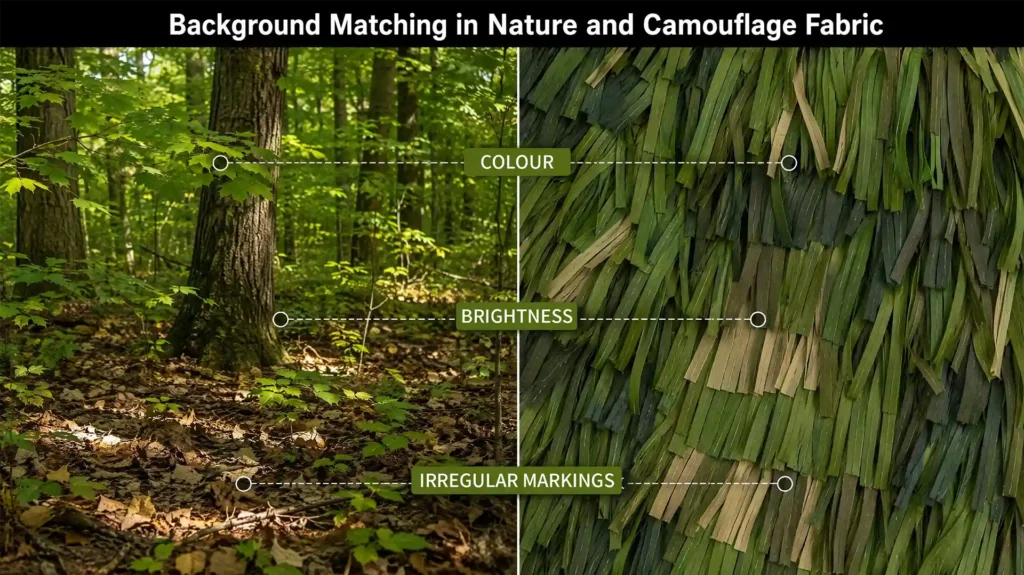
Comparison between a camouflaged animal on tree bark and woodland camouflage fabric

Disruptive Coloration: Hiding the Body’s Real Outline

Colour matching alone is not enough. An observer may still recognise a human figure from the outline of the head, shoulders, arms, torso, and legs.

Nature provides a second strategy called disruptive coloration.

Disruptive markings create high-contrast shapes that cross an animal’s true outline. These markings produce false edges and interfere with the observer’s ability to identify where the body begins and ends.

A stripe or patch placed entirely inside the body may add texture. A marking that reaches the outer edge can do something more important: it can make part of the true boundary appear connected to the background.

Camouflage clothing uses irregular patches in a similar way. Large shapes can cross seams, sleeves, shoulders, and trouser legs. They divide the human form into smaller visual areas rather than presenting one continuous silhouette.

Scientific studies distinguish disruptive coloration from simple background matching. Background matching reduces the strength of the overall signal. Disruptive coloration interferes with the true edge signal and introduces misleading internal edges.

The two methods often work together. A highly contrasting pattern that has no relationship with its background may still attract attention. A perfectly matched colour without sufficient pattern variation may leave the human outline recognisable.

A practical camouflage design therefore needs both:

  1. Colours and brightness levels that relate to the environment.
  2. Irregular markings that interrupt recognisable body boundaries.
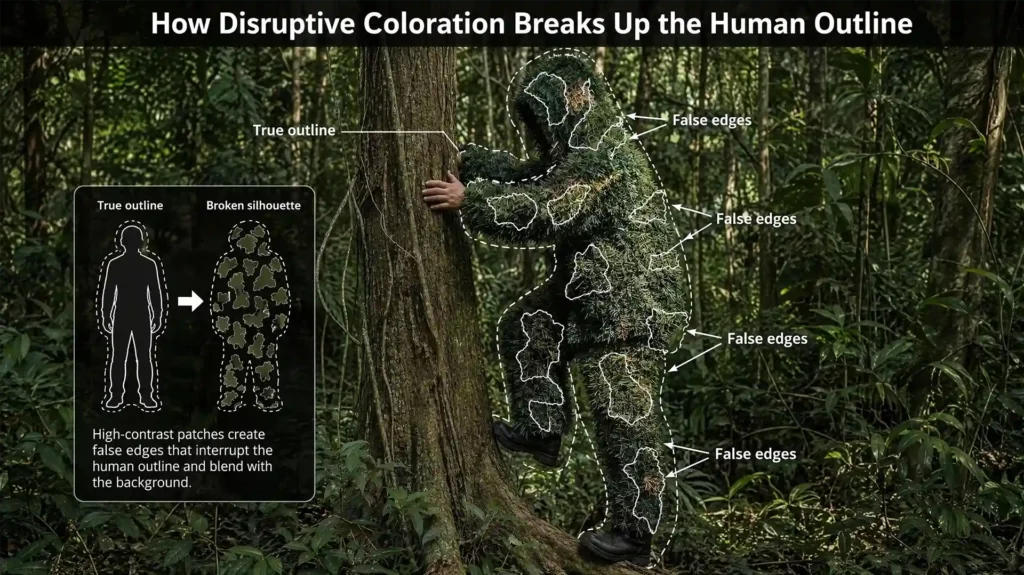
Diagram showing camouflage patches crossing the outline of a human figure

Texture Mimicry: Recreating the Complexity of Natural Terrain

Natural backgrounds are rarely smooth and uniform. Forests contain leaves, bark, branches, grass, gaps, and overlapping shadows. Rocky areas contain cracks, grains, sharp boundaries, and surfaces of different brightness.

Animals often carry markings that resemble the visual texture of these environments. Fine speckles may resemble sand, bark, or small stones. Larger blotches may imitate leaves, shadows, and separated areas of vegetation.

Camouflage clothing translates these visual textures into printed shapes.

The pattern does not need to reproduce every leaf or blade of grass. A detailed photographic print may look realistic at close range but merge into an unhelpful colour field from farther away.

Instead, designers identify the statistical character of the background:

  • Are the shapes mainly rounded, angular, or linear?
  • Is the environment fine-grained or coarse?
  • How large are the common light and dark areas?
  • Are edges sharp or soft?
  • How much contrast exists between nearby features?
  • Does the background contain strong vertical or horizontal directions?

The answers influence the shapes, scale, colour distribution, and edge treatment of the textile pattern.

Texture also comes from the fabric surface. A glossy material may reflect light in a way that does not resemble dry vegetation or soil. A matte finish can reduce sharp highlights, but the required finish must be balanced with abrasion resistance, water management, comfort, and other textile properties.

Why Camouflage Patterns Use More Than One Scale

Natural environments contain visual information at several scales. A forest includes large tree trunks and shadow zones, medium groups of leaves, and small details such as twigs and bark texture.

A camouflage pattern that contains only tiny shapes may look detailed at close range. At a longer distance, those shapes merge and the garment may appear as one uniform colour.

A pattern made only from very large shapes can break up the body at a distance, but it may lack enough local texture at closer ranges.

For this reason, many camouflage designs use a combination of macro and micro elements.

Macro Patterns

Macro patterns are the larger colour areas. They divide the human silhouette and remain visible at longer viewing distances.

Their main roles include:

  • Breaking up the torso and limbs
  • Interrupting the shoulder line
  • Dividing large areas of one colour
  • Reproducing broad background zones

Micro Patterns

Micro patterns are smaller elements that provide local texture. They become more relevant at closer ranges.

Their roles can include:

  • Reproducing fine environmental detail
  • Softening the boundaries between large colour areas
  • Preventing broad sections from appearing flat
  • Adding visual noise around small garment features

A successful multiscale pattern does not simply add more shapes. The sizes, spacing, colours, and distribution must remain connected to the intended environment and the dimensions of the wearer.
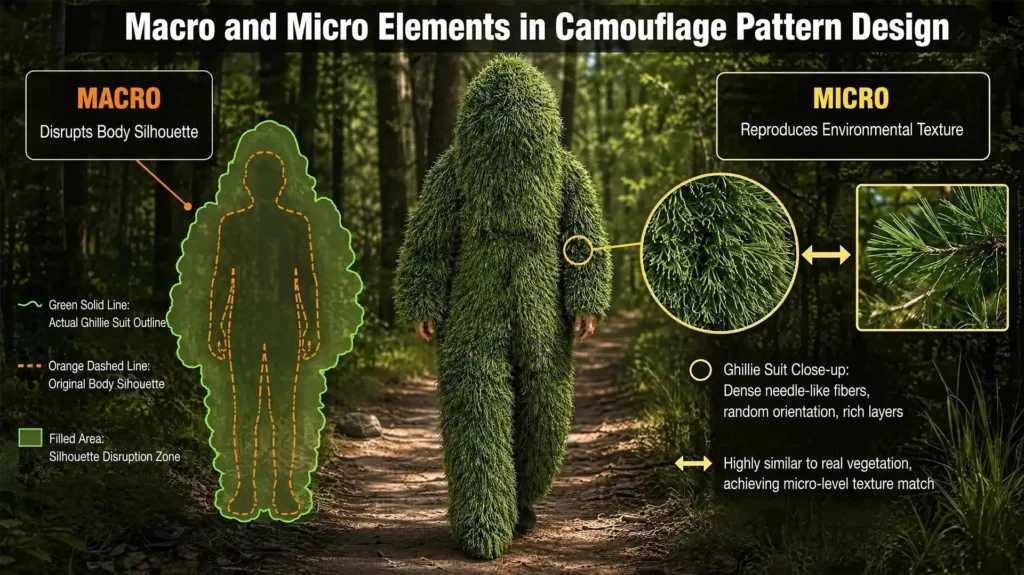
Comparison of large disruptive shapes and small texture elements in camouflage fabric

Shape Mimicry and Three-Dimensional Form

The source material for camouflage design often describes shape imitation as making clothing resemble leaves, plants, rocks, or other natural features. This idea is useful, but printed cloth alone cannot fully change the shape of the human body.

A shirt and trousers still contain recognisable features:

  • A rounded head
  • A vertical torso
  • Two shoulders
  • Two arms
  • Two legs
  • Regular seams and edges

Printed patterns reduce the visibility of these features, but three-dimensional additions can produce stronger physical disruption.

Examples include:

  • Textured outer layers
  • Irregular strips
  • Leaf-like elements
  • Fringes
  • Loose overshells
  • Camouflage net sections
  • Environmentally compatible natural material added where permitted

These elements change the garment’s outer contour and cast irregular shadows. They can reduce the smooth, manufactured appearance of standard clothing.

Nature uses similar structural methods. Some insects resemble twigs or leaves. Other animals have projections, surface structures, or irregular body shapes that make their boundaries harder to separate from the background.

However, extra material creates practical trade-offs. It may increase weight, retain water, restrict movement, snag on vegetation, reduce ventilation, or create a fire hazard. Three-dimensional camouflage must therefore be designed around the real task and environment.

Countershading and the Problem of Body Volume

A three-dimensional body receives more light on surfaces facing the sky and less light on surfaces facing the ground. This predictable shading helps observers recognise volume and shape.

Many animals use countershading. Their upper surfaces are darker, while their undersides are lighter. This colour gradient can partly offset natural illumination and make the body appear flatter.

Standard camouflage uniforms do not always use clear biological countershading because a human body changes posture and orientation. Arms, legs, and equipment also move.

Still, the underlying principle remains relevant. Pattern designers should consider how light falls across the shoulders, chest, sleeves, knees, and folds of the garment. Large uninterrupted light or dark areas can strengthen the appearance of body volume.

Irregular tonal changes help prevent the eye from reading the garment as one continuous three-dimensional object.

Animal Camouflage Is Often Behavioural as Well as Visual

A well-camouflaged animal can still be detected when it moves suddenly against a stationary background.

Natural camouflage often combines appearance with behaviour. Animals select suitable resting places, orient their bodies to surrounding lines, remain still when danger approaches, or move during conditions that reduce visibility.

Clothing cannot compensate for every conflict between the wearer and the environment. A woodland pattern remains visible against a pale wall. A desert pattern can stand out in green vegetation. Fast movement creates a strong visual signal even when the colours are well selected.

This is an important lesson from biomimicry: camouflage performance belongs to the complete system, not just the printed fabric.

The system includes:

  • Pattern
  • Garment construction
  • Equipment carried over the garment
  • Headwear
  • Footwear
  • Exposed skin
  • Background
  • Lighting
  • Shadow
  • Weather
  • Movement
  • Viewing distance
  • Observation technology

Product testing should therefore consider realistic garment configurations rather than evaluating only a small, flat fabric sample.

Static Patterns and Adaptive Camouflage

Some animals can change their appearance.

Cuttlefish, octopuses, and squid can rapidly alter colour, brightness, pattern, and aspects of skin texture. Chameleons can change colour through specialised biological structures, although communication and temperature regulation are also important parts of this behaviour.

Most current camouflage clothing uses a static printed pattern. It is manufactured for a defined range of backgrounds and cannot automatically respond to environmental changes.

Reversible garments, removable covers, layered systems, and different seasonal patterns provide practical forms of adaptation. More advanced research explores responsive pigments, electrochromic materials, active displays, and other technologies.

However, laboratory demonstrations and field-ready garments are different stages of development. An adaptive material must also meet requirements for power use, flexibility, washing, abrasion resistance, temperature range, repair, weight, and cost.

Nature remains a valuable design reference, but biological performance cannot always be copied directly into a durable textile product.
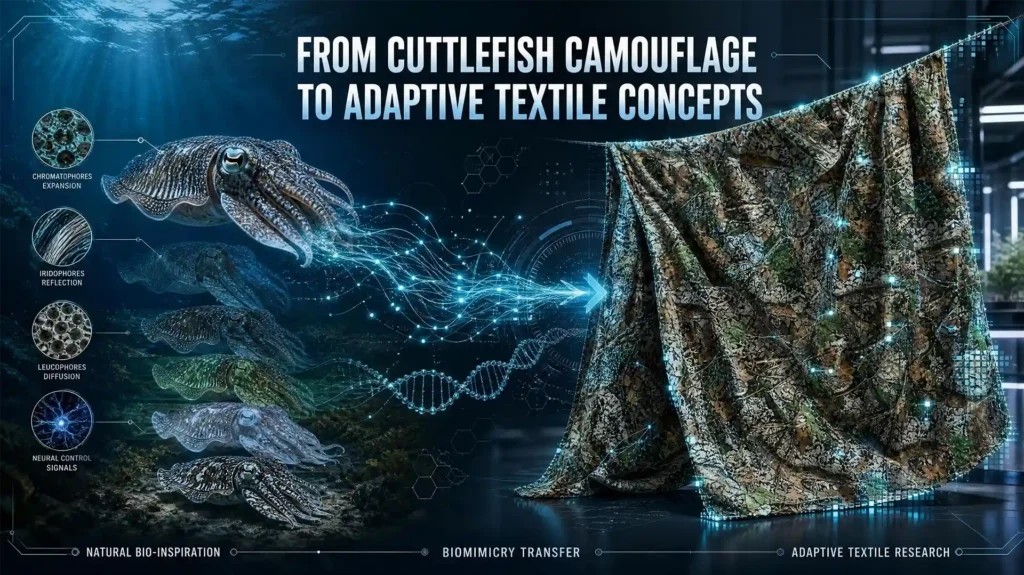
Cuttlefish changing its skin pattern beside a conceptual adaptive camouflage textile

Why Visible Colour Is Only One Part of Modern Camouflage

Human eyes detect visible light, but modern observation systems may also operate in near-infrared, short-wave infrared, and thermal infrared regions.

A fabric that looks well matched in daylight may appear unusually bright or dark through another sensor. This happens because pigments and textile treatments can reflect non-visible wavelengths differently from natural vegetation, soil, or other background materials.

Near-infrared performance is especially relevant to camouflage clothing. Healthy vegetation often has a strong and characteristic near-infrared response. A visually green fabric does not automatically reproduce that response.

The US Defense Logistics Agency has published specifications that define spectral reflectance limits for individual camouflage colours at selected wavelengths. The existence of these separate requirements shows that visual colour matching and near-infrared matching are not the same test.

Official US programme information also states that near-infrared technology has been incorporated into uniforms and load-carrying equipment, with further work involving short-wave infrared signature management.

Buyers should therefore distinguish between:

  • Camouflage-style printed fabric
  • Visual camouflage fabric
  • Fabric with tested near-infrared performance
  • Fabric designed for broader multispectral signature management

A product should not be described as NIR-compliant, infrared-resistant, or multispectral only because it has a military-looking pattern. These claims need defined wavelength ranges, test methods, limits, and test reports.

How Camouflage Fabric Is Developed

A systematic development process begins with the environment rather than the printing machine.

1. Collect Environmental Data

Designers record representative colours, brightness values, textures, feature sizes, and seasonal changes. Photographs should be colour-managed and taken under relevant lighting conditions.

2. Identify Dominant Visual Features

The design team determines which background elements have the strongest effect on detection. These may be large shadow areas, vertical tree trunks, dry grass lines, scattered stones, or broken patches of vegetation.

3. Build the Colour Palette

The palette should reproduce the useful range of background colours without adding unnecessary tones. Each colour must also be practical to print and control during production.

4. Design Pattern Scales

Large elements are arranged to disrupt the human silhouette. Smaller elements reproduce local texture and help connect the larger shapes.

5. Apply the Pattern to Garment Panels

Pattern placement should be evaluated across seams, sleeves, pockets, knees, hoods, and other components. A pattern that works on an uninterrupted fabric sheet can change when it is cut and sewn.

6. Produce and Measure Trial Fabric

Colour should be evaluated instrumentally as well as visually. Where required, spectral reflectance, colourfastness, tensile performance, tear strength, abrasion resistance, and other properties should be tested.

7. Evaluate Complete Garments

The finished garment should be assessed at relevant distances and under representative backgrounds, lighting conditions, postures, and equipment configurations.

8. Verify Performance After Use and Care

Washing, sunlight, abrasion, sweat, dirt, and repeated wear can change colour and surface properties. Required performance should be confirmed after the specified care or ageing procedure, not only on new material.
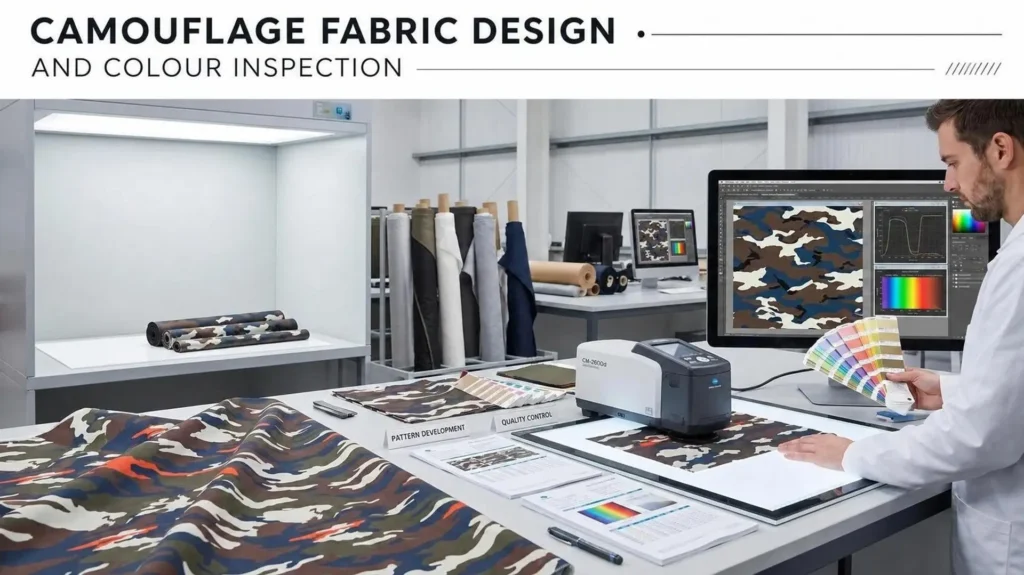
Camouflage fabric samples being compared with digital pattern files and colour measurements

Important Performance Requirements Beyond the Pattern

Camouflage clothing still needs to function as clothing. A convincing print is not useful if the fabric tears easily, restricts movement, causes excessive heat stress, or loses its colour after limited use.

Depending on the application, buyers may evaluate:

  • Fibre composition
  • Fabric weight
  • Weave or knit structure
  • Tensile strength
  • Tear strength
  • Abrasion resistance
  • Seam strength
  • Colourfastness to washing
  • Colourfastness to rubbing
  • Colourfastness to light
  • Air permeability
  • Moisture management
  • Drying performance
  • Dimensional stability
  • Pilling resistance
  • Water repellency
  • Flame resistance
  • Near-infrared reflectance
  • Print repeat and colour tolerance

Not every garment requires every property. The specification should reflect the intended operating conditions and applicable standard.

For example, film costumes may prioritise appearance, comfort, and budget. Outdoor uniforms may require greater abrasion resistance, colourfastness, and weather durability. Defence projects may add formal colour, NIR, flame, physical, and quality-control requirements.

Common Misunderstandings About Biomimetic Camouflage

“The Best Pattern Copies Leaves Exactly”

Literal leaf shapes may work in one narrow setting, but camouflage depends on colour distribution, scale, contrast, outline disruption, and viewing distance. A photographically detailed leaf print is not automatically effective.

“Digital Camouflage Is Always Better”

Digital-looking square pixels describe a design style or production geometry. Their presence does not prove better camouflage.

A digital pattern still needs the correct colours, scales, contrast, and distribution for its intended environment.

“More Colours Create Better Camouflage”

Too many colours can make production difficult and may not improve concealment. The useful question is whether every colour performs a clear function within the environmental palette.

“One Pattern Works Everywhere”

Every static pattern represents a compromise. Woodland, desert, snow, transitional, and urban environments contain different visual features.

“If It Looks Correct to the Eye, It Is NIR Camouflage”

Visible appearance cannot confirm near-infrared reflectance. Instrumental testing is required.

“Camouflage Fabric Alone Hides the Complete Wearer”

Equipment, movement, body outline, exposed surfaces, background selection, light, and shadows all influence detection.

How SHIJIE Approaches Camouflage Material Development

Shandong Shijie New Materials Technology Co., Ltd. focuses on camouflage materials and related protective products for project-based applications.

The biological principles discussed in this article provide a useful design framework. However, commercial production also requires measurable quality control. Colour, pattern geometry, material structure, physical properties, finishing, and functional performance must remain consistent across samples and production batches.

For a customised camouflage material project, buyers should provide:

  • Intended application
  • Operating environment
  • Reference pattern or environmental photographs
  • Required colour values or approved colour standard
  • Pattern repeat dimensions
  • Fabric composition
  • Fabric weight and construction
  • Physical performance requirements
  • Colourfastness requirements
  • Flame-resistance requirements
  • Near-infrared or other spectral requirements
  • Applicable test standards
  • Sample approval process
  • Order quantity
  • Packaging and identification requirements

SHIJIE can discuss product configuration according to the intended use. Any specialised visual, NIR, thermal, electromagnetic, or flame-related claim should be connected to a defined product, test method, and acceptance requirement.
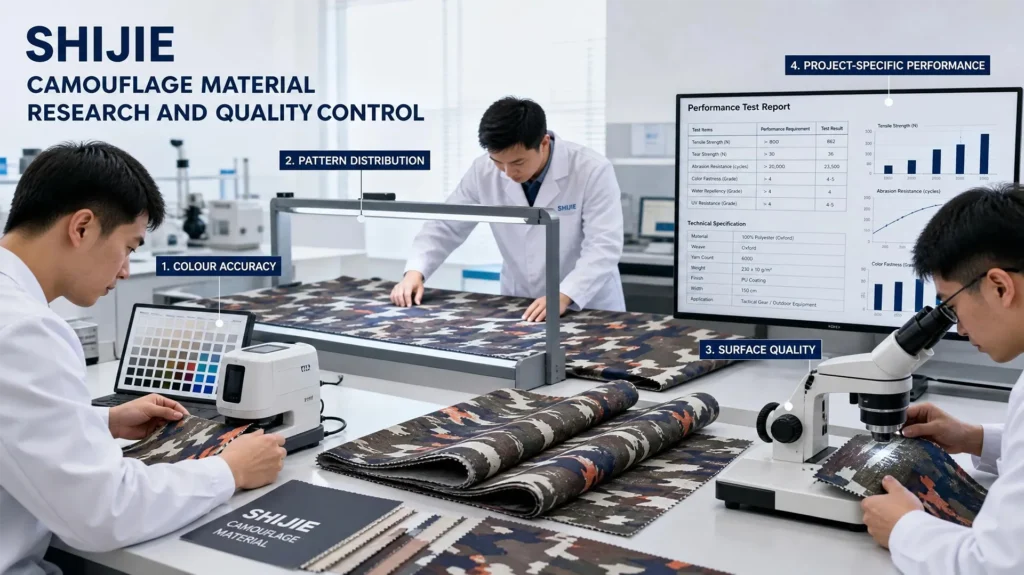
SHIJIE technicians examining camouflage material colours and pattern consistency

Conclusion

Biomimicry in camouflage clothing is not limited to copying the colours of plants and soil. It applies several natural strategies at the same time.

Background matching reduces the visual difference between the garment and its surroundings. Disruptive coloration creates false edges and interrupts the human silhouette. Multiscale patterns reproduce both broad environmental areas and fine local textures. Surface treatments and three-dimensional elements can further change gloss, shadow, texture, and body shape.

Nature also shows the limitations of a static pattern. Camouflage depends on habitat, light, viewing distance, movement, and the complete appearance of the wearer. A pattern designed for one background cannot provide the same result everywhere.

Modern camouflage development adds another layer. The material may need controlled performance beyond visible light, including near-infrared reflectance. These capabilities cannot be confirmed by appearance alone and must be evaluated with relevant test methods.

By combining biological insight, textile engineering, environmental analysis, and measurable quality control, manufacturers can develop camouflage materials that serve a clear application rather than simply displaying a military-style print.
July 26, 2026 Comments (0) Product Insights

Read more

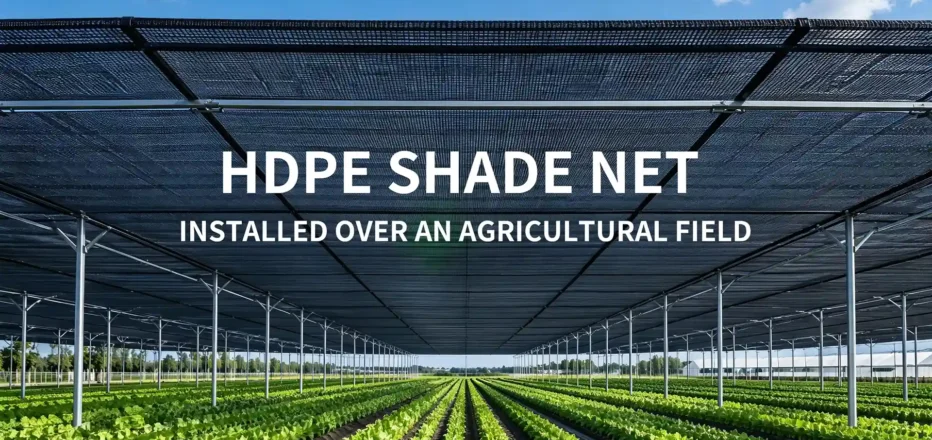
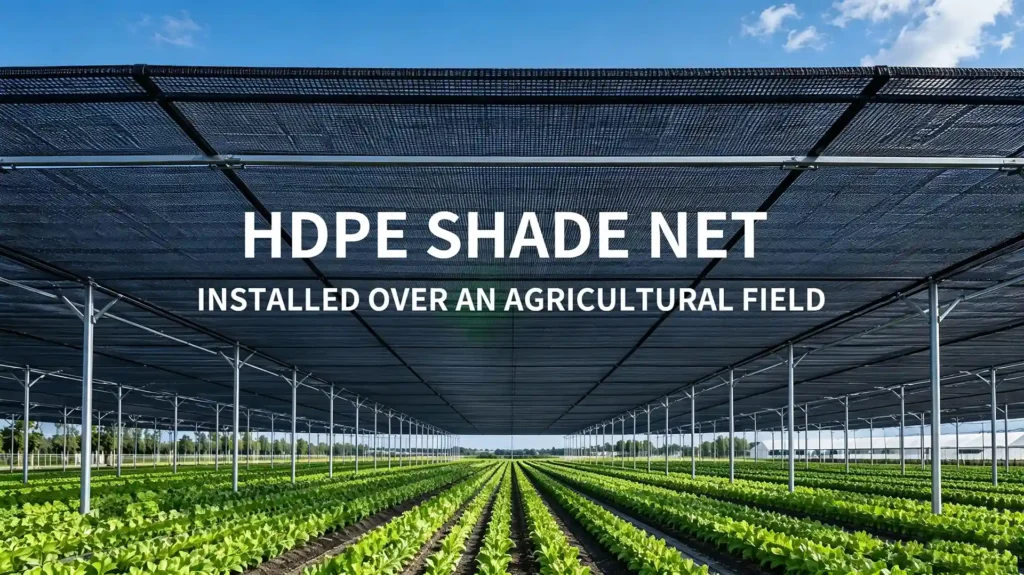
Black HDPE shade net installed above crops to reduce direct sunlight

How Does Shade Net Work? Materials, Structure, Shade Rate, and Applications

A shade net controls how much sunlight reaches the area beneath it. It does this by intercepting, reflecting, absorbing, and scattering part of the incoming solar radiation. The open mesh still allows part of the light and air to pass through, so the covered space remains ventilated.

This simple working principle makes shade netting useful in agriculture, horticulture, nurseries, animal farming, construction, outdoor storage, and public spaces. However, not every shade net produces the same result. Its performance depends on the raw material, knitting or weaving structure, shade rate, colour, installation position, and local climate.

A suitable shade net does more than create a darker area. It can help reduce heat stress, protect crops from intense sunlight, limit moisture loss, and create a more stable growing environment. To select the right product, buyers first need to understand how these factors work together.

Black HDPE shade net installed above crops to reduce direct sunlight

What Is a Shade Net?

A shade net is a flexible mesh material designed to reduce the amount of sunlight passing into a covered area. Most modern shade nets are made from synthetic polymers, especially high-density polyethylene, commonly known as HDPE. Polypropylene may also be used for certain net structures and applications.

These materials are lightweight, moisture-resistant, and suitable for outdoor fabrication. Manufacturers normally add ultraviolet stabilisers to the polymer during production. These additives help slow the degradation caused by long-term exposure to solar radiation.

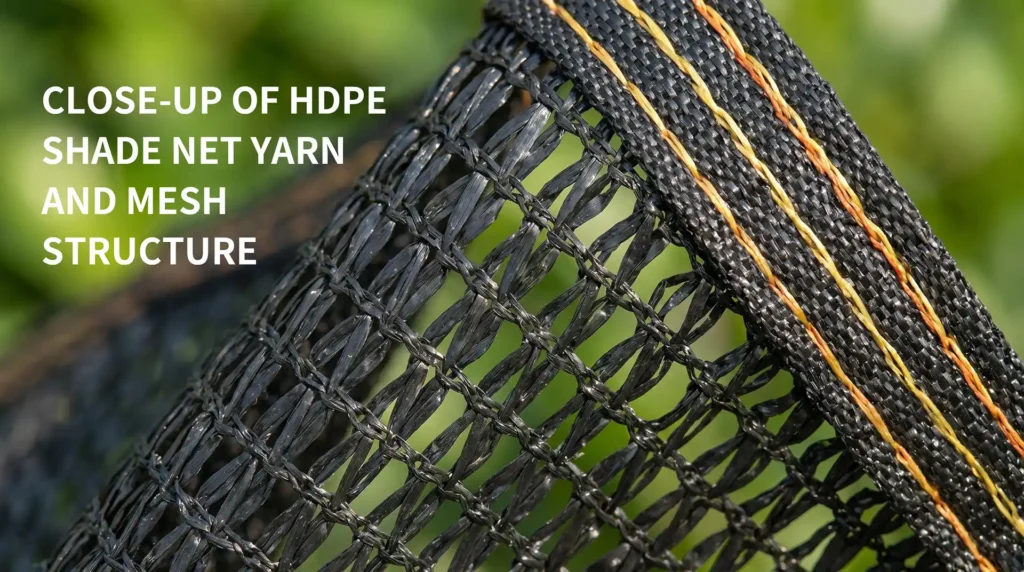
The net can be knitted or woven into different structures. The yarn arrangement creates a controlled combination of solid material and open spaces. The solid parts interact with sunlight, while the openings allow light, air, and some rainwater to pass through.

This balance separates shade netting from solid roofing materials. A solid cover may block rain and airflow, while a shade net creates partial protection without completely enclosing the area.

How Does Shade Net Work?

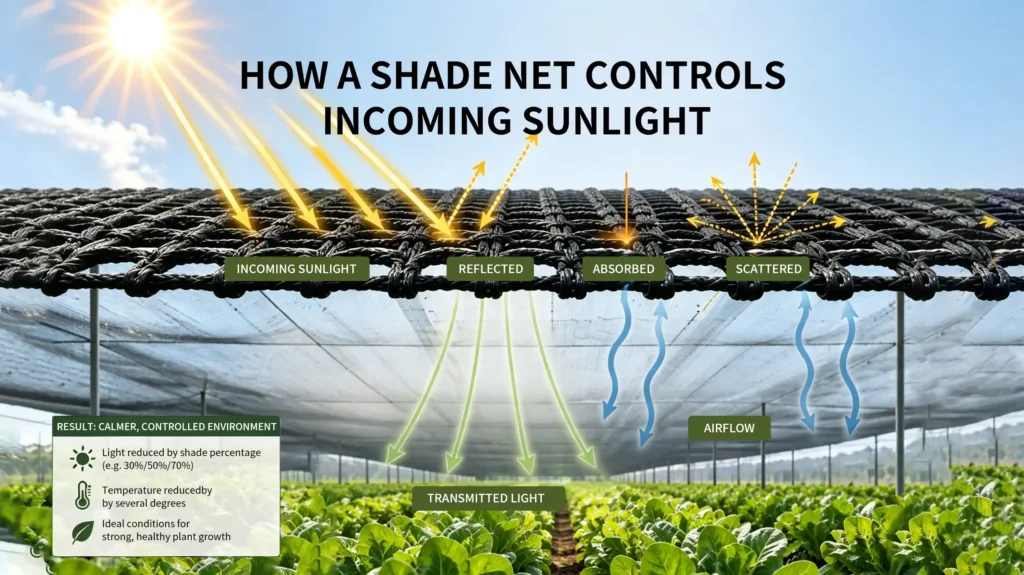
Sunlight contains visible light, ultraviolet radiation, and infrared energy. When this solar radiation reaches a shade net, several actions take place at the same time.

Part of the sunlight is blocked by the yarns or tapes. Part is reflected away from the covered area. Some energy is absorbed by the net material, and some light passes through the open mesh. The edges and surfaces of the yarns also scatter part of the transmitted light.

As a result, the light below the net is less intense than direct sunlight. It may also be more evenly distributed because some of the incoming light has been diffused.

The net structure does not create cold air by itself. Instead, it reduces the amount of solar energy reaching plants, soil, equipment, or people. When surfaces absorb less solar radiation, they usually gain heat more slowly. The open mesh also allows natural ventilation to carry warm air away.

Research on protected cultivation shows that shade nets can change several parts of the crop microclimate. These may include solar radiation, canopy temperature, root-zone temperature, relative humidity, wind speed, and evapotranspiration. The result is not identical in every location because it depends on the climate, crop, net design, and installation method.

Diagram showing sunlight reflected, absorbed, scattered, and transmitted by a shade net

The Four Main Light-Control Mechanisms

1. Interception

The yarns and tapes form the solid part of the shade net. They stand in the path of incoming sunlight and stop part of it from reaching the covered surface.

A denser structure contains more material across a given area. It normally intercepts more sunlight than an open structure. This is one reason why higher-percentage shade nets appear darker beneath them.

2. Reflection

Part of the sunlight is reflected from the surface of the net. The amount of reflection depends on the colour, surface properties, material, and construction.

Light-coloured or reflective nets may return more radiation away from the protected area. Dark nets often absorb more solar energy. However, colour alone does not determine the final shade rate. A buyer should always check the measured shade percentage and product specifications.

3. Absorption

The polymer material absorbs part of the solar energy that reaches it. The net can then release some of this energy as heat to the surrounding air.

For this reason, ventilation is important. A well-ventilated structure allows heat around the net to disperse. If a shade net is installed too close to a greenhouse roof or enclosed surface, warm air may become trapped between the two layers.

4. Transmission and Diffusion

Some sunlight travels directly through the mesh openings. Other light changes direction after interacting with the yarn surfaces and edges.

This scattered or diffused light can reach the crop canopy from more angles. It may reduce sharp contrasts between strongly illuminated leaves and deeply shaded leaves. However, the exact light distribution depends on the yarn geometry, net colour, sun angle, and installation height.

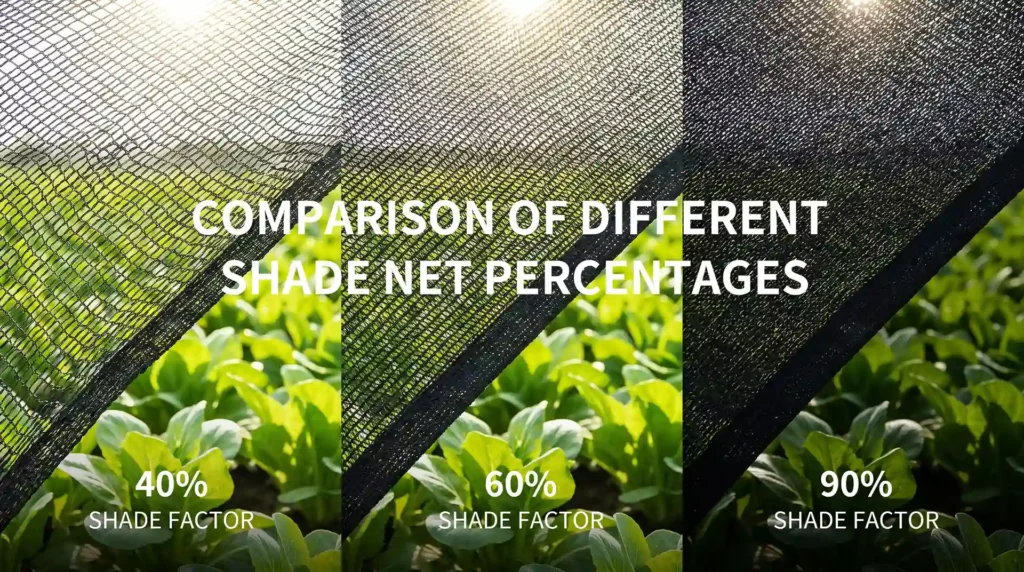
What Does Shade Percentage Mean?

The shade percentage indicates how much incident light the net is designed to block under specified test conditions.

For example, a nominal 50% shade net is intended to reduce the measured light level by about half. It does not mean that the net has 50% visible holes, and it does not guarantee that every form of solar radiation is reduced by exactly 50%.

Shade percentage and mesh opening percentage are related, but they are not the same measurement. Yarn width, yarn shape, colour, thickness, and arrangement can all affect light transmission.

Actual field performance may also vary because of:

  • The height and angle of the sun
  • Cloud cover and seasonal conditions
  • Dust or water on the net
  • Stretching during installation
  • Overlapping sections
  • The distance between the net and the protected area
  • The test method used by the supplier

Shade products are available across a broad range. Utah State University Extension notes that commercial shade cloth can range from about 10% to 90% shade. It also states that many fruit and vegetable crops use lower to moderate levels, often around 20% to 40%, depending on local conditions and crop needs. This is a useful general reference, but it should not replace crop-specific testing.

A high shade rate is not automatically better. Plants need enough light for photosynthesis. Excessive shade may produce weak, elongated growth, delay flowering, reduce fruit development, or lower yield. The correct goal is to remove harmful excess radiation while retaining enough useful light.

Comparison of low, medium, and high shade net percentages over plants

How Shade Netting Changes the Growing Environment

It Reduces Direct Solar Radiation

The most immediate effect is lower light intensity under the net. This can protect leaves, flowers, and fruit from extreme solar exposure.

Sensitive crops may experience leaf scorch, fruit sunburn, flower loss, or poor growth during periods of intense sunlight and high temperature. Correctly selected shade netting helps reduce this stress.

It Can Lower Leaf, Fruit, and Root-Zone Temperatures

A shade net reduces the solar energy that reaches plant surfaces and the soil. This can lower leaf and fruit surface temperatures, which may be more important than a small change in the surrounding air temperature.

A 2024 study comparing green, black, and beige nets reported that their main benefit was associated with lower leaf and root-zone temperatures. The study also found that colour-related differences in plant growth were not always consistent. This shows why buyers should not select a net based on colour claims alone.

It Can Reduce Water Loss

Strong sunlight, high temperature, and wind can increase the amount of water lost from plants and soil. A shade net may reduce solar load and wind speed, which can help slow evapotranspiration.

This does not remove the need for proper irrigation. Growers should monitor soil moisture after installing a net because the previous watering schedule may no longer match the new environment.

It Can Change Relative Humidity

Lower solar load and reduced air movement can help maintain slightly higher humidity around the crop canopy. This may benefit some crops in hot and dry conditions.

Too much humidity can also create problems. Poor ventilation and wet foliage may increase the risk of certain diseases. The installation should therefore provide enough open space for air exchange.

It Can Reduce Wind Speed

The mesh presents resistance to moving air. It slows the wind without behaving like a completely solid barrier.

This can reduce mechanical damage to young plants and limit rapid moisture loss. However, the net also receives wind loads. Strong supports, correct tension, suitable fixing points, and reinforced edges are important for outdoor projects.

How Material and Structure Affect Performance

Raw Material

HDPE is widely used because it combines low weight, flexibility, and resistance to moisture. Polypropylene can also be processed into shade and protective netting.

Raw material quality affects the net’s strength, appearance, processing stability, and outdoor performance. A very low initial price may reflect inconsistent resin, insufficient stabilisation, or poor control of yarn dimensions.

UV Stabilisation

Continuous sunlight can break down unstabilised polymers. The material may fade, become brittle, lose tensile strength, and tear prematurely.

UV stabilisers help delay this process. However, service life still depends on solar intensity, climate, colour, installation tension, chemical exposure, and handling. Buyers should compare the actual technical specification and warranty conditions instead of relying only on general claims such as “UV resistant.”

Knitted and Woven Construction

Knitted shade nets use interlocking loops. This structure can provide flexibility and help limit the spread of local damage. It is often convenient for agricultural covers and large outdoor installations.

Woven shade cloth uses crossing warp and weft elements. It may provide a firm and dimensionally stable structure, depending on the yarn design.

Neither construction is best for every project. The choice depends on required shade rate, roll dimensions, strength, edge treatment, installation method, and budget.

Yarn Design and Density

Shade nets may use monofilament yarn, flat tape, or a combination of yarn types. Flat tapes can cover a larger visual area, while monofilament yarns may contribute to structural stability and resistance.

The density and arrangement of these yarns determine how much open space remains. Manufacturers adjust these variables to create different shade rates and mechanical properties.

Close-up view of HDPE yarns forming a knitted shade net structure

Does Shade Net Colour Matter?

Yes, colour can influence the way a net interacts with solar radiation. However, its effect must be considered together with the shade percentage and net structure.

Black Shade Net

Black is one of the most common options. It provides a neutral reduction in light intensity and is widely used in nurseries, greenhouses, livestock areas, construction sites, and outdoor shade structures.

Black material absorbs a considerable amount of solar energy. This makes ventilation and installation spacing important.

Green Shade Net

Green shade netting is common in horticulture and landscaping because it blends visually with plants and surrounding environments. Its effect on the plant light spectrum can differ from that of a black net with the same nominal shade rate.

The colour should not be treated as proof that the product is better for every crop. Crop response varies by species, growth stage, climate, and net design.

White, Beige, or Reflective Shade Net

Light-coloured nets can reflect more incoming radiation and may distribute light differently beneath the cover. They are often considered where heat management and diffused light are important.

Red, Blue, and Other Photoselective Nets

Photoselective nets are designed to modify both light quantity and spectral composition. They may influence plant form, leaf development, flowering, yield, or fruit quality.

The results are crop-specific. A coloured net that works well for one crop and climate may not produce the same result elsewhere. Commercial growers should use local trials, agronomic advice, and measured data before applying a specialised colour over a large area.

Internal and External Installation

Shade netting can be placed outside or inside a greenhouse, or it can be mounted on an independent support structure.

An external net blocks part of the solar radiation before it enters the greenhouse. This can be effective for reducing solar heat gain. The net should not lie directly against the greenhouse covering if trapped heat, abrasion, or poor airflow may become a concern.

An internal net is protected from wind, rain, and some outdoor contamination. It is usually easier to operate and maintain. However, solar energy has already entered through the greenhouse covering before it reaches the internal net. Part of the absorbed heat may therefore remain inside the structure.

Independent shade houses use the net as the main upper or side covering. The frame height, roof shape, side openings, support spacing, and wind exposure all influence performance.

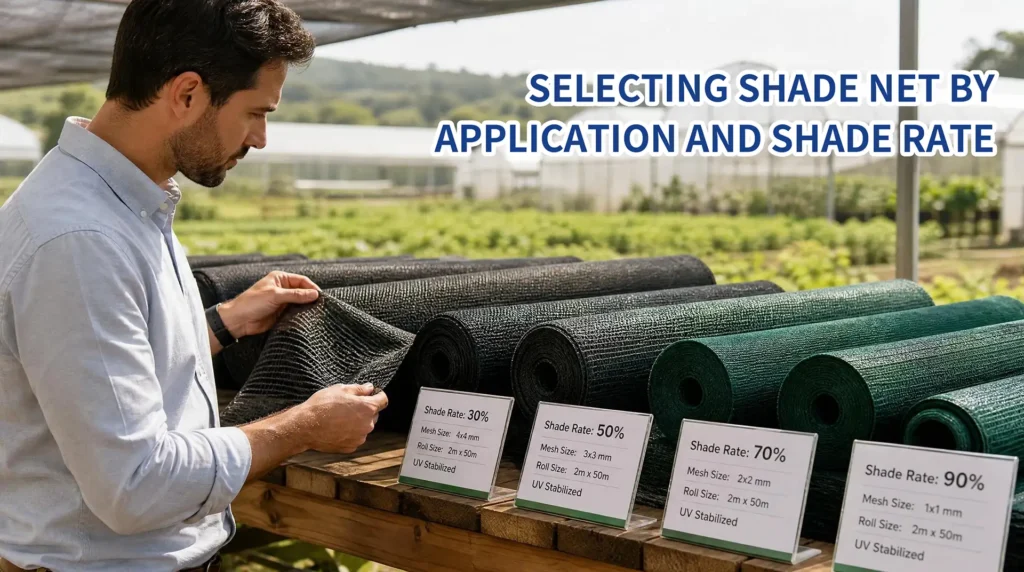
How to Choose the Right Shade Net

The selection process should begin with the application, not with colour or price.

1. Define What Needs Protection

A crop nursery, cattle shelter, greenhouse, building scaffold, outdoor storage yard, and recreational area have different requirements. Decide whether the main purpose is crop protection, temperature management, visual screening, wind reduction, or worker comfort.

2. Identify the Required Shade Rate

Consider the crop or material being protected, local solar intensity, season, latitude, and hours of exposure.

Low shade levels may suit light-demanding crops that only need relief during the hottest hours. Higher shade levels may be used for shade-loving plants, livestock shelters, outdoor rest areas, or non-crop applications.

Do not select the highest available percentage as a safety measure. Too much shade can create new problems.

3. Select an Appropriate Colour

Choose colour after confirming the shade rate. Standard black or green netting is suitable for many general applications. Reflective or photoselective products require a clearer technical purpose.

4. Check Strength and Outdoor Durability

Ask the supplier about:

  • Raw material
  • UV stabilisation
  • Net weight
  • Yarn structure
  • Tensile or breaking strength
  • Roll width and length
  • Reinforced edges
  • Eyelets or fixing options
  • Expected operating conditions
  • Packaging and transportation

Product weight alone should not be used as the only quality indicator. Two nets with similar weight may have different yarn structures, UV formulations, shade rates, and strengths.

5. Confirm Installation Conditions

Measure the structure carefully and allow for attachment, tensioning, overlaps, and edge finishing. Check local wind conditions and determine whether the net will remain installed throughout the year.

The support structure must be strong enough to carry the net under wind and rain. Water should not be allowed to collect in loose sections. Excessive tension may damage the material, while insufficient tension can cause repeated flapping and abrasion.

Agricultural buyers comparing shade net colour, structure, and shade percentage

Common Shade Net Installation Mistakes

Choosing by Colour Alone

Two nets of the same colour may have very different shade rates. Always compare measured performance and construction.

Installing the Net Without Ventilation Space

A net placed too close to a greenhouse roof or solid surface may trap warm air. Adequate separation helps heat disperse.

Ignoring Wind Load

Shade netting allows airflow, but it still creates substantial resistance in strong wind. Weak posts, wide unsupported spans, and poor fasteners can lead to failure.

Stretching the Net Too Tightly

Over-tensioning places constant stress on yarns, seams, edges, and fixing points. The net requires controlled tension, not maximum tension.

Allowing Loose Areas to Flap

A loose cover repeatedly bends and rubs against the frame. This can cause local wear and enlarge small tears.

Using the Same Shade Rate for Every Crop

Crop light requirements vary. Seedlings, leafy vegetables, ornamentals, fruiting crops, and shade-tolerant plants do not need identical conditions.

Forgetting Seasonal Changes

A suitable summer shade level may be excessive during a cloudy or cool season. Removable, retractable, or seasonal installation can provide better control.

Where Can Shade Nets Be Used?

Agriculture remains one of the largest application areas. Shade netting can be installed over nurseries, vegetable plots, orchards, tea gardens, flower production areas, and greenhouses.

It can also be used for:

  • Poultry and livestock shelters
  • Aquaculture and fishpond areas
  • Outdoor storage
  • Vehicle parking
  • Construction scaffolding
  • Dust and debris control
  • Garden centres
  • Patios and recreation areas
  • Temporary work zones
  • Privacy and visual screening

The required product specification changes with the application. A greenhouse net should focus on controlled light and crop microclimate. A construction net may place more emphasis on strength, containment, and project safety. A livestock cover may require a high shade rate, wide coverage, and reliable wind resistance.

Why Work With SHIJIE for Shade Netting?

SHIJIE supplies shade netting for agricultural, commercial, and project-based applications. Shandong Shijie New Materials Technology Co., Ltd. can help buyers compare shade rate, material, colour, structure, roll dimensions, packaging, and installation requirements before ordering.

For distributors and project buyers, specification consistency is especially important. Products supplied across different batches should maintain a stable structure, colour, dimensions, and shading performance. Clear product identification and suitable export packaging also make storage, resale, and on-site handling easier.

SHIJIE can discuss customised roll widths, roll lengths, colours, packaging, labels, and other project requirements. Buyers should provide the intended application, required shade rate, installation dimensions, local climate, and expected order quantity. These details allow the supplier to recommend a more suitable product instead of offering one general net for every situation.

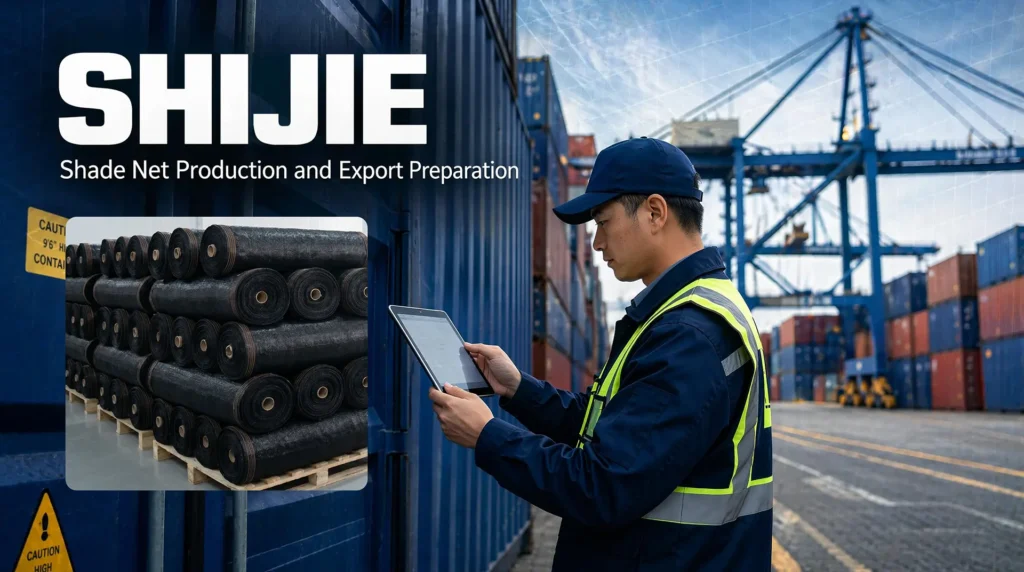
SHIJIE shade net rolls prepared for quality inspection and export
Finished SHIJIE shade net rolls are checked for mesh structure, dimensions, shade specifications, and packaging before export shipment.

Conclusion

Shade netting works by controlling the interaction between sunlight and a carefully designed polymer mesh. Its yarns intercept, reflect, absorb, and scatter solar radiation, while its openings allow controlled light and air to pass through.

The result depends on more than the colour of the net. Raw material, UV stabilisation, shade percentage, yarn design, knitting or weaving structure, installation height, ventilation, and local weather all influence actual performance.

A well-selected shade net can reduce excessive solar exposure, lower plant and surface temperatures, limit water loss, reduce wind speed, and create a more stable environment. An unsuitable net may block too much light, trap heat, restrict ventilation, or fail under wind.

For this reason, buyers should match the product specification to the crop, climate, structure, and operating period. SHIJIE can support agricultural distributors, growers, contractors, and project buyers with shade net selection and customised supply solutions.

July 22, 2026 Comments (0) Product Insights

Read more

  • Popular
  • Latest
  • Black HDPE shade net installed above crops to reduce direct sunlight

    How Does Shade Net Work? Materials, Structure, Shade Rate,...

    July 22, 2026

    Woodland camouflage net draped over outdoor equipment to break up its visible outline

    How to Choose and Use Camouflage Netting: A Complete...

    July 26, 2026

    Person wearing woodland camouflage clothing among trees, leaves, and natural shadows

    How Biomimicry Shapes Modern Camouflage Clothing and Pattern Design

    July 26, 2026

  • Person wearing woodland camouflage clothing among trees, leaves, and natural shadows

    How Biomimicry Shapes Modern Camouflage Clothing and Pattern Design

    July 26, 2026

    Woodland camouflage net draped over outdoor equipment to break up its visible outline

    How to Choose and Use Camouflage Netting: A Complete...

    July 26, 2026

    Black HDPE shade net installed above crops to reduce direct sunlight

    How Does Shade Net Work? Materials, Structure, Shade Rate,...

    July 22, 2026

Shandong Shijie New Materials Technology Co., Ltd. — A manufacturer of concealment, shade, protective cover, functional camouflage fabric, tactical-support gear, and outdoor textile solutions.

Projects

Cultural Heritage Protection Industrial & Infrastructure Military Camouflage Applications Wildlife & Environmental

Latest News

  • How Biomimicry Shapes Modern Camouflage Clothing and Pattern Design July 26, 2026
  • How to Choose and Use Camouflage Netting: A Complete Buyer’s Guide July 26, 2026

    Request a Quote


    Tell us what you need. Our team will reply within one business day.

    © 2026 sjxincai.com • Designed by Shijie New Materials