
Products
SHIJIE manufactures camouflage nets, shade and privacy nets, protective covers, functional camouflage fabrics, tactical load-bearing equipment, field bags and related textile components.
Our production capabilities cover material preparation, automated spreading, pattern cutting, sewing, multi-layer quilting, inspection and custom finishing. Standard products and project-specific textile solutions are available for outdoor, industrial, agricultural, concealment and field-support applications.
Explore Our Product Categories
Our product range is organised into seven main categories. Select a category to view available product structures, materials, specifications and customization options.


Manufacturing Capabilities at a Glance
Up to 7 m
Maximum travel length of the automatic fabric spreading system.
Up to 1.5 m
Maximum spreading width of the current automatic spreading line.
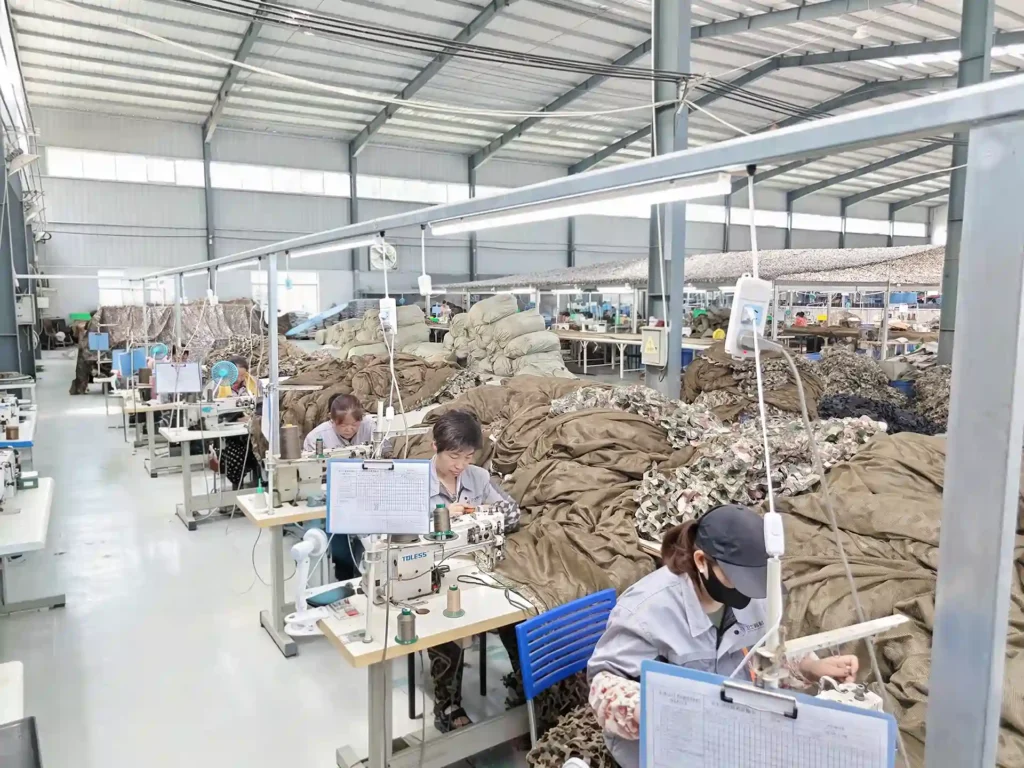
120 Sewing Machines
Three sewing production areas support standard sewing, assembly and specialised net stitching.
10 QA and QC Personnel
A dedicated team supports quality planning, incoming inspection, in-process control and final verification.
From Textile Materials to Finished Products
SHIJIE combines automated material preparation with flexible sewing and assembly processes. This allows the factory to handle repeat production, custom dimensions, irregular shapes, sample development and multi-layer textile structures.
The manufacturing route is selected according to the product. A lightweight shade net may require spreading, cutting, edge sewing and tie-rope installation, while a multi-layer camouflage system may also require backing mesh assembly, functional layers and computer-controlled quilting.
Production requirements are reviewed before manufacturing so that the material, cutting pattern, stitching method, accessories and inspection items match the intended application.
Our Production Process
1. Material and Specification Review
Fabric, backing mesh, webbing, zippers, buckles and other components are reviewed against the product specification. The production team confirms dimensions, colour, pattern, construction, accessories and packaging requirements before work begins.
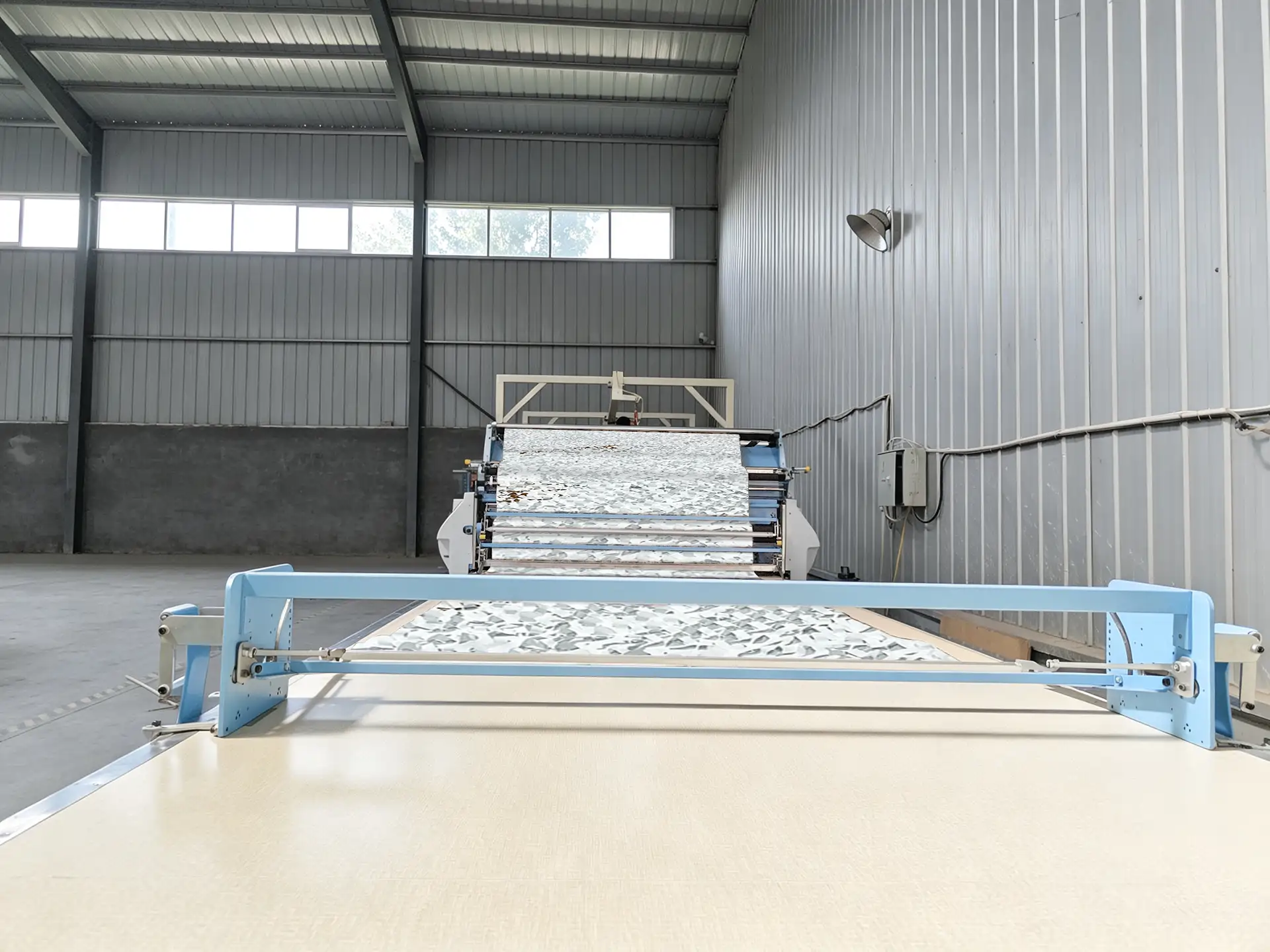
2. Automatic Fabric Spreading
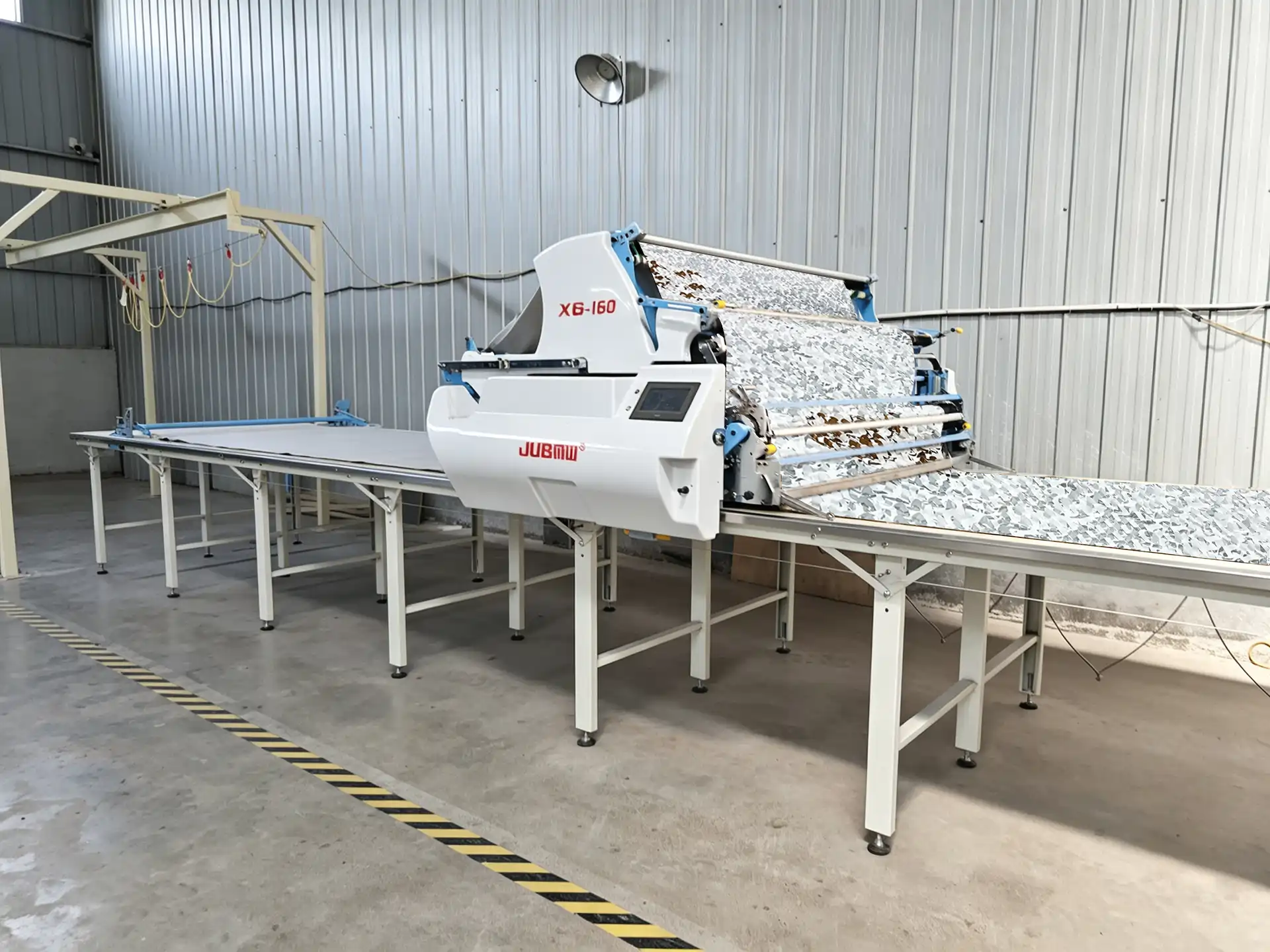
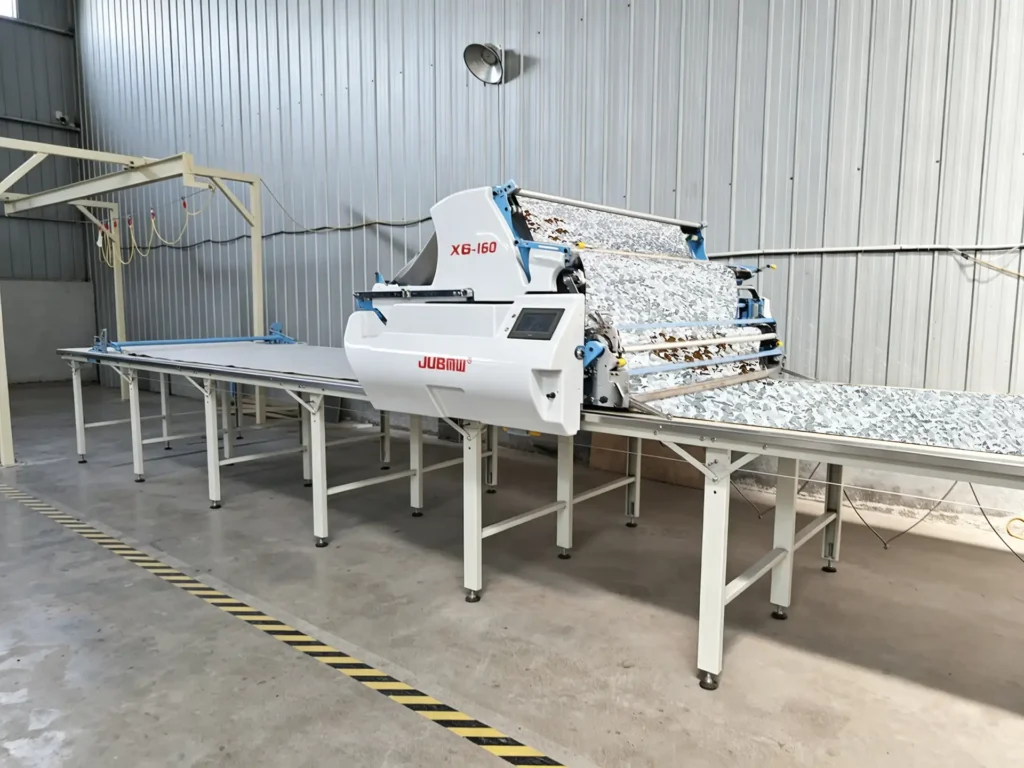
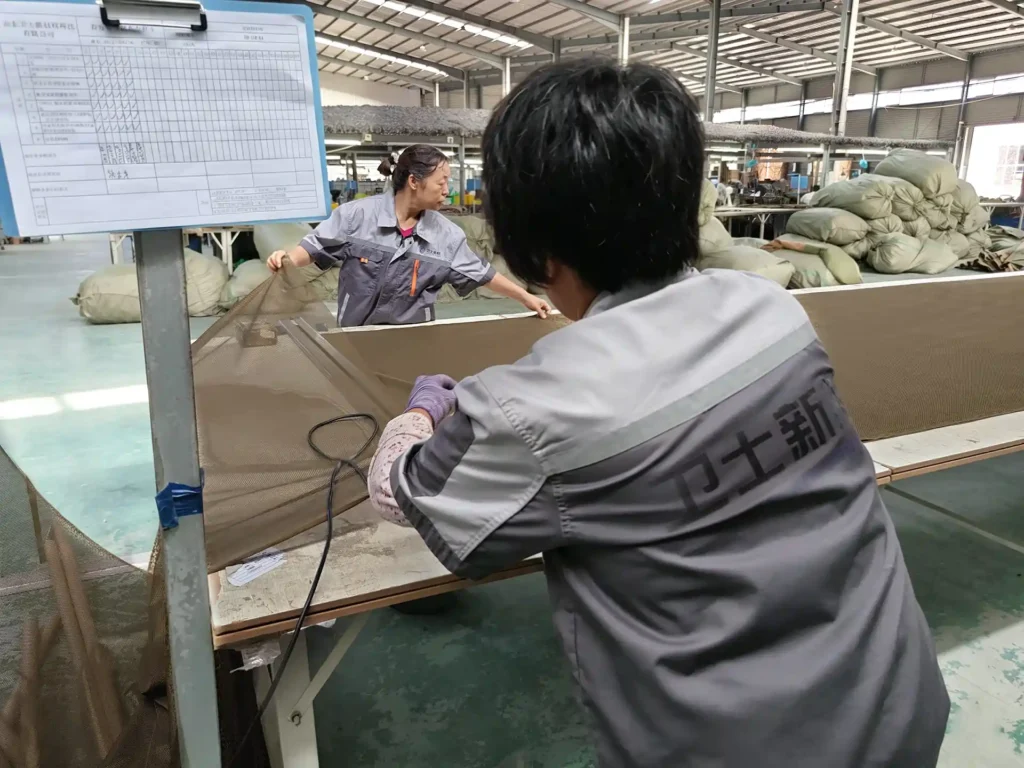
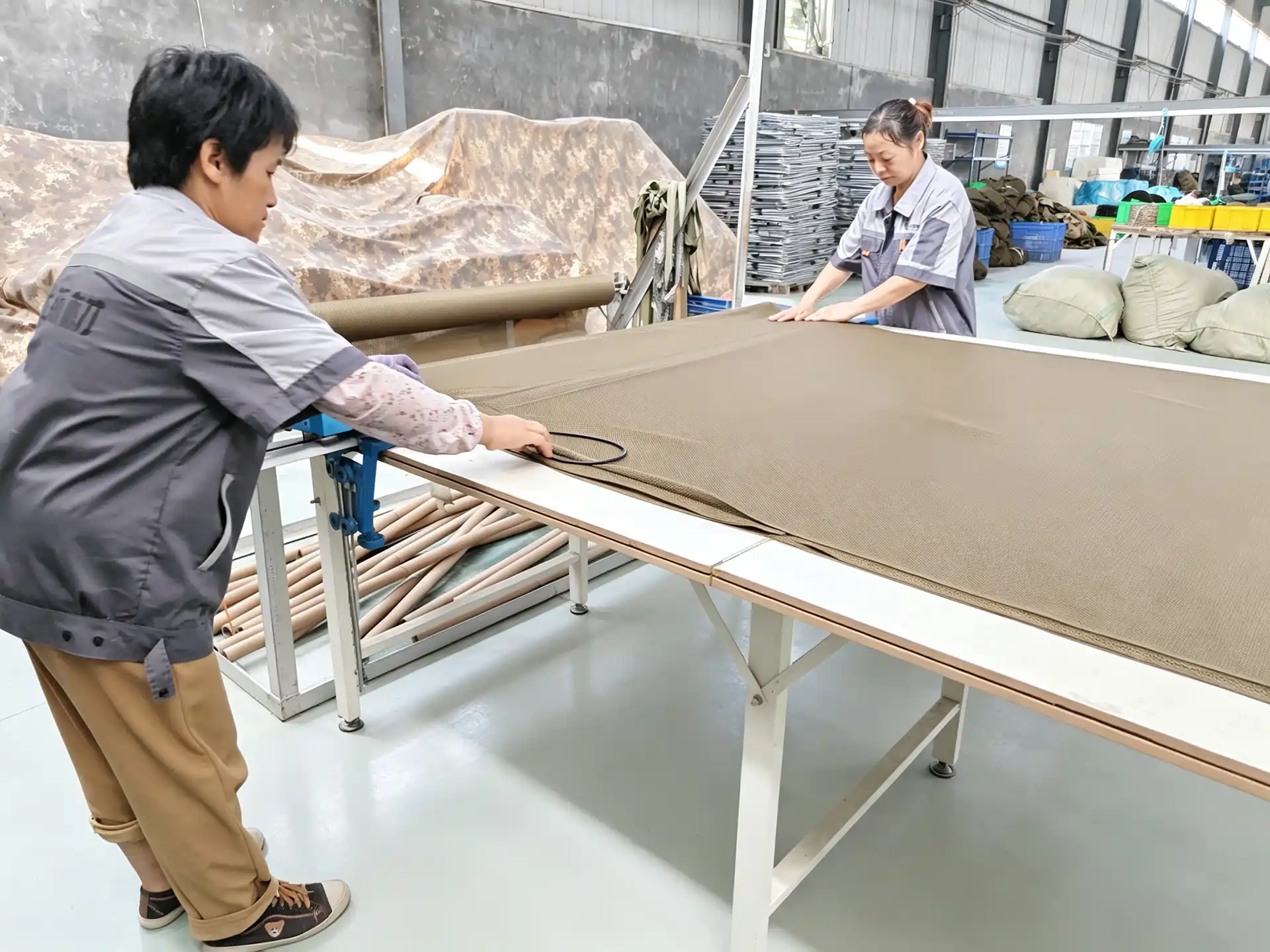
Fabric rolls are loaded onto the automatic spreading system. Length, number of layers, spreading direction, tension and edge alignment are set according to the cutting task.
The automated system helps maintain even tension and accurate alignment across multiple fabric layers.
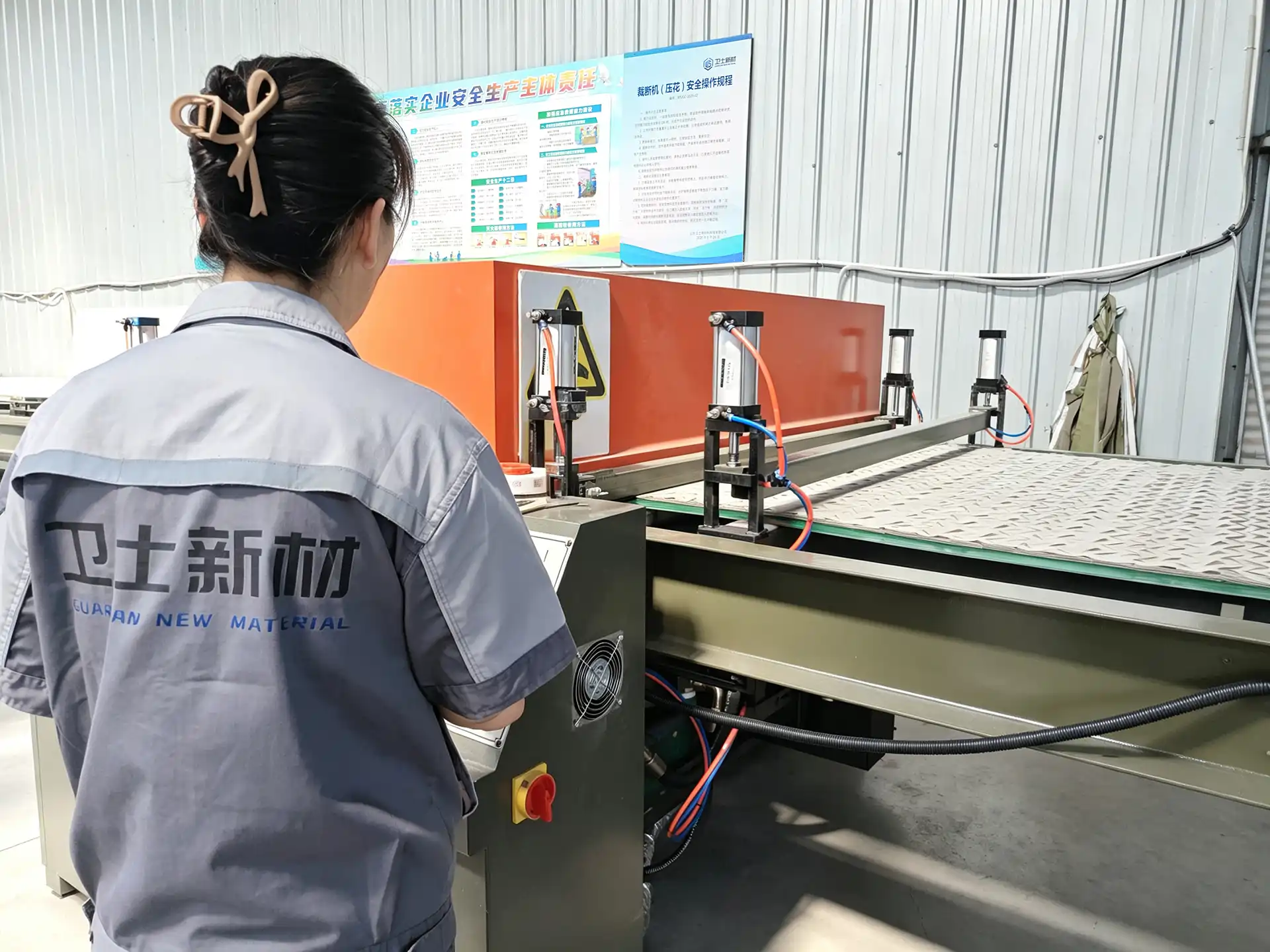
3. Pattern Cutting
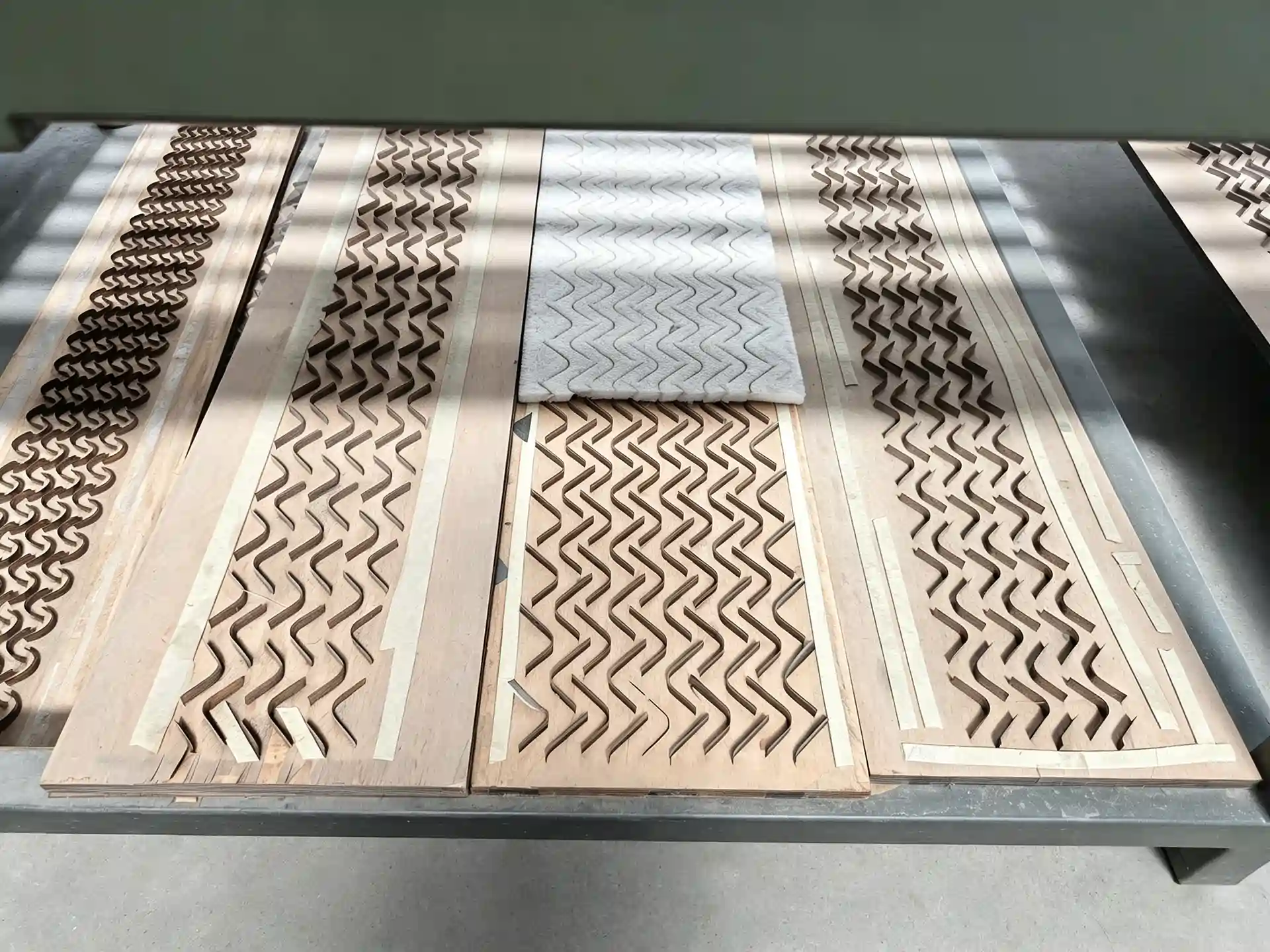
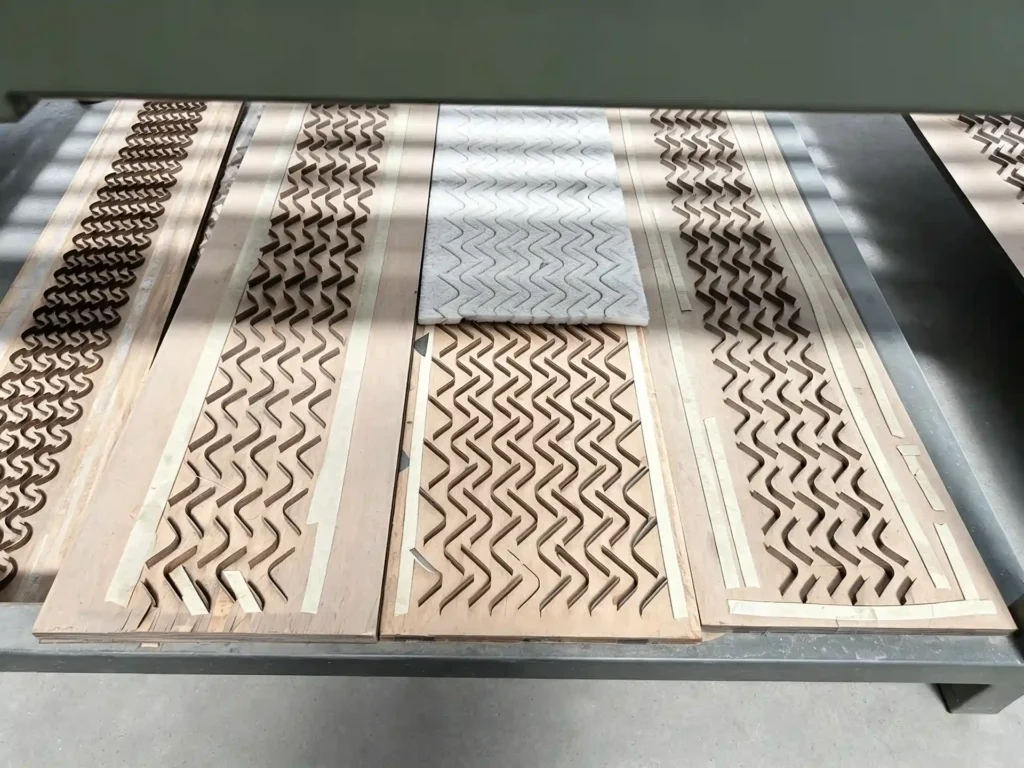
After spreading, the fabric is transferred to the cutting area. Heavy-duty cutting equipment and customised dies produce the required leaf, wave or component shapes.
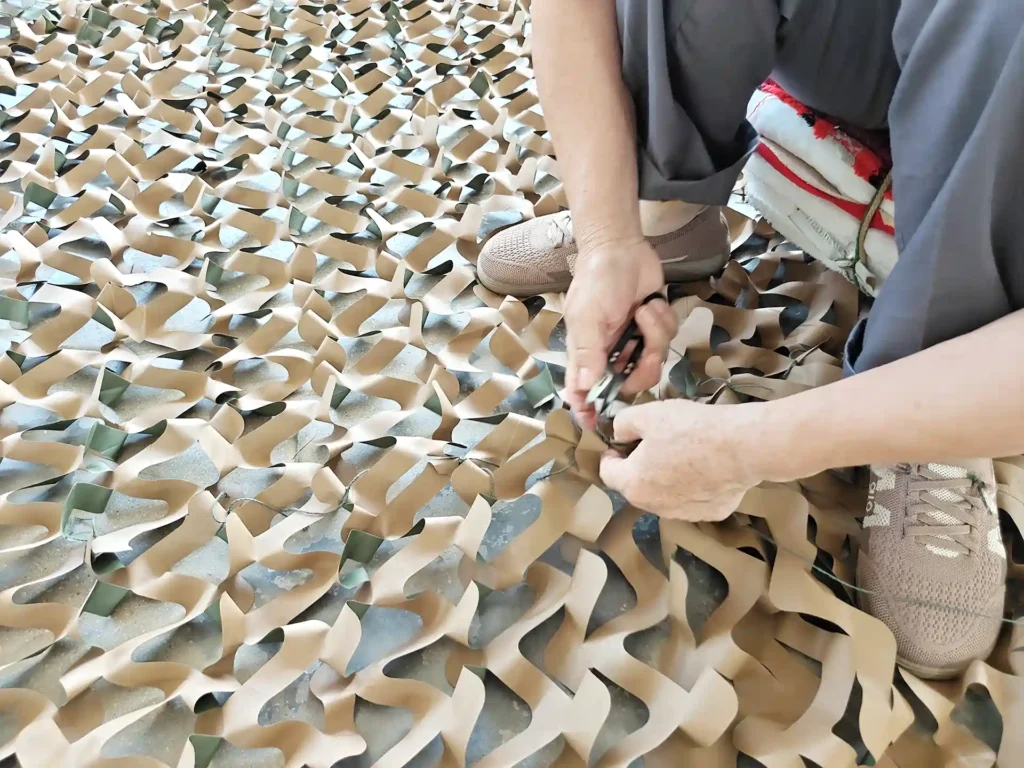
Available camouflage cutting patterns include large and small V shapes, S shapes, and large and small C shapes. Other dies can be developed for project-specific patterns.
4. Sewing and Assembly
Cut components are transferred to the relevant sewing area. Depending on the product, operations may include edge binding, backing mesh attachment, tie-rope installation, zipper sewing, pocket assembly, webbing reinforcement and hardware fitting.
5. Quilting and Multi-Layer Construction
Computer-controlled multi-needle quilting equipment joins camouflage decorative layers, lining materials, functional layers and high-strength backing mesh.
The stitching pattern is programmed to distribute force across the product and reduce the risk of local seam opening.
6. Inspection and Packing
Finished products are checked against the approved specification. Inspection items may include dimensions, structure, stitching, accessories, appearance and applicable physical performance.
Products are then folded, packed and identified according to the confirmed order and shipping requirements.
Production Equipment

Automatic Fabric Spreading and Heavy-Duty Die Cutting
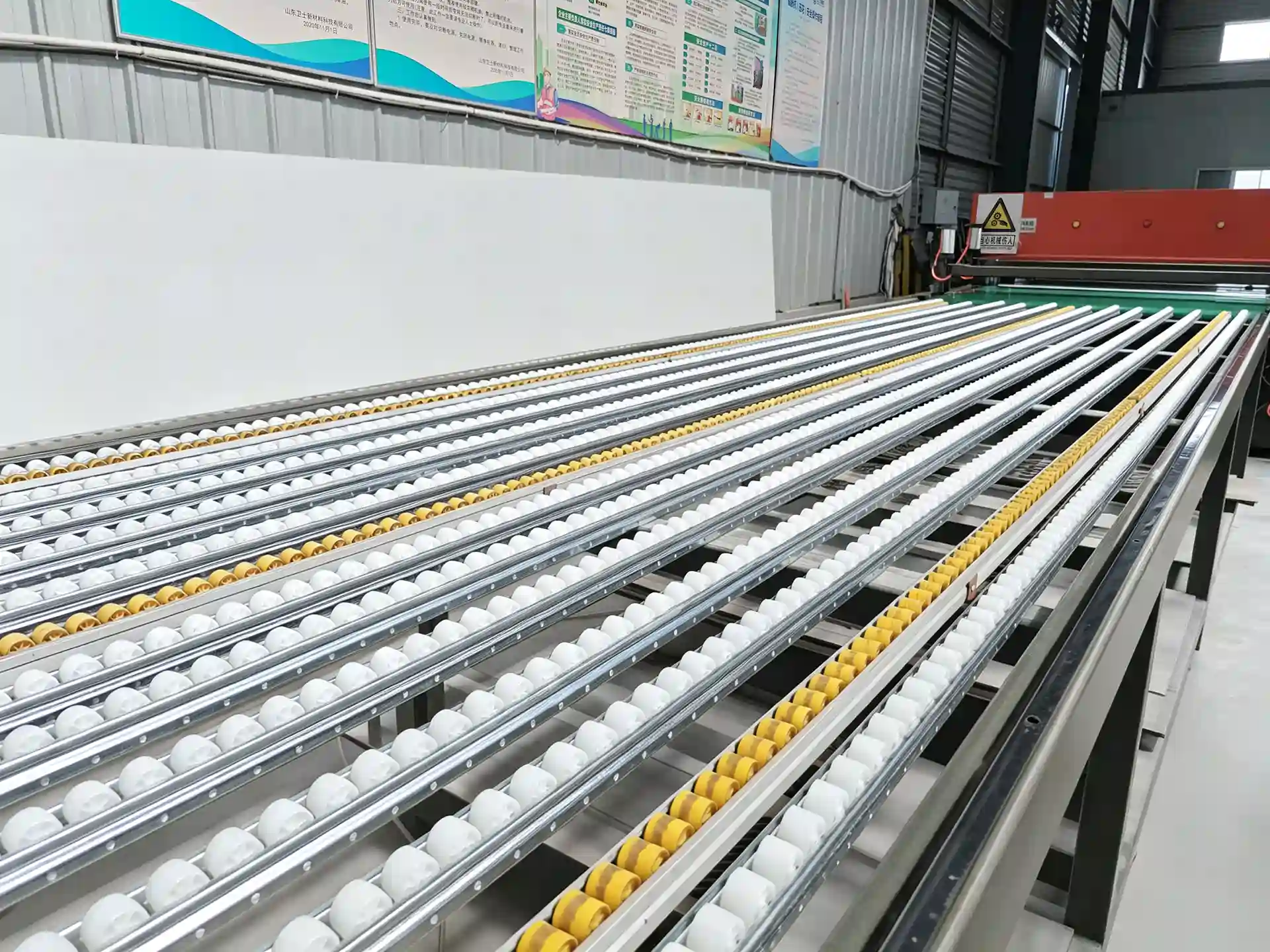
The automatic line combines a loading platform, fabric spreading system, transfer platform and heavy-duty cutting machine. The spreading system can produce flat fabric layers from 1 to 7 metres in length and can spread material during both forward and return travel. Depending on fabric and job settings, a 200-metre roll can be unfolded in approximately five minutes. Compared with manual spreading, the system improves alignment, reduces handling errors and supports more consistent cutting. One trained operator can manage work that previously required several workers.
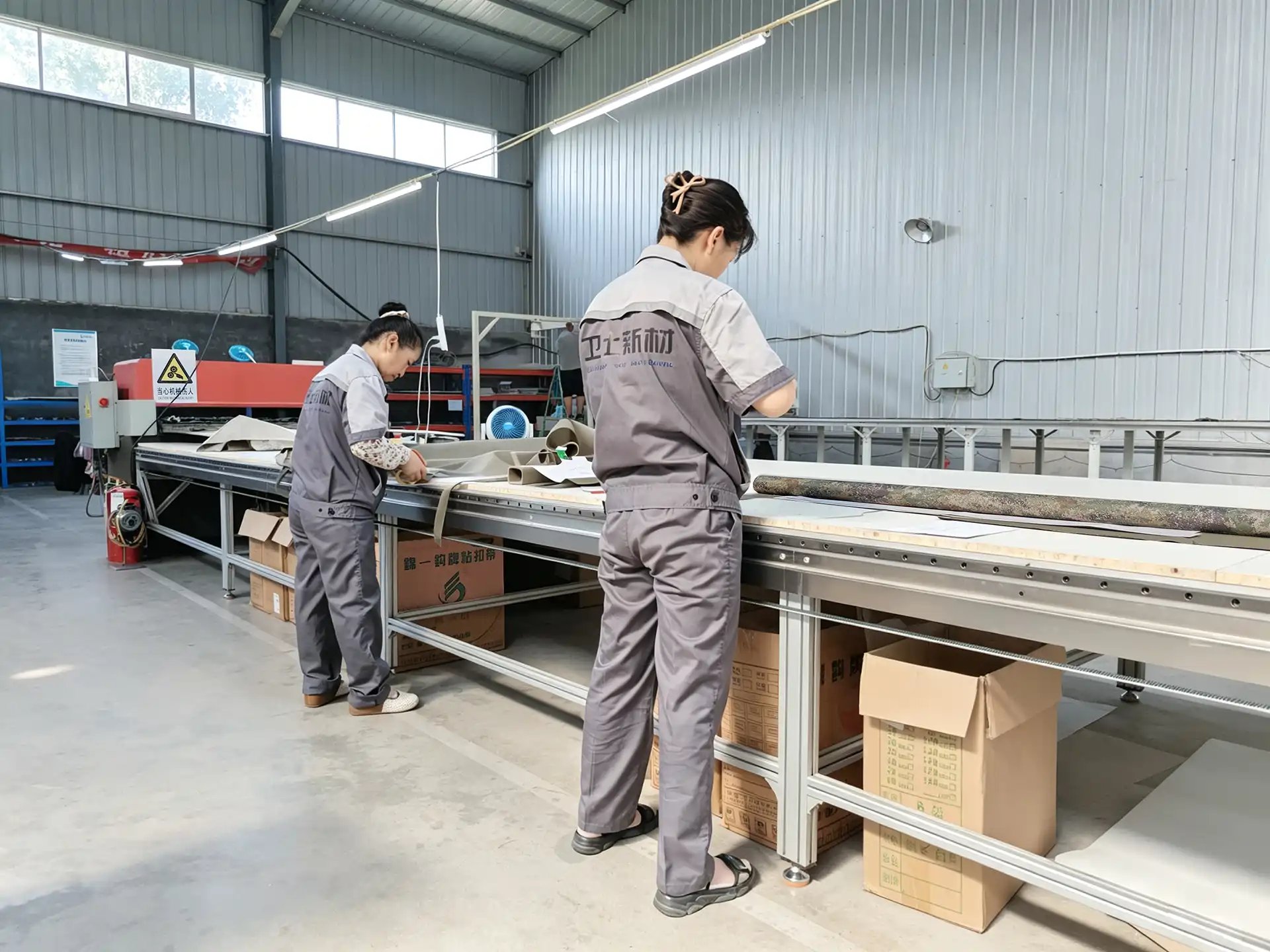
Flexible Automatic Cutting Bed
The flexible cutting line combines a loading platform, automatic cutting bed, work platform and die-cutting equipment. Operators programme the required panel length, after which the system automatically pulls and cuts each fabric layer. The material is then transferred for pattern punching or component cutting. This line is suitable for multiple product types, smaller production batches and sample development. It can also prepare components such as hook-and-loop panels, pockets, tie straps and zipper sections.
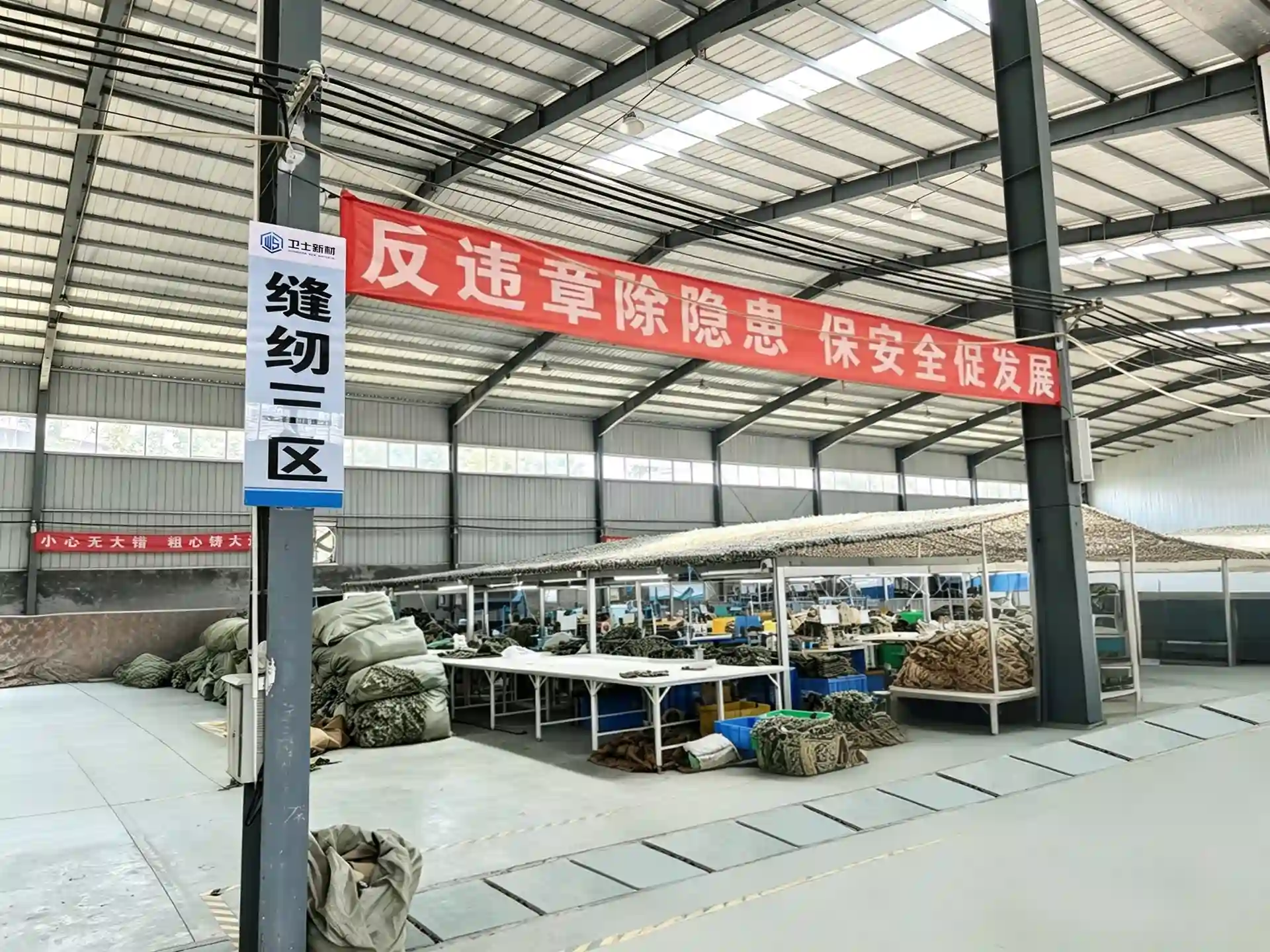
Three Dedicated Sewing Areas
The sewing department is divided into three production areas. The first area contains 40 sewing machines for early-stage sewing and component preparation. The second area contains 60 machines for later-stage assembly and finishing. A third area contains 20 specialised zigzag sewing machines used mainly for net and mesh products. The W-shaped stitch uses a denser sewing path than ordinary straight stitching, improving seam coverage and helping the net withstand repeated handling.
Computer-Controlled Multi-Needle Quilting
Multi-needle quilting equipment joins wide and multi-layer textile structures in a controlled sewing pattern. It can combine camouflage decorative fabric, lining material, functional layers and reinforced nylon backing mesh. Computerised control helps maintain even stitch distribution across large areas. The equipment also supports wide-format and continuous production for large camouflage nets and other multi-layer products.
Shandong Shijie New Materials Technology Co., Ltd. — A manufacturer of concealment, shade, protective cover, functional camouflage fabric, tactical-support gear, and outdoor textile solutions.