How Does Shade Net Work? Understanding Its Materials, Structure, and Shading Effect
A shade net controls how much sunlight reaches the area beneath it. It does this by intercepting, reflecting, absorbing, and scattering part of the incoming solar radiation. The open mesh still allows part of the light and air to pass through, so the covered space remains ventilated.
This simple working principle makes shade netting useful in agriculture, horticulture, nurseries, animal farming, construction, outdoor storage, and public spaces. However, not every shade net produces the same result. Its performance depends on the raw material, knitting or weaving structure, shade rate, colour, installation position, and local climate.
A suitable shade net does more than create a darker area. It can help reduce heat stress, protect crops from intense sunlight, limit moisture loss, and create a more stable growing environment. To select the right product, buyers first need to understand how these factors work together.
What Is a Shade Net?
A shade net is a flexible mesh material designed to reduce the amount of sunlight passing into a covered area. Most modern shade nets are made from synthetic polymers, especially high-density polyethylene, commonly known as HDPE. Polypropylene may also be used for certain net structures and applications.
These materials are lightweight, moisture-resistant, and suitable for outdoor fabrication. Manufacturers normally add ultraviolet stabilisers to the polymer during production. These additives help slow the degradation caused by long-term exposure to solar radiation.
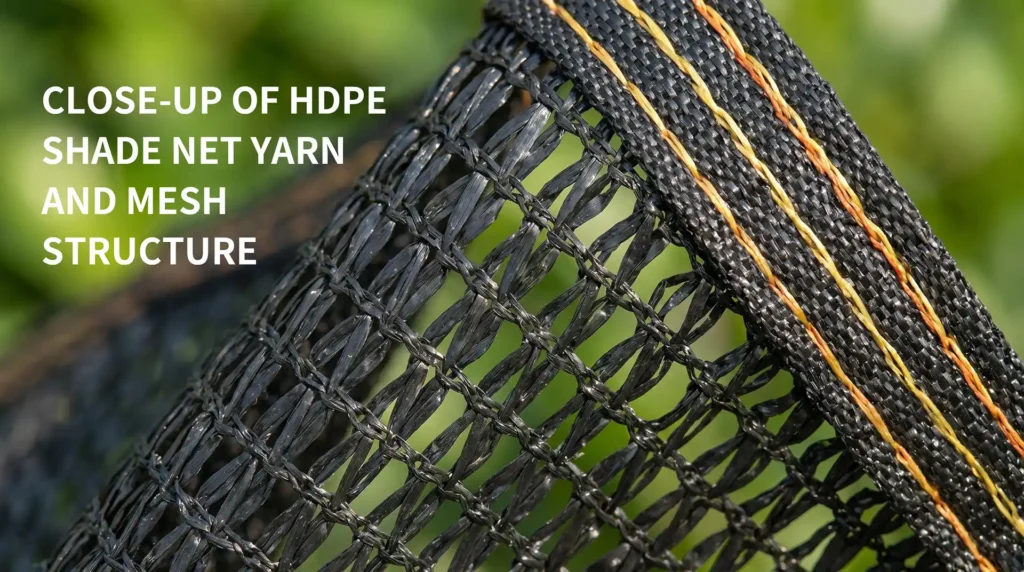
The net can be knitted or woven into different structures. The yarn arrangement creates a controlled combination of solid material and open spaces. The solid parts interact with sunlight, while the openings allow light, air, and some rainwater to pass through.
This balance separates shade netting from solid roofing materials. A solid cover may block rain and airflow, while a shade net creates partial protection without completely enclosing the area.
How Does Shade Net Work?
Sunlight contains visible light, ultraviolet radiation, and infrared energy. When this solar radiation reaches a shade net, several actions take place at the same time.
Part of the sunlight is blocked by the yarns or tapes. Part is reflected away from the covered area. Some energy is absorbed by the net material, and some light passes through the open mesh. The edges and surfaces of the yarns also scatter part of the transmitted light.
As a result, the light below the net is less intense than direct sunlight. It may also be more evenly distributed because some of the incoming light has been diffused.
The net structure does not create cold air by itself. Instead, it reduces the amount of solar energy reaching plants, soil, equipment, or people. When surfaces absorb less solar radiation, they usually gain heat more slowly. The open mesh also allows natural ventilation to carry warm air away.
Research on protected cultivation shows that shade nets can change several parts of the crop microclimate. These may include solar radiation, canopy temperature, root-zone temperature, relative humidity, wind speed, and evapotranspiration. The result is not identical in every location because it depends on the climate, crop, net design, and installation method.
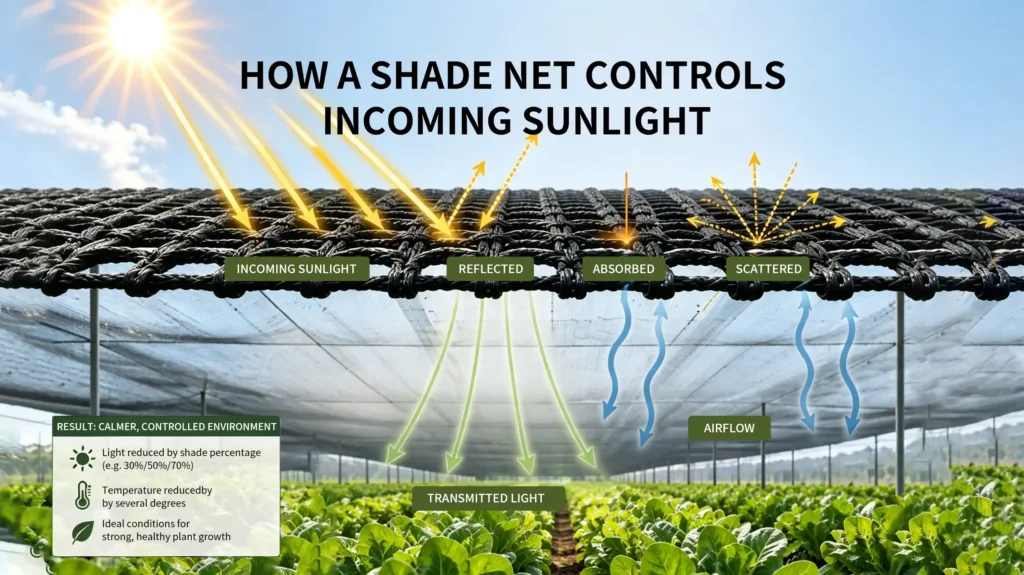
The Four Main Light-Control Mechanisms
1. Interception
The yarns and tapes form the solid part of the shade net. They stand in the path of incoming sunlight and stop part of it from reaching the covered surface.
A denser structure contains more material across a given area. It normally intercepts more sunlight than an open structure. This is one reason why higher-percentage shade nets appear darker beneath them.
2. Reflection
Part of the sunlight is reflected from the surface of the net. The amount of reflection depends on the colour, surface properties, material, and construction.
Light-coloured or reflective nets may return more radiation away from the protected area. Dark nets often absorb more solar energy. However, colour alone does not determine the final shade rate. A buyer should always check the measured shade percentage and product specifications.
3. Absorption
The polymer material absorbs part of the solar energy that reaches it. The net can then release some of this energy as heat to the surrounding air.
For this reason, ventilation is important. A well-ventilated structure allows heat around the net to disperse. If a shade net is installed too close to a greenhouse roof or enclosed surface, warm air may become trapped between the two layers.
4. Transmission and Diffusion
Some sunlight travels directly through the mesh openings. Other light changes direction after interacting with the yarn surfaces and edges.
This scattered or diffused light can reach the crop canopy from more angles. It may reduce sharp contrasts between strongly illuminated leaves and deeply shaded leaves. However, the exact light distribution depends on the yarn geometry, net colour, sun angle, and installation height.
What Does Shade Percentage Mean?
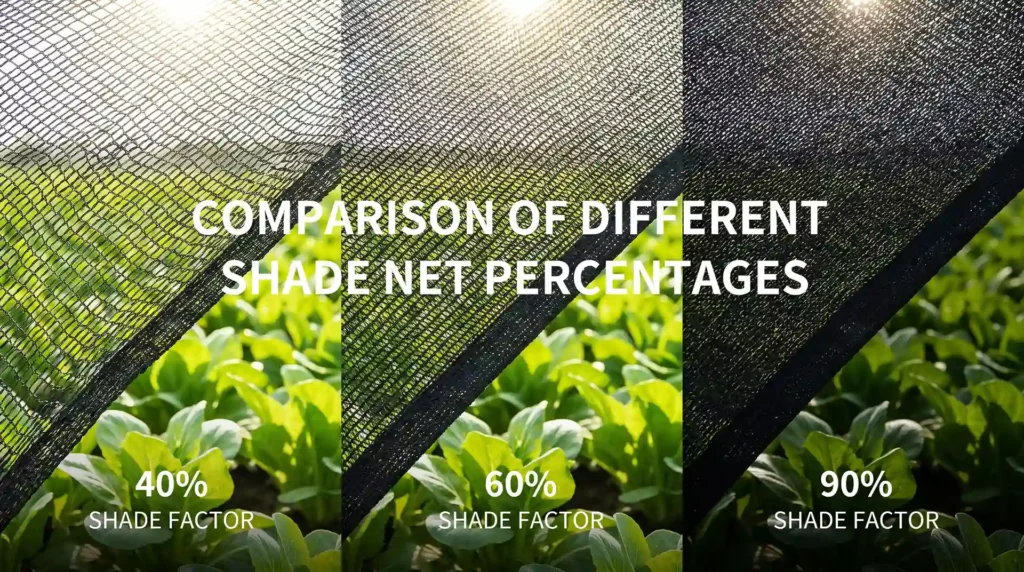
The shade percentage indicates how much incident light the net is designed to block under specified test conditions.
For example, a nominal 50% shade net is intended to reduce the measured light level by about half. It does not mean that the net has 50% visible holes, and it does not guarantee that every form of solar radiation is reduced by exactly 50%.
Shade percentage and mesh opening percentage are related, but they are not the same measurement. Yarn width, yarn shape, colour, thickness, and arrangement can all affect light transmission.
Actual field performance may also vary because of:
- The height and angle of the sun
- Cloud cover and seasonal conditions
- Dust or water on the net
- Stretching during installation
- Overlapping sections
- The distance between the net and the protected area
- The test method used by the supplier
Shade products are available across a broad range. Utah State University Extension notes that commercial shade cloth can range from about 10% to 90% shade. It also states that many fruit and vegetable crops use lower to moderate levels, often around 20% to 40%, depending on local conditions and crop needs. This is a useful general reference, but it should not replace crop-specific testing.
A high shade rate is not automatically better. Plants need enough light for photosynthesis. Excessive shade may produce weak, elongated growth, delay flowering, reduce fruit development, or lower yield. The correct goal is to remove harmful excess radiation while retaining enough useful light.
How Shade Netting Changes the Growing Environment
It Reduces Direct Solar Radiation
The most immediate effect is lower light intensity under the net. This can protect leaves, flowers, and fruit from extreme solar exposure.
Sensitive crops may experience leaf scorch, fruit sunburn, flower loss, or poor growth during periods of intense sunlight and high temperature. Correctly selected shade netting helps reduce this stress.
It Can Lower Leaf, Fruit, and Root-Zone Temperatures
A shade net reduces the solar energy that reaches plant surfaces and the soil. This can lower leaf and fruit surface temperatures, which may be more important than a small change in the surrounding air temperature.
A 2024 study comparing green, black, and beige nets reported that their main benefit was associated with lower leaf and root-zone temperatures. The study also found that colour-related differences in plant growth were not always consistent. This shows why buyers should not select a net based on colour claims alone.
It Can Reduce Water Loss
Strong sunlight, high temperature, and wind can increase the amount of water lost from plants and soil. A shade net may reduce solar load and wind speed, which can help slow evapotranspiration.
This does not remove the need for proper irrigation. Growers should monitor soil moisture after installing a net because the previous watering schedule may no longer match the new environment.
It Can Change Relative Humidity
Lower solar load and reduced air movement can help maintain slightly higher humidity around the crop canopy. This may benefit some crops in hot and dry conditions.
Too much humidity can also create problems. Poor ventilation and wet foliage may increase the risk of certain diseases. The installation should therefore provide enough open space for air exchange.
It Can Reduce Wind Speed
The mesh presents resistance to moving air. It slows the wind without behaving like a completely solid barrier.
This can reduce mechanical damage to young plants and limit rapid moisture loss. However, the net also receives wind loads. Strong supports, correct tension, suitable fixing points, and reinforced edges are important for outdoor projects.
How Material and Structure Affect Performance
Raw Material
HDPE is widely used because it combines low weight, flexibility, and resistance to moisture. Polypropylene can also be processed into shade and protective netting.
Raw material quality affects the net’s strength, appearance, processing stability, and outdoor performance. A very low initial price may reflect inconsistent resin, insufficient stabilisation, or poor control of yarn dimensions.
UV Stabilisation
Continuous sunlight can break down unstabilised polymers. The material may fade, become brittle, lose tensile strength, and tear prematurely.
UV stabilisers help delay this process. However, service life still depends on solar intensity, climate, colour, installation tension, chemical exposure, and handling. Buyers should compare the actual technical specification and warranty conditions instead of relying only on general claims such as “UV resistant.”
Knitted and Woven Construction
Knitted shade nets use interlocking loops. This structure can provide flexibility and help limit the spread of local damage. It is often convenient for agricultural covers and large outdoor installations.
Woven shade cloth uses crossing warp and weft elements. It may provide a firm and dimensionally stable structure, depending on the yarn design.
Neither construction is best for every project. The choice depends on required shade rate, roll dimensions, strength, edge treatment, installation method, and budget.
Yarn Design and Density
Shade nets may use monofilament yarn, flat tape, or a combination of yarn types. Flat tapes can cover a larger visual area, while monofilament yarns may contribute to structural stability and resistance.
The density and arrangement of these yarns determine how much open space remains. Manufacturers adjust these variables to create different shade rates and mechanical properties.
Does Shade Net Colour Matter?
Yes, colour can influence the way a net interacts with solar radiation. However, its effect must be considered together with the shade percentage and net structure.
Black Shade Net
Black is one of the most common options. It provides a neutral reduction in light intensity and is widely used in nurseries, greenhouses, livestock areas, construction sites, and outdoor shade structures.
Black material absorbs a considerable amount of solar energy. This makes ventilation and installation spacing important.
Green Shade Net
Green shade netting is common in horticulture and landscaping because it blends visually with plants and surrounding environments. Its effect on the plant light spectrum can differ from that of a black net with the same nominal shade rate.
The colour should not be treated as proof that the product is better for every crop. Crop response varies by species, growth stage, climate, and net design.
White, Beige, or Reflective Shade Net
Light-coloured nets can reflect more incoming radiation and may distribute light differently beneath the cover. They are often considered where heat management and diffused light are important.
Red, Blue, and Other Photoselective Nets
Photoselective nets are designed to modify both light quantity and spectral composition. They may influence plant form, leaf development, flowering, yield, or fruit quality.
The results are crop-specific. A coloured net that works well for one crop and climate may not produce the same result elsewhere. Commercial growers should use local trials, agronomic advice, and measured data before applying a specialised colour over a large area.
Internal and External Installation
Shade netting can be placed outside or inside a greenhouse, or it can be mounted on an independent support structure.
An external net blocks part of the solar radiation before it enters the greenhouse. This can be effective for reducing solar heat gain. The net should not lie directly against the greenhouse covering if trapped heat, abrasion, or poor airflow may become a concern.
An internal net is protected from wind, rain, and some outdoor contamination. It is usually easier to operate and maintain. However, solar energy has already entered through the greenhouse covering before it reaches the internal net. Part of the absorbed heat may therefore remain inside the structure.
Independent shade houses use the net as the main upper or side covering. The frame height, roof shape, side openings, support spacing, and wind exposure all influence performance.
How to Choose the Right Shade Net
The selection process should begin with the application, not with colour or price.
1. Define What Needs Protection
A crop nursery, cattle shelter, greenhouse, building scaffold, outdoor storage yard, and recreational area have different requirements. Decide whether the main purpose is crop protection, temperature management, visual screening, wind reduction, or worker comfort.
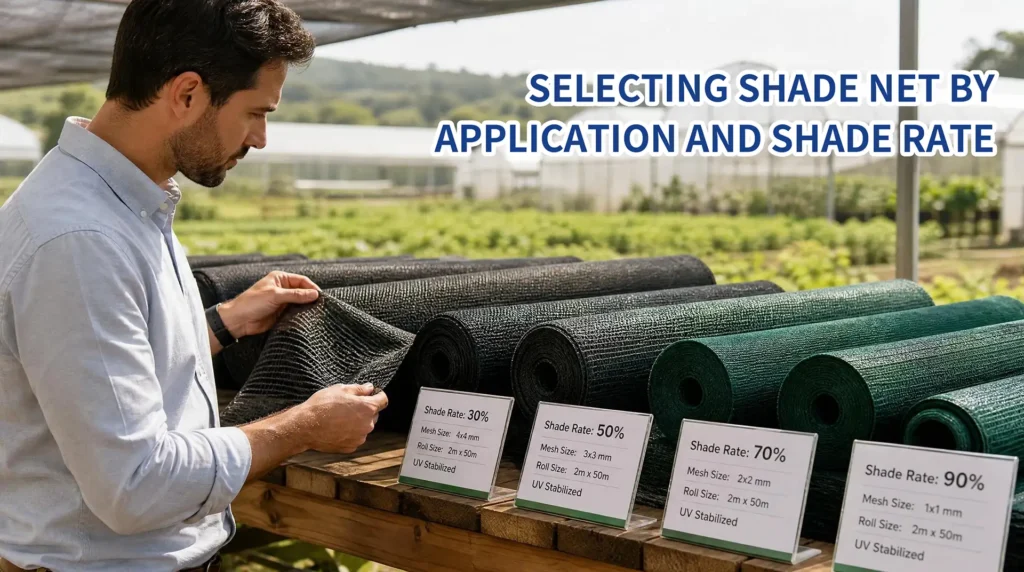
2. Identify the Required Shade Rate
Consider the crop or material being protected, local solar intensity, season, latitude, and hours of exposure.
Low shade levels may suit light-demanding crops that only need relief during the hottest hours. Higher shade levels may be used for shade-loving plants, livestock shelters, outdoor rest areas, or non-crop applications.
Do not select the highest available percentage as a safety measure. Too much shade can create new problems.
3. Select an Appropriate Colour
Choose colour after confirming the shade rate. Standard black or green netting is suitable for many general applications. Reflective or photoselective products require a clearer technical purpose.
4. Check Strength and Outdoor Durability
Ask the supplier about:
- Raw material
- UV stabilisation
- Net weight
- Yarn structure
- Tensile or breaking strength
- Roll width and length
- Reinforced edges
- Eyelets or fixing options
- Expected operating conditions
- Packaging and transportation
Product weight alone should not be used as the only quality indicator. Two nets with similar weight may have different yarn structures, UV formulations, shade rates, and strengths.
5. Confirm Installation Conditions
Measure the structure carefully and allow for attachment, tensioning, overlaps, and edge finishing. Check local wind conditions and determine whether the net will remain installed throughout the year.
The support structure must be strong enough to carry the net under wind and rain. Water should not be allowed to collect in loose sections. Excessive tension may damage the material, while insufficient tension can cause repeated flapping and abrasion.
Common Shade Net Installation Mistakes
Choosing by Colour Alone
Two nets of the same colour may have very different shade rates. Always compare measured performance and construction.
Installing the Net Without Ventilation Space
A net placed too close to a greenhouse roof or solid surface may trap warm air. Adequate separation helps heat disperse.
Mengabaikan Beban Angin
Shade netting allows airflow, but it still creates substantial resistance in strong wind. Weak posts, wide unsupported spans, and poor fasteners can lead to failure.
Stretching the Net Too Tightly
Over-tensioning places constant stress on yarns, seams, edges, and fixing points. The net requires controlled tension, not maximum tension.
Allowing Loose Areas to Flap
A loose cover repeatedly bends and rubs against the frame. This can cause local wear and enlarge small tears.
Using the Same Shade Rate for Every Crop
Crop light requirements vary. Seedlings, leafy vegetables, ornamentals, fruiting crops, and shade-tolerant plants do not need identical conditions.
Forgetting Seasonal Changes
A suitable summer shade level may be excessive during a cloudy or cool season. Removable, retractable, or seasonal installation can provide better control.
Where Can Shade Nets Be Used?
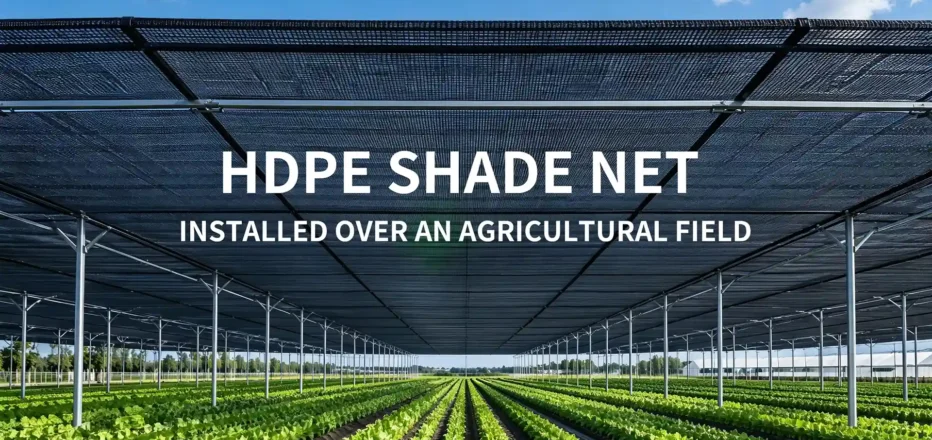
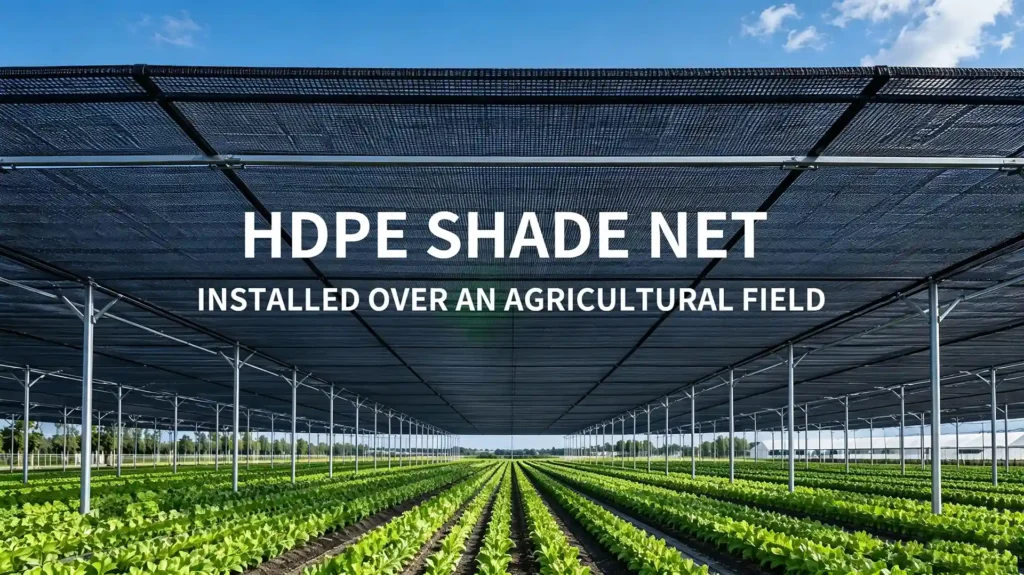
Agriculture remains one of the largest application areas. Shade netting can be installed over nurseries, vegetable plots, orchards, tea gardens, flower production areas, and greenhouses.
It can also be used for:
- Poultry and livestock shelters
- Aquaculture and fishpond areas
- Outdoor storage
- Vehicle parking
- Construction scaffolding
- Dust and debris control
- Garden centres
- Patios and recreation areas
- Temporary work zones
- Privacy and visual screening
The required product specification changes with the application. A greenhouse net should focus on controlled light and crop microclimate. A construction net may place more emphasis on strength, containment, and project safety. A livestock cover may require a high shade rate, wide coverage, and reliable wind resistance.
Why Work With SHIJIE for Shade Netting?
SHIJIE supplies shade netting for agricultural, commercial, and project-based applications. Shandong Shijie New Materials Technology Co., Ltd. can help buyers compare shade rate, material, colour, structure, roll dimensions, packaging, and installation requirements before ordering.
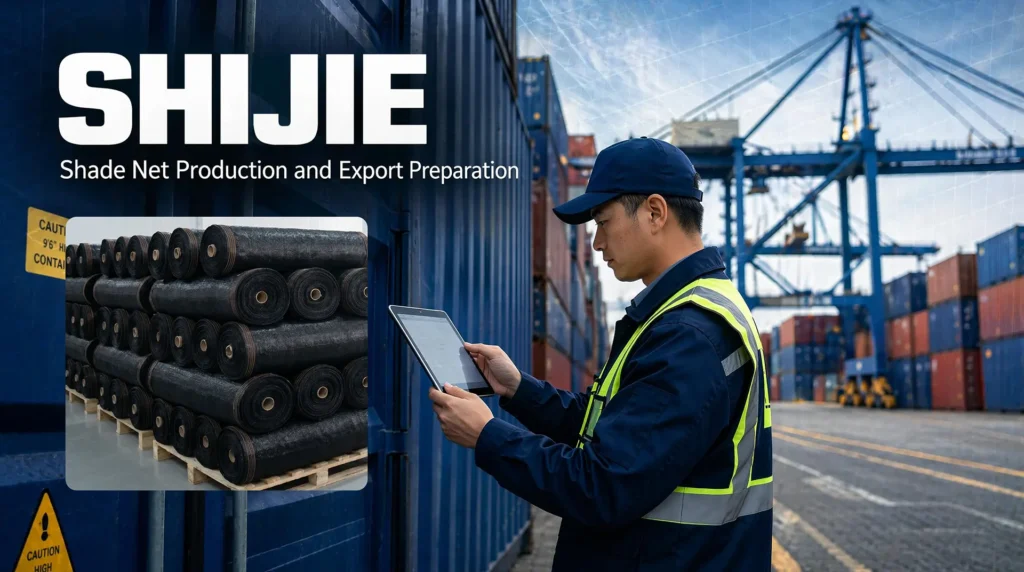
For distributors and project buyers, specification consistency is especially important. Products supplied across different batches should maintain a stable structure, colour, dimensions, and shading performance. Clear product identification and suitable export packaging also make storage, resale, and on-site handling easier.
SHIJIE can discuss customised roll widths, roll lengths, colours, packaging, labels, and other project requirements. Buyers should provide the intended application, required shade rate, installation dimensions, local climate, and expected order quantity. These details allow the supplier to recommend a more suitable product instead of offering one general net for every situation.
Kesimpulan
Shade netting works by controlling the interaction between sunlight and a carefully designed polymer mesh. Its yarns intercept, reflect, absorb, and scatter solar radiation, while its openings allow controlled light and air to pass through.
The result depends on more than the colour of the net. Raw material, UV stabilisation, shade percentage, yarn design, knitting or weaving structure, installation height, ventilation, and local weather all influence actual performance.
A well-selected shade net can reduce excessive solar exposure, lower plant and surface temperatures, limit water loss, reduce wind speed, and create a more stable environment. An unsuitable net may block too much light, trap heat, restrict ventilation, or fail under wind.
For this reason, buyers should match the product specification to the crop, climate, structure, and operating period. SHIJIE can support agricultural distributors, growers, contractors, and project buyers with shade net selection and customised supply solutions.