What Are The Three Main Types Of Camo?
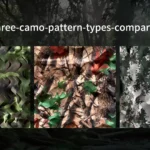
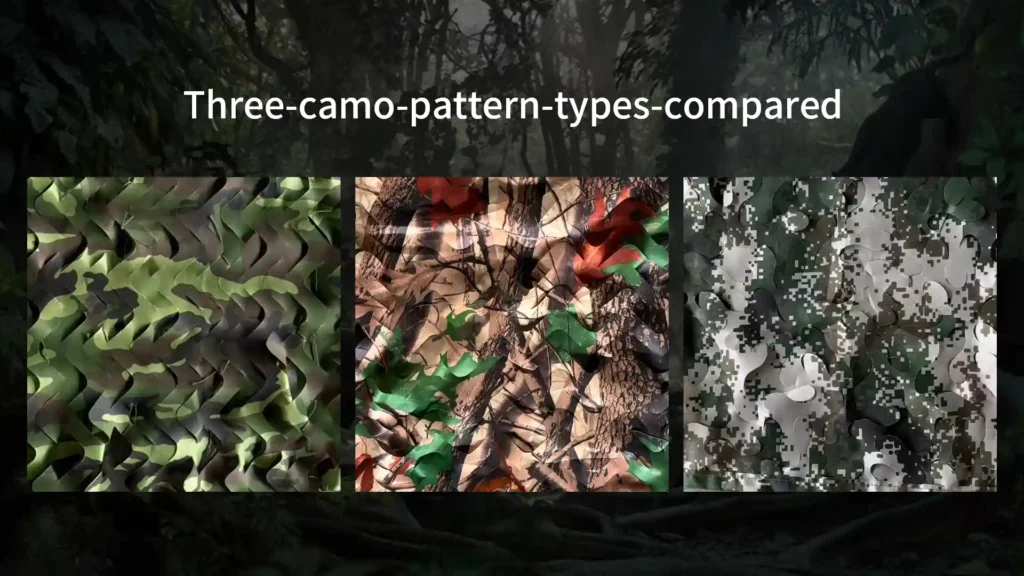
A common way to describe the three main types of camo is traditional abstract camouflage, realistic stick-and-leaf camouflage, and digital camouflage. These groups describe the appearance of the pattern. They do not define the fabric strength, number of layers, or performance of a finished camo net.
This distinction matters when buying netting. You may see a familiar green-and-brown print, a detailed image of leaves, or a pixel-style design. You may also receive an enquiry for blank camouflage netting, where the intended material or finish needs clarification before a supplier can quote accurately.
This guide explains the three pattern styles, how they relate to net construction, and what to confirm when discussing printed, plain-colour, or unfinished material with SHIJIE.
What Does “Three Main Types Of Camo” Mean?
There is no single three-part classification covering every use of camouflage. Biology, clothing, and textile manufacturing describe camouflage in different ways.
For a practical introduction to printed outdoor textiles, the traditional, stick-and-leaf, and digital grouping is useful. Columbia uses this grouping in its camouflage guide. Here, “realistic” refers to the stick-and-leaf style, where the artwork resembles natural objects rather than abstract patches.
The categories can overlap. A realistic print may be created with digital tools, and an abstract design may use both large and small shapes. In everyday product descriptions, however, “digital camo” usually refers to a pixel-like visual style rather than simply computer-made artwork.
When ordering a camo net, use these terms to describe the look you want. Then specify its colour palette and physical construction separately.
| Pattern Style | What It Looks Like | What Buyers Should Review |
|---|---|---|
| Traditional abstract | Irregular patches or shapes in several colours | Palette, contrast, repeat size, and appearance against the background |
| Realistic stick-and-leaf | Images resembling leaves, bark, branches, grass, or similar natural features | Local relevance, season, image scale, and how the artwork looks after cutting |
| Digital | Groups of small angular or pixel-like shapes | Colour balance, pattern scale, and appearance on the finished material |
These are visual descriptions. None of the three labels guarantees that a product will suit every setting.
Type 1: Traditional Abstract Camouflage
Traditional abstract camouflage uses irregular coloured areas rather than a detailed picture of a particular leaf or branch. Green and brown versions are familiar examples, but the same general style can use other palettes.
For netting buyers, this style offers a clear starting point for discussing colour blocks and overall appearance. You can review whether the proposed sample is too dark, too bright, or too high in contrast for the intended location.
What To Check On A Camo Net
Inspect a representative finished sample. The printed fabric, cut openings, backing mesh, and background visible through the net all contribute to its appearance.
A swatch of uncut fabric may show the colours accurately, but it cannot show the full effect of the finished construction. Ask to see the print after the intended cutting and assembly steps.
Also compare the reverse face and edge materials if they will be visible. Matching the main print while leaving a noticeably different backing or border may produce a result that differs from the approved concept.
Type 2: Realistic Stick-And-Leaf Camouflage
Realistic camouflage uses recognisable natural imagery. Instead of broad abstract patches, the artwork may include bark, branches, leaves, or grass.
Mossy Oak’s published pattern information provides examples of designs based on natural bark and vegetation. These examples illustrate the style; they do not establish that every similar-looking print provides the same result.
For a buyer, the key question is whether the imagery belongs in the intended setting. A print dominated by fresh green leaves may be a poor visual match for dry reeds or bare ground, even when the artwork is detailed.
Printed Leaves And Cut Leaves Are Different
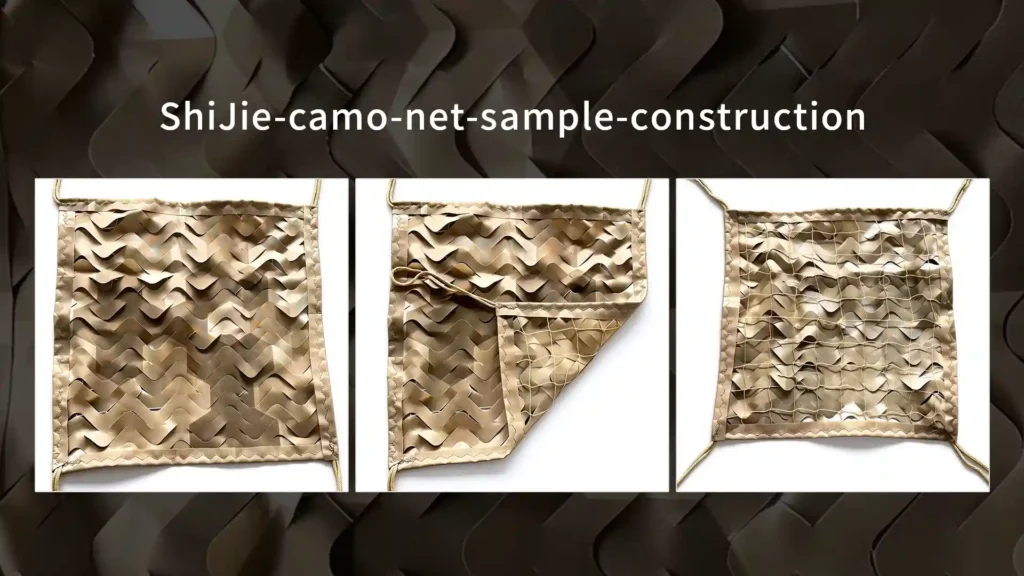
“Leaf camouflage” can describe two separate features. One is a printed picture of leaves. The other is fabric physically cut into leaf-like sections.
A flat fabric can have realistic leaf artwork without any cut sections. A cut-leaf camo net can have an abstract print rather than realistic foliage images. Some products combine both features.
State which one you need. For example, an enquiry might request realistic vegetation artwork on a flat screen, or a cut-leaf net with a custom green-and-brown palette. These are different manufacturing requests.

Check The Artwork After Processing
Cutting changes which parts of the printed surface remain visible. Review the completed sample rather than approving detailed artwork only on a computer screen.
If you supply artwork, confirm that it is authorised for your intended use. You can also discuss an original design brief with the manufacturer instead of requesting a copy of a protected commercial pattern.
Type 3: Digital Camouflage
Digital camouflage commonly has a pixel-like appearance, with small angular shapes arranged into larger colour areas. The term describes a pattern style, not an electronic function.
The US Army’s account of camouflage research at West Point discusses the digital camouflage concept in connection with texture matching. This provides useful context: the aim is more specific than adding random squares to fabric.
For commercial netting, buyers should review the proposed palette, pattern scale, and finished appearance. A modern-looking design does not automatically make a product better for the intended background.
Digital Printing Is A Separate Term
Digital printing is a production process. Digital camouflage is a visual design style. A realistic image can be digitally printed without becoming pixel-style camouflage.
This difference is useful in an enquiry. “Digital camo net” may describe the artwork, while “digitally printed netting” may describe how the colour is applied. Include an approved image or sample so the supplier understands which meaning you intend.
As with other patterns, inspect the finished net. Do not transfer a performance claim from a uniform, another material, or another manufacturer’s product to the net you plan to order.
Where Does Blank Camouflage Netting Fit?
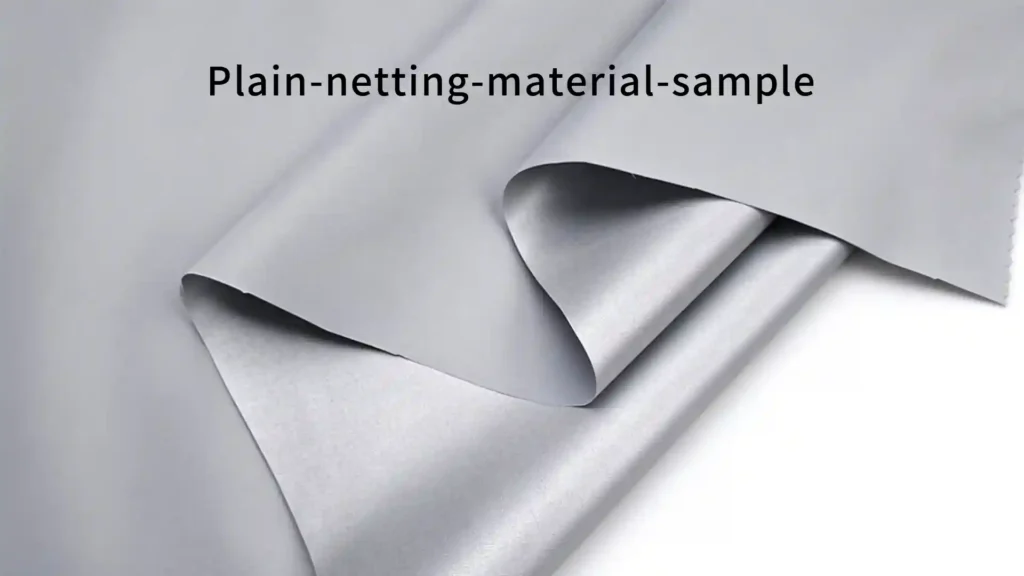
Blank camouflage netting is not one of these three printed pattern styles, and the phrase alone is not a complete material specification. It needs clarification because “blank” may refer to different stages or finishes in a buyer’s enquiry.
Before quoting, establish whether the request is for unprinted fabric or netting, a finished plain-colour net, or material supplied before certain cutting, sewing, or finishing operations.
These are possible interpretations to resolve, not interchangeable product definitions. A plain khaki net may already be dyed and finished. An unprinted material may still have a coating. A panel without edge binding is not necessarily unprinted.
Do not assume that blank camouflage netting is automatically suitable for later printing or dyeing. The fibre, coating, existing finish, and intended process need review first.
Turn “Blank” Into A Clear Order Description
Replace a general request with the details that affect production:
- Material condition: Unprinted, dyed, coated, or otherwise finished.
- Colour: An approved physical reference or defined colour requirement.
- Structure: Flat fabric, cut fabric, backed netting, or another agreed construction.
- Supply form: Roll material, unfinished panels, or finished pieces.
- Next process: Any printing, coating, cutting, or assembly planned after delivery.
- Edges and attachments: Which details are included and which remain unfinished.
For example, “plain khaki cut-fabric panels with bound edges and no backing mesh” is clearer than “blank net.” It still needs dimensions, material selection, and sample approval, but it gives the supplier a practical starting point.
Pattern, Environment, And Construction Are Separate Choices
A useful product description answers three questions: what does it look like, where will it be used, and how is it made?
The pattern styles covered above answer the first question. Terms such as woodland, desert, and snow describe an intended background or palette. Terms such as single-layer, backed, and multi-layer describe construction.
| Specification Area | Example Of Information To Provide |
|---|---|
| Pattern style | Abstract patches, realistic vegetation, pixel-style, or no printed pattern |
| Palette and background | Approved colours for the actual site or display |
| Material | Agreed fabric type and grade |
| Construction | Single cut layer, reinforcing backing, or a defined multi-layer assembly |
| Finished form | Panel dimensions, edges, attachment details, and packing |
| Required function | Visual screening, shade, decoration, privacy, or another defined use |
A solid colour belongs in this discussion as a colour and finish choice. It does not need to be forced into a printed pattern category.
For background context, the Natural History Museum explains examples of colour matching and disruptive coloration in animals. The examples help explain why background and outline matter. They are not performance tests of a manufactured net.
How To Compare A Camo Net Before Ordering
Once you have chosen a visual direction, review the complete sample against the job it must do. This applies to printed products and to any enquiry described as blank camouflage netting.
Compare Coverage And Visibility
Look through the sample from both sides under representative lighting. A net suitable as a decorative backdrop may provide less privacy than you need. A dense screen may limit the view from an observation area.
If shade is important, request an appropriate measurement for the proposed product. The pattern name does not establish a shade percentage or a cooling result.
Review Weight And Handling
Confirm the finished panel weight and packed size. Include backing mesh, edge binding, ties, and accessories in the comparison.
Fabric denier is one material descriptor, not a complete measure of durability. Check relevant fabric, seam, and connection requirements separately. Also handle the sample to assess snagging and noise if those properties matter to your application.
Specify Exposure And Any Special Finish
Tell the supplier whether the net will be used indoors, installed temporarily outdoors, or exposed for an extended period. Include expected weather and maintenance conditions.
Water resistance, flame retardancy, and UV-ageing resistance need their own specifications. The appearance of a print does not establish these properties. Thermal or radar-related claims also require separate evidence for the supplied system.
If you plan to alter an unfinished material, approve the complete processing sequence. Additional printing or coating can change the material’s appearance and other properties, so the final configuration should be reviewed.
Discussing Your Netting Project With SHIJIE
At SHIJIE, we help buyers define the material and construction as well as the appearance of a camo net. Shandong Shijie New Materials Technology Co., Ltd. manufactures camouflage textiles for visual screening, shade, decoration, and other specified applications.
Our camouflage net range includes different fabric grades and layer structures. The SHIJIE CamoNet Single-Layer page, for example, describes a cut-fabric construction without standard reinforcing backing mesh, with options for colour, dimensions, and edge finishing.
That product description should not be treated as confirmation that an unprinted substrate is available for every process. If you need blank camouflage netting, send the intended material condition and subsequent processing requirements. We can review the request and confirm a suitable supply specification where available.
Our manufacturing capabilities cover material review, cutting, sewing, and assembly routes selected for the product. Our quality control process uses relevant inspections and tests according to the approved specification.
For an enquiry, include the purpose, artwork or colour reference, dimensions, quantity, material condition, exposure, and packing needs. A representative sample then provides a shared reference for production approval.
Frequently Asked Questions
Are Woodland, Desert, And Snow The Three Main Types Of Camo?
They are common environment-based descriptions. This article uses a different grouping: traditional abstract, realistic stick-and-leaf, and digital patterns. A woodland palette can be used in more than one pattern style.
Is Blank Camouflage Netting The Same As A Solid-Colour Net?
Not necessarily. A solid-colour net may already be dyed, coated, and finished. “Blank” needs clarification before ordering. State whether you need an unprinted substrate, a plain-colour finished product, or another agreed material condition.
Can I Print A Custom Pattern On Blank Netting?
That depends on the material, finish, and intended printing process. Ask the manufacturer to review compatibility and approve a processed sample. Do not assume any unprinted net can accept any ink or treatment.
Is Digital Camouflage Always Better?
No universal advantage should be assumed from the label. Compare the proposed colours, appearance, construction, and evidence against the intended application. A pixel-style print is not a substitute for a suitable product specification.
Does A Leaf-Cut Camo Net Need A Realistic Leaf Print?
No. Physical cut-leaf construction and printed leaf imagery are separate features. Specify each one clearly when you request a sample or quotation.
Choose The Pattern And Specify The Product
Traditional abstract, realistic stick-and-leaf, and digital camouflage offer three useful ways to describe a pattern. Buyers still need to define the palette, construction, dimensions, and required function of the finished net.
For blank camouflage netting, clarify the material condition before discussing later processing. Contact SHIJIE with your project details to review printed, plain-colour, or custom material requirements and arrange an appropriate sample.