What Is The Purpose Of Camo Netting?
The main purpose of camo netting is to make people, equipment, or spaces less visually noticeable by helping them blend with their surroundings. Depending on its construction, it can also provide partial shade, reduce views into an area, or create a natural-looking backdrop.
These uses share one idea: changing what people see through or around a flexible textile screen. But they need different specifications. A garden canopy, a wildlife observation screen, and a professional camouflage system should not be chosen from appearance alone.
SHIJIE manufactures camouflage nets and related outdoor textiles for different applications. Understanding the purpose of your project helps you choose a suitable fabric, pattern, structure, and finish before ordering.
What Is Camo Netting?
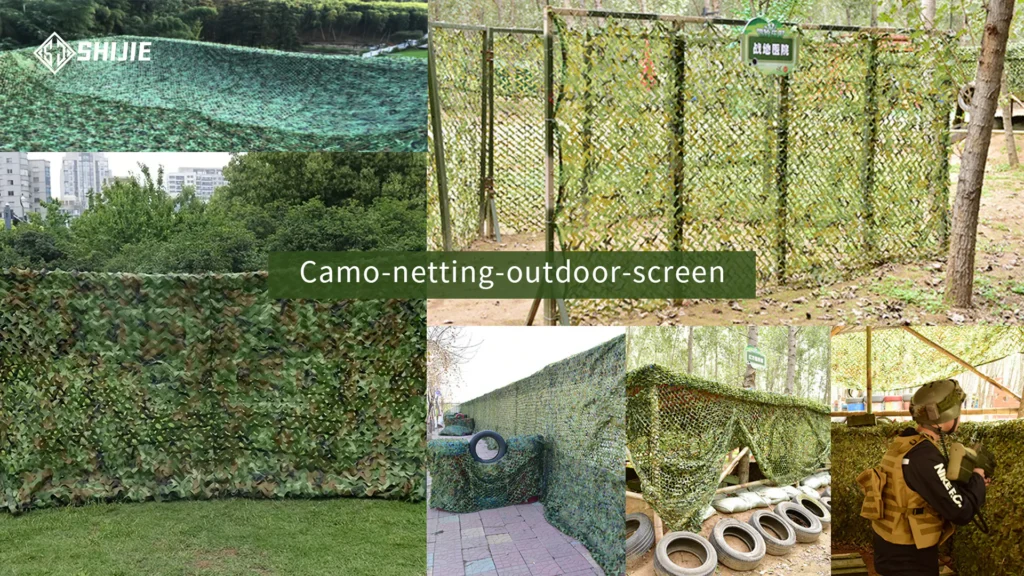
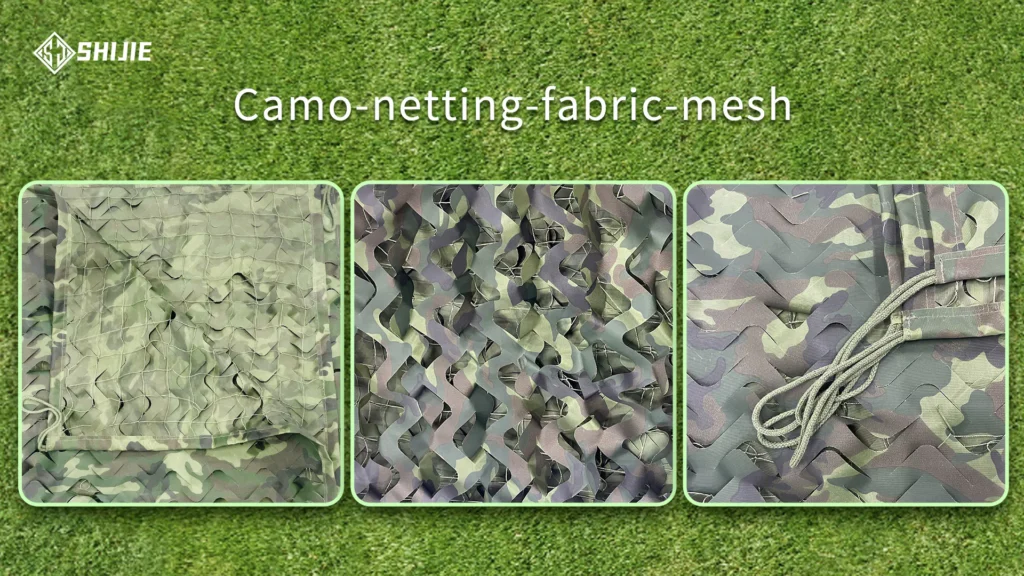
Camo netting is a flexible covering or screen made with camouflage fabric, mesh, or a combination of both. Many designs use cut fabric shapes that resemble leaves. Some have a backing mesh to support the decorative layer and help distribute loads during handling.
The colours and irregular surface help reduce the visual contrast between the covered object and its background. Instead of showing one clear outline, the net introduces patches, openings, and overlapping shapes.
Construction varies. A lightweight decorative net may use a single fabric layer. A reinforced product may combine cut fabric, backing mesh, stronger edges, and attachment points. A specialised system may include functional layers for defined performance requirements.
The word “camo” describes camouflage. It does not tell you whether a product is waterproof, flame-retardant, or suitable for sensor-related concealment. Those features need their own specifications.
What Are the Main Uses of Camo Netting?
The most common purposes are visual concealment, shade, privacy screening, and decoration. Professional camouflage products may serve additional functions when their materials and performance have been verified.
| Purpose | Typical Application | Main Feature to Check |
|---|---|---|
| Visual concealment | Wildlife observation screens and equipment screening | Suitable colours, coverage, and surface structure |
| Partial shade | Gardens, campsites, and outdoor seating | Shade performance and outdoor durability |
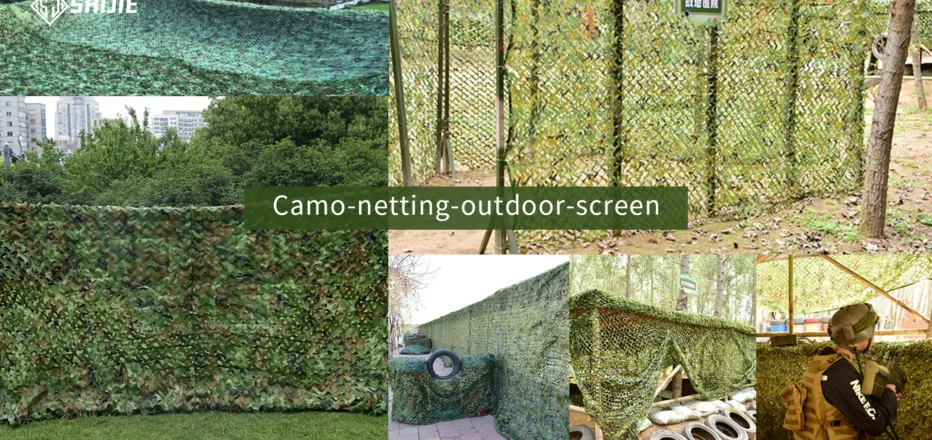
| Privacy screening | Fences, patios, and temporary partitions | Visibility through the net under actual lighting |
| Decoration | Events, displays, and film sets | Appearance, dimensions, and venue requirements |
| Professional camouflage | Specified camouflage systems | Documented performance for the required application |
This table is a starting point. A single net may support more than one use, but success in one role does not prove suitability for another.
Visual Concealment: Helping Objects Blend In
Visual concealment is the core purpose of camo netting. A solid object can stand out because its colour, surface, or outline differs from the surrounding area. A camouflage screen can make that contrast less obvious.
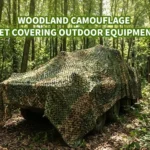
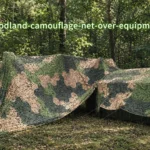
For example, an equipment enclosure beside vegetation may have straight edges and a uniform surface. A suitable net can introduce a more irregular appearance. For wildlife photography, a screen can reduce the visibility of a camera position without requiring a permanent wall.
This is a visual effect, not a guarantee that an object becomes invisible. Results depend on the background, lighting, viewing position, coverage, and condition of the net.
Colour and Texture Both Matter
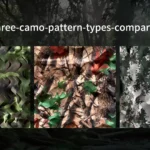
A woodland pattern may suit a green and brown setting. A lighter pattern may fit a dry landscape. A white pattern has a different purpose again. The best choice is the one that suits the actual environment.
Texture also matters. Cut fabric can create a broken surface with depth and small shadows. A flat printed sheet produces a different appearance, even when the colours are similar.
Buyers should review physical samples. A photograph on a screen may not show the real colour, gloss, opening size, or texture accurately.
Shade: Reducing Direct Sunlight
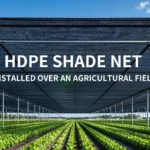
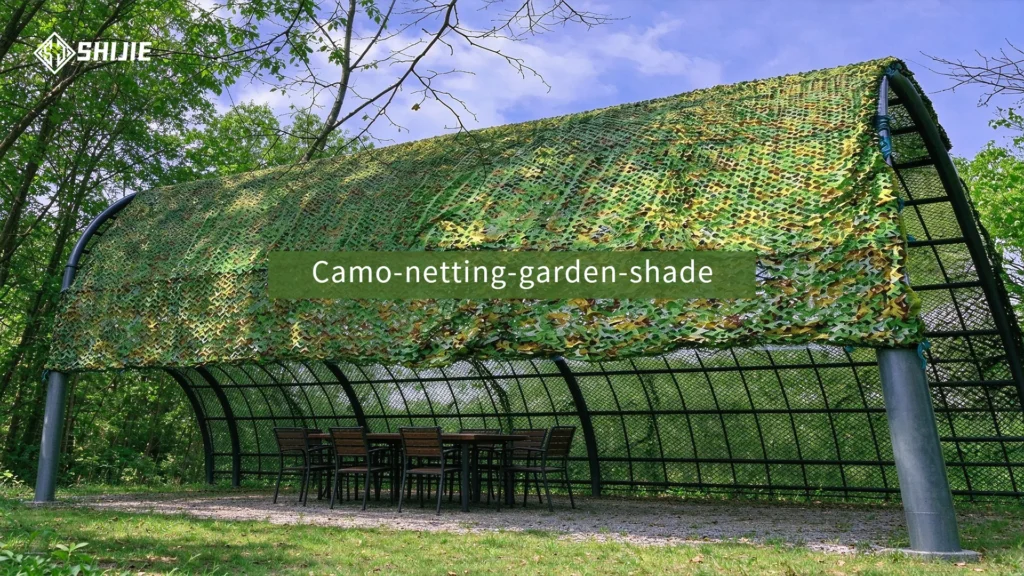
Camo netting can create partial shade above a seating area, campsite, or outdoor workspace. Its openings allow some light and air to pass through, while the fabric-covered sections interrupt direct sunlight.
This can suit projects that want a softer overhead screen rather than a fully enclosed roof. The appearance may also fit a garden or outdoor recreation setting.
However, the amount of shade varies with the pattern, fabric coverage, installation, and direction of sunlight. A net with large openings will behave differently from a denser design. There is no single shade percentage that applies to all camo netting.
Check Shade Performance Separately
If shade is your main goal, ask the supplier for the relevant measurement and test method. Do not use a product photograph as proof of light-blocking performance.
Also separate resistance to UV ageing from protection against UV passing through the net. A treatment intended to help the material withstand sunlight does not automatically establish a protective rating for people underneath.
An open net is also different from a rain cover. Even if its fabric has a water-resistant treatment, rain can pass through its openings. Choose a separate shelter or a suitable cover when keeping an area dry is part of the project.
Privacy: Making Outdoor Areas Less Exposed
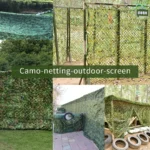
A camo privacy screen can reduce direct views into a patio, storage area, or outdoor activity space. It can also soften the appearance of a fence or temporary partition.
The important word is “reduce.” Many nets remain partly transparent. Visibility depends on how much fabric covers the surface, how close the viewer stands, and the lighting on each side.
A screen that looks private in daylight may behave differently when the area behind it is brightly lit at night. Before ordering a large quantity, test a sample in the conditions that matter to your project.
For fence applications, consider attachment points and the supporting structure as well as coverage. The net and its supports need to suit the expected exposure. A visually dense screen may also place different demands on the installation than a more open one.
If complete privacy is essential, define that requirement clearly and compare the net with products designed specifically for opaque screening.
Decoration: Creating Texture and Atmosphere
Camo netting is also used for themed events, outdoor displays, exhibition spaces, and film sets. Its irregular shape can create a woodland or outdoor atmosphere without using large amounts of natural foliage.
For these projects, appearance may be more important than concealment. Buyers may want a particular colour, hanging length, cut pattern, or degree of transparency. A lightweight design can be useful when portability and quick setup matter.
Decoration still needs a clear specification. A net used for a short indoor display has different demands from one left outside throughout a season.
Check the venue’s material requirements before choosing a product. If flame-retardant performance is required, request documentation for the supplied specification. The camouflage pattern itself provides no evidence of that property.
Professional Camouflage: A Separate Performance Requirement
Some professional systems are designed to manage more than visual appearance. Depending on the product, they may address near-infrared, thermal-infrared, or radar-related requirements. These functions involve specific materials and designs. Ordinary decorative netting should not be assumed to provide them.
For such a purchase, define the required performance, test conditions, and acceptance criteria before production. A general label such as “military style” or “multispectral” is not enough to compare products reliably.
The supplied SHIJIE product handbook describes specialised camouflage constructions. Buyers should confirm which current model and configuration corresponds to their requirements, and request applicable documentation. Specifications for one system should not be applied to every net in a manufacturer’s range.
How to Choose Camo Netting for Its Intended Purpose
Start with the job the net must do. Then decide which features are essential and which are optional. This makes quotations easier to compare and helps avoid paying for features that do not support the application.
1. Define the Application and Environment
Tell the manufacturer whether the net will be used for concealment, shade, privacy, decoration, or a defined professional requirement. Include whether it will be indoors, outdoors occasionally, or exposed outdoors for extended periods.
Describe the background, available supports, expected handling, and storage conditions. These details give the supplier a better basis for proposing a construction.
2. Compare Fabric and Construction
Fabric grade is useful information, but it is only one part of the finished product. Compare weight, tear performance where relevant, backing mesh, stitching, edge reinforcement, and attachment details.
A lighter net may be easier to transport. A reinforced construction may better suit repeated handling. Neither choice is automatically best for every project.
SHIJIE lists lightweight, 3D, reinforced, and multi-band product options. Use the SHIJIE manufacturing capabilities page to understand how cutting, sewing, backing assembly, and multi-layer construction relate to different products.
3. Specify Dimensions and Attachment Details
Measure the installation area and confirm the finished dimensions. Include edge finishing, tie positions, connection requirements, and any restrictions on the supporting frame.
For repeat orders, keep these details in the approved specification. Two nets with the same advertised size may still differ in how they attach and how much usable coverage they provide.
4. Request Evidence for Functional Claims
UV resistance, water resistance, flame retardancy, and sensor-related performance are separate properties. Request information that applies to the exact construction you intend to buy.
Outdoor exposure deserves particular attention. NIST research on PET under UV radiation found that UV exposure, humidity, and temperature affected chemical degradation under the study’s conditions. The research concerns PET material; it does not establish the service life of a finished camouflage net.
The practical buying lesson is to ask how outdoor durability is assessed, rather than relying on an unspecified claim that the net “lasts for years.”
How SHIJIE Supports Different Camo Netting Applications
Shandong Shijie New Materials Technology Co., Ltd. manufactures camouflage nets, shade and privacy nets, and other outdoor textile products. Its production approach combines product development, textile processing, finishing, printing, assembly, and quality control.
SHIJIE supports customised materials, patterns, dimensions, structures, and functional treatments. This allows buyers to discuss the purpose of a project before selecting the final specification.
For example, a garden screening order may focus on colour, coverage, and attachment details. A portable observation screen may place more emphasis on weight and packing. A multi-layer camouflage project requires a different material and assembly review.
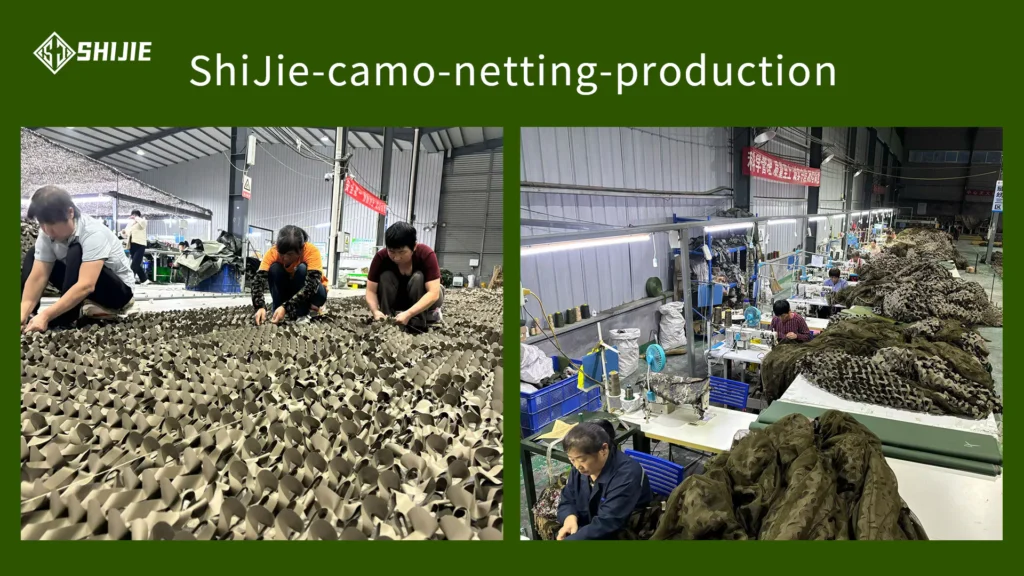
The company’s manufacturing information describes material review, fabric spreading, pattern cutting, sewing, and inspection. Multi-layer products may also involve backing mesh and computer-controlled quilting. The production route depends on the product being ordered.
According to its quality control information, SHIJIE uses specification-based inspection and testing for applicable product requirements. Buyers should agree on the relevant checks and acceptance criteria before placing an order. Available equipment does not mean every product has undergone every test.
For a quotation, provide the intended use, installation dimensions, colour preference, quantity, exposure conditions, and required performance. Ask for a sample that represents the proposed production specification.
Frequently Asked Questions About Camo Netting
What Is the Main Purpose of Camo Netting?
Its main purpose is visual concealment: helping objects or spaces blend with their surroundings. Depending on its construction, it can also provide partial shade, privacy screening, or decoration.
Can Camo Netting Be Used in a Garden?
Yes. It can serve as a garden screen, a decorative feature, or a partial shade canopy. Choose a product suited to outdoor exposure and check its coverage, attachments, and maintenance requirements.
Does Camo Netting Give Complete Privacy?
Not necessarily. Most designs contain openings. Test the proposed product under the actual viewing and lighting conditions, especially if privacy after dark matters.
Is Camo Netting Waterproof?
Open netting does not form a continuous waterproof roof. A water-resistant fabric treatment does not close the openings. Use a suitable rain cover when water protection is required.
Can SHIJIE Customise Camo Netting?
SHIJIE supports customised patterns, dimensions, constructions, and specified functional treatments. Share your application and request confirmation of available options, samples, and applicable testing before ordering.
Choose Camo Netting Around the Job It Must Do
Camo netting serves several purposes, but the right product starts with a clear requirement. Decide whether your priority is visual concealment, shade, privacy, decoration, or documented professional performance.
Then compare the construction and evidence that support that purpose. Colour and appearance matter, but so do coverage, stitching, attachments, exposure, and handling.
To discuss a customised solution, share your project requirements with SHIJIE. A clear specification and representative sample give you a practical basis for choosing camo netting that fits its intended use.