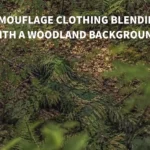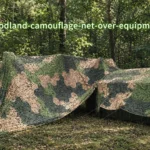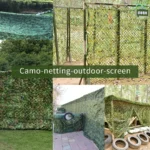
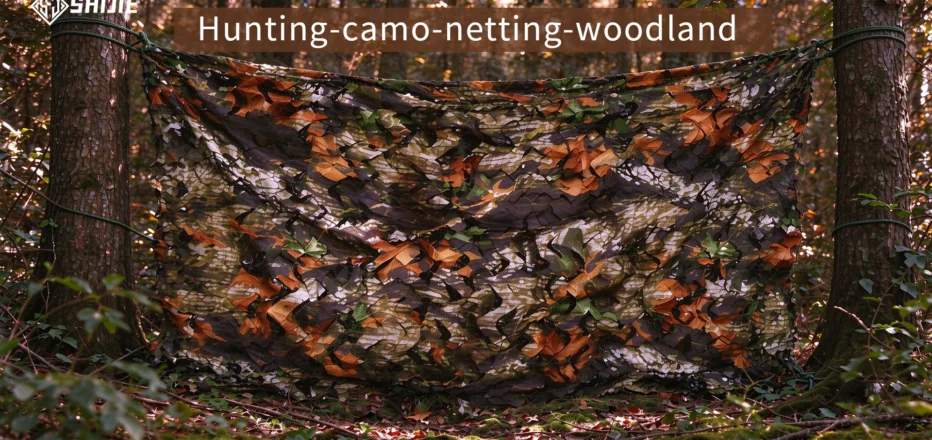
The best hunting camo netting is the one that matches your surroundings, screens your outline, stays quiet during use, and gives you the visibility your blind needs. For a portable screen, start by comparing lightweight 3D leaf netting. For observation windows, fine camouflage mesh is often a better starting point. For a larger blind used repeatedly, consider reinforced construction and stronger attachment details.
These are recommendations by use, not a universal product ranking. A net that works well around a fixed blind may be too bulky to carry. A mesh that makes observation easier may provide too little coverage as the main blind wall.
This guide explains how to compare hunting camo netting and which SHIJIE camouflage net options to discuss when you need custom sizes, colours, or construction.
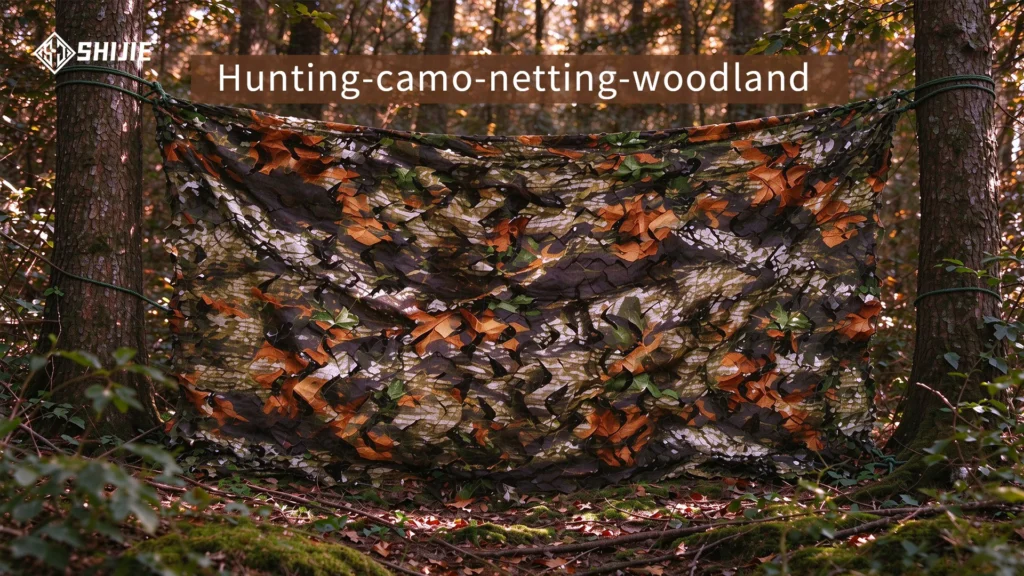
What Makes Camo Netting Suitable For Hunting?
Hunting netting acts as a visual screen. Its colours, pattern, openings, and surface texture affect how the covered area looks against the surrounding background.
Good selection starts with the setting. Green foliage, dry reeds, fallen leaves, and pale winter backgrounds call for different colours. The same pattern can look appropriate in one place and conspicuous in another.
The practical details matter just as much. A screen must fit the blind, attach securely, and pack into the space available. It should allow comfortable observation without unwanted gaps or interference with equipment.
Quiet handling is another important buying criterion. Do not assume every polyester net, leaf-cut product, or camouflage mesh behaves the same way. Fabric finish, stiffness, loose edges, and attachment hardware can all affect the sounds you hear when handling a sample.
The strongest purchase decision combines suitable appearance with a practical trial. A product photograph alone cannot answer all of these questions.
Which Type Of Hunting Camo Netting Should You Choose?
There are several useful constructions. Their strengths overlap, but each has a different starting purpose.
| Type | Recommended Starting Use | Main Advantage To Evaluate | Main Trade-Off To Check |
|---|---|---|---|
| Fine camouflage mesh | Observation openings and light screening | Visibility through the material | Coverage may be too light for a main wall |
| Lightweight 3D leaf netting | Portable screens and blind exterior texture | Irregular surface and packability | Noise, snagging, and actual screening level |
| Reinforced 3D netting | Larger screens and repeated setup | Backing support and attachment construction | Finished weight and packed bulk |
| Burlap blind material | Projects that prefer a coarse fabric texture | Surface appearance and handling feel | Wet weight, drying, fraying, and storage care |
| Custom panels | Unusual blind sizes or commercial programmes | Dimensions and details specified for the job | Sample approval and production requirements |
This comparison is a selection framework. It does not mean that every product in a category meets the same durability, noise, or visibility standard.
Fine Mesh For Observation Openings
Fine mesh is worth evaluating when seeing through the screen is the priority. Allen Company’s published ground-blind netting information, for example, describes fine mesh intended for viewing openings, with airflow and a finish intended to reduce glare. These are manufacturer descriptions rather than independent comparative test results.
This illustrates an important distinction: material designed for an observation opening serves a different role from the net used to cover a large exterior surface.
Check the view with your own eyes and with any observation equipment you plan to use. Lighting and viewing distance can change how easy the mesh is to see through. Do not assume all ordinary mesh has the same properties as a purpose-built one-way viewing system.
3D Leaf Netting For Surface Texture
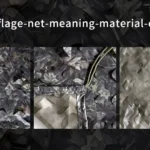
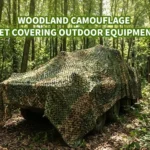
Cut-leaf netting creates an irregular surface rather than a continuous flat sheet. It is a reasonable starting point when you want texture around a portable screen or a blind exterior.
Compare how the leaf shapes hang, how much open space remains, and whether the surface becomes noisy when folded or moved. A dense-looking photograph can hide large openings or show the product against a background that makes it appear more opaque than it is.
Reinforced Netting For Larger Panels
A backing mesh can support the cut fabric and provide structure for handling larger areas. Edge reinforcement and attachment points are particularly useful features to compare when panels will be assembled and removed repeatedly.
Reinforcement also adds material. Ask for the finished panel weight and packed dimensions instead of judging portability from the fabric grade alone.
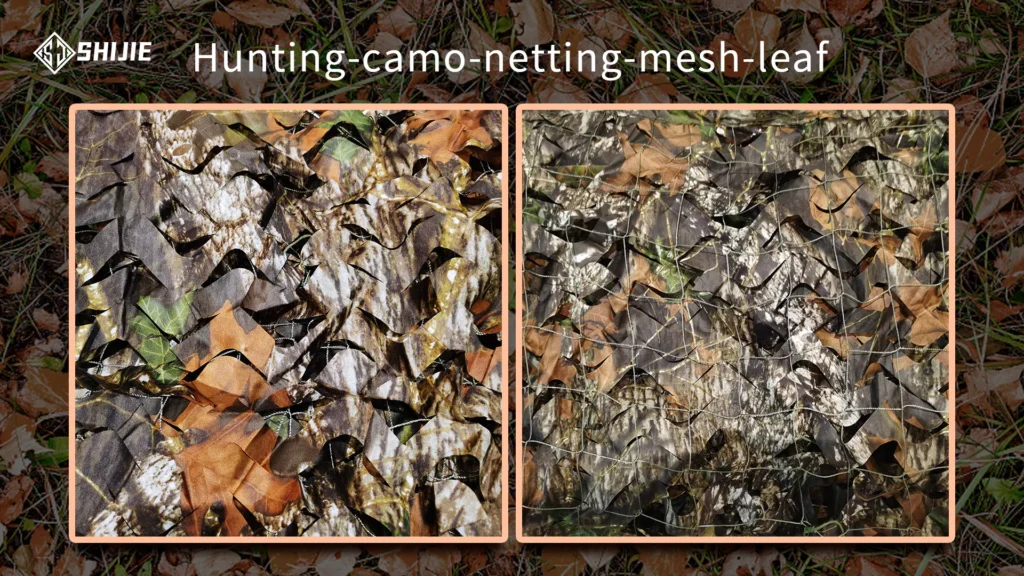
Match The Pattern To The Actual Hunting Background
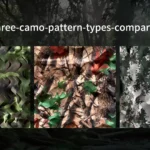
Choose colours by looking at the place where the net will be used. Consider the season as well as the general terrain name.
A woodland area may contain mostly green foliage in one season and mostly grey trunks and brown leaves in another. A wetland background may be dominated by tan reeds rather than dark green plants. A pale pattern can be appropriate against snow but stand out against exposed soil.
Request a physical colour sample when possible. Compare it outdoors, because indoor lighting and screen settings can change the appearance of a printed pattern.
Also inspect both sides. If the reverse face is bright, glossy, or a noticeably different colour, folds and exposed edges may affect the appearance of the installed screen.
Custom colour matching can be useful for repeat projects, but confirm what the manufacturer will supply. A custom palette is a production option, not proof that a net will perform equally well in every background.
Choose Coverage Without Losing Useful Visibility
More coverage is not automatically better. Dense netting may reduce views into a blind, but it can also make observation harder. Open netting may preserve a wider view while leaving more of the interior visible.
Decide which parts of the blind need screening and which need clear observation. You may find that different materials work better in different areas.
Evaluate the net from both sides. Look through it from the intended seated or standing position, then check its appearance from outside under different lighting. Pay attention to openings, silhouettes, and reflections.
Do not treat a visible-light shading percentage as a direct measure of hunting concealment. Shading describes a particular optical measurement. It does not capture all viewing angles, background conditions, or animal responses.
Likewise, do not assume generic netting is suitable to shoot through. Keep intended shooting openings clear unless the complete system has explicit, applicable manufacturer instructions for that use.
Check Noise Before Buying A Full Panel
A quiet sample can be more valuable than an impressive list of material specifications. Noise is a practical property that should be checked on the proposed finished product.
Fold and unfold the sample. Handle the edges and attachment ties. Check whether cut sections rub together, whether the backing catches on clothing, and whether loose fittings click against each other.
Ask how the material behaves after exposure to moisture or colder temperatures. If those conditions matter to you, include them in your sample evaluation rather than relying on an unqualified “silent” claim.
Public hunting-blind product descriptions often emphasise quiet access and adjustment. That shows why noise belongs in a buying checklist. It does not establish that one particular net is quieter than all others.
For SHIJIE products, request a sample of the intended fabric, finish, backing, and edge construction. The available product information does not establish a comparative hunting-noise rating.
Understand Weight, Strength, And Outdoor Exposure
Portable hunting camo netting should be assessed as a complete item. The surface fabric, mesh, edge binding, ties, and carry bag all contribute to what you must transport.
Denier describes yarn linear density. It can help identify a fabric specification, but it does not by itself prove the finished net’s tear resistance, noise level, or service life. Weave, coating, stitching, and construction also matter.
For durability, ask which measurements apply to the fabric and which apply to the assembled net. A strong mesh cord does not automatically establish the strength of the connection between the mesh and the decorative layer.
Outdoor exposure is another separate consideration. NIST research on PET degradation under UV radiation found that UV exposure, humidity, and temperature affected chemical degradation under the study’s conditions. This material research does not establish the lifespan of a finished hunting net.
For your purchase, request a relevant outdoor specification and care guidance. Occasional use with indoor storage is different from leaving a screen exposed for an entire season.
SHIJIE Camouflage Net Options To Evaluate
Shandong Shijie New Materials Technology Co., Ltd. offers several camouflage net constructions that buyers can evaluate for custom screening projects. Its published product pages describe general visual screening and outdoor applications; they do not establish that these models are independently proven hunting category winners.
SHIJIE CamoNet Lite 150D: A Lightweight Starting Point
The SHIJIE CamoNet Lite 150D combines a cut-leaf polyester surface with a nylon backing mesh. The product information describes standard and custom dimensions and a lightweight construction.
This makes it a candidate to sample when portability and a textured screen are priorities. Confirm the finished size, packed bulk, noise, and visibility before choosing it for a hunting blind.
SHIJIE CamoNet 3D 210D: A Different Layer Structure
The SHIJIE CamoNet 3D 210D uses two printed polyester surface layers with an internal reinforcing grid. Its page describes custom colours, sizes, and panel connections.
Consider this construction when a more substantial panel is relevant to the project. Compare its actual finished weight and visibility with the lighter option. A higher fabric grade does not automatically make it the better portable hunting choice.
SHIJIE CamoNet Pro 420D: A Heavier Surface Option
The SHIJIE CamoNet Pro 420D combines a heavier cut fabric face with a reinforced backing grid. Its listed applications include outdoor screening and customised enclosures.
This is an option to discuss for larger or repeatedly handled panels. Hunting suitability still depends on the sample’s weight, noise, appearance, and installation details. Its general outdoor specification should not be presented as a hunting field-test result.

A Simple Sample Checklist Before You Order
Use the same checklist for each candidate. That makes comparisons clearer than choosing from different suppliers’ marketing language.
- Background match: Compare the real colours and both faces in the intended setting.
- Coverage: Check what can be seen through the installed sample from inside and outside.
- Noise: Handle, fold, and lightly move the material, including ties and fittings.
- Portability: Confirm finished weight, packing size, and ease of repacking.
- Construction: Inspect edges, seams, mesh connections, and attachment points.
- Care: Obtain cleaning, drying, storage, and repair instructions.
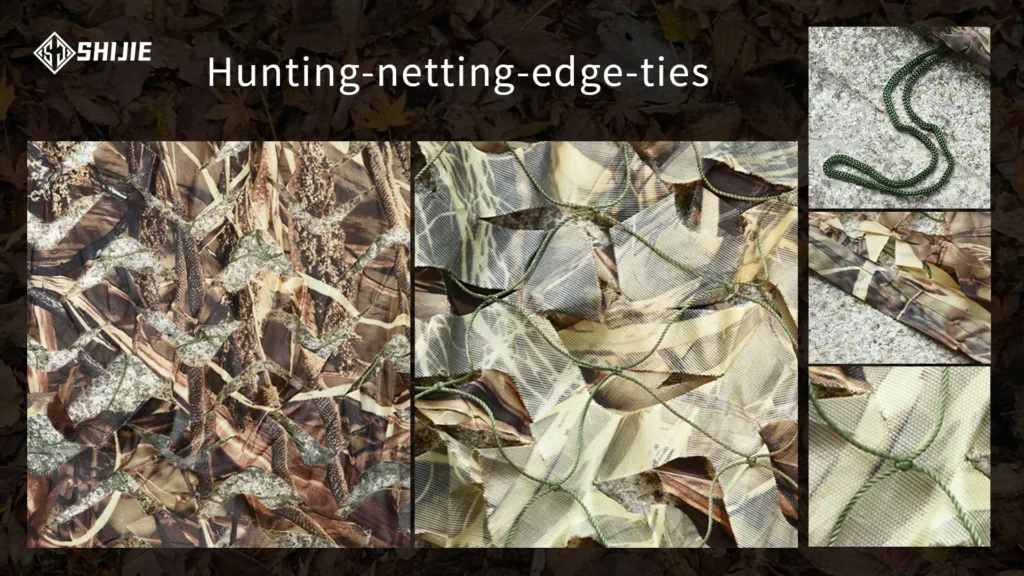
For bulk buying, approve a representative finished sample. A small fabric swatch is useful for colour and feel, but it cannot show how a large panel hangs or how its complete edges are assembled.
Ask SHIJIE to record the agreed dimensions, colours, layer structure, attachment details, packing, and acceptance requirements. Its manufacturing capabilities and quality control information provide background for discussing the production specification.
Frequently Asked Questions About Hunting Camo Netting
What Is The Best Hunting Camo Netting For A Portable Blind?
Start by comparing lightweight cut-leaf netting with suitable camouflage mesh. Choose based on the coverage you need, the noise of the finished product, and the weight and bulk you can carry. Check samples before committing.
Is 3D Netting Better Than Flat Mesh?
They serve different purposes. A 3D surface provides irregular texture. Fine mesh can be useful where visibility through a screen is the priority. The best choice depends on where the material sits in the blind.
Is 420D Always Better Than 150D For Hunting?
No. Denier is one material descriptor. Compare the complete construction, finished weight, noise, and relevant strength information. A lighter net may fit a mobile setup better, while a more substantial panel may suit another project.
Can Hunting Camo Netting Keep Rain Out?
Open netting is not a continuous waterproof roof. Water-resistant fabric does not close the gaps between cut sections. Use an appropriate separate shelter when rain protection is required.
Does Camo Netting Control Scent?
Do not assume that it does. The visual camouflage products discussed here have not been established as scent-control systems. Ask for specific evidence if a supplier makes that additional claim.
Can SHIJIE Supply Custom Hunting Screens?
SHIJIE supports custom camouflage net dimensions, colours, and construction details. Describe the intended hunting-screen application and request a representative sample. Confirm that the proposed configuration meets your requirements before placing a production order.
Choose The Best Netting For Your Own Setup
The best hunting camo netting balances background matching, screening, visibility, quiet handling, and practical transport. Begin with the type of screen you need, then compare finished samples.
For custom projects, SHIJIE’s lightweight and reinforced camouflage net constructions provide options to discuss. Send the required dimensions, background colours, quantity, exposure conditions, and packing needs to SHIJIE. A clear specification gives you a stronger basis for selecting the right net than a general claim that one product is best for every hunt.