info@sjxincai.com

+86 199 5434 1252

+86 155 5335 8339

    • en_USEN
      • zh_CNZH
      • es_ESES
      • arAR
      • pt_BRPT
      • ru_RURU
      • de_DEDE
      • fr_FRFR
      • id_IDID
      • tr_TRTR
      • ko_KRKO
      • jaJA
      • en_GBEN_GB
    Shijie New Materials
    • Contact Ussales@sjxincai.com
    • Request a QuoteGet a fast quotation
    MENU
    • Home
    • Products
      • Concealment & Camouflage Nets
        • Shijie CamoNet Single-Layer
        • Shijie CamoNet Lite 150D
        • Shijie CamoNet 3D 150D
        • Shijie CamoNet 3D 210D
        • Shijie CamoNet 3D 420D
        • Shijie CamoNet Dual 420D
        • Shijie CamoNet Pro 420D
        • Shijie CamoNet Multi-Band Y / W / G
        • Shijie Anti-Drone Net
    • Project
    • Blog
    • About Us
      • Manufacturing Capabilities
      • Quality Control
      • Order Sample
    • Contact Us

    multispectral camouflage net
    Tag Archive

    Camouflage net sample beside a product specification checklist

    What Are The Key Standards For Military Camouflage Nets?

    The key standards for Military Camouflage Nets cover the applicable product specification, visual appearance, spectral performance where required, flame behaviour, mechanical strength, environmental durability, and inspection records. A military-style pattern alone does not establish compliance.

    The first buying decision is which requirements govern the order. Different programmes can specify different backgrounds, radar behaviour, environmental conditions, and acceptance tests. There is no single worldwide “military grade” label that replaces those details.

    This guide explains what buyers should check, how test methods differ from pass limits, and how to prepare a clear enquiry for SHIJIE.
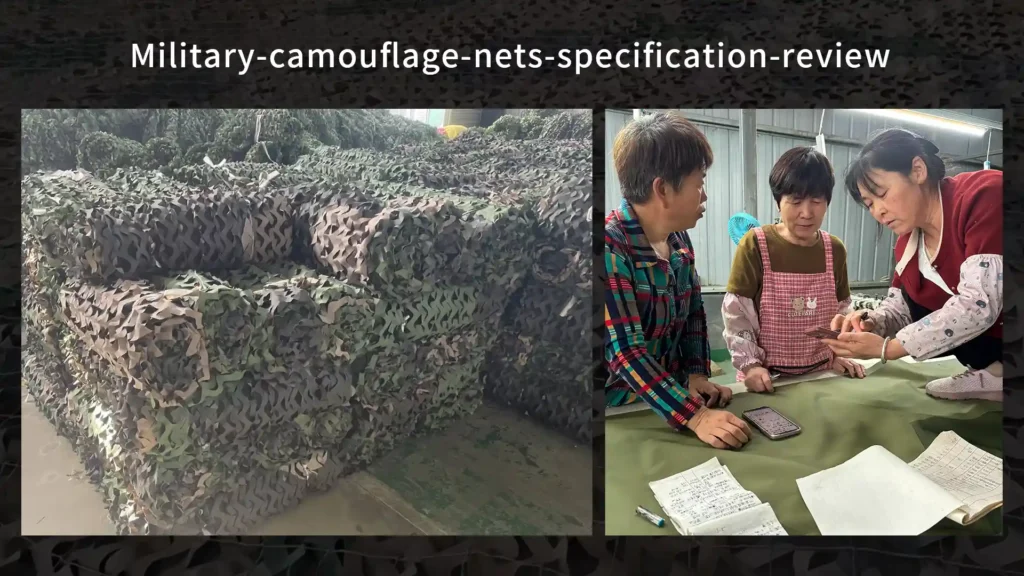
    Camouflage net sample beside a product specification checklist

    1. Confirm The Governing Specification And Edition

    A standards review starts with the complete document reference: designation, title, revision, amendments, and applicable product type. Also confirm the contract’s rules for resolving differences between documents.

    Public catalogues can contain older references. As checked on October 29, 2026, the US Defense Logistics Agency’s official records show the following:

    ReferenceOfficial Public RecordWhat Buyers Should Confirm
    MIL-PRF-53134ULCANS performance specification; listed as Inactive, with an inactivation notice dated May 15, 2025Whether an existing contract explicitly invokes it
    MIL-PRF-32575ULCANS Increment I; listed as Active, Revision D dated October 17, 2024Applicable configuration and authorised access to the required document
    Contract-specific requirementsRequirements selected for the actual procurementProduct type, methods, limits, conditioning, and required evidence

    The official records distinguish the inactive MIL-PRF-53134 from the active MIL-PRF-32575 specification.

    The MIL-PRF-32575 catalogue record identifies both radar-scattering and radar-transparent variants. It also marks the document as controlled distribution. The public record establishes its title, status, and general scope; it does not provide a basis for inventing detailed acceptance limits.

    The MIL-PRF-53134 record should likewise be read with its status notice. Do not present it as a universally current requirement for new orders.

    For a Chinese GJB-based enquiry, obtain the full referenced documents and confirm their editions and applicability. A standard number copied into a commercial summary is not enough to establish the governing requirements.

    2. Define Visual Colour And Pattern Requirements

    Visual requirements commonly concern the approved colours, their distribution, pattern layout, and surface appearance. The background and intended configuration must be clear before colour can be accepted.

    Use a physical reference sample where possible. Product photographs and screen images can assist discussion, but they should not be the only production colour standard.

    Specify The Colour-Difference Method

    A requirement such as “colour difference no greater than 3” is incomplete without its measurement conditions. Confirm the colour-difference formula, reference sample, instrument geometry, illuminant, observer, and sample preparation.

    For example, ΔE*ab ≤3 can be a selected purchasing requirement. It is not a universal limit for every camouflage colour, material, or military programme. Do not treat different colour-difference formulas as interchangeable.

    Check Pattern And Surface Separately

    Colour agreement does not establish correct pattern placement or low gloss. Inspect the print layout, reverse face, edges, and visible accessories as relevant to the order.

    For basic construction terminology, our explanation of camouflage net structure and uses helps distinguish the surface fabric, supporting mesh, and finishing details.
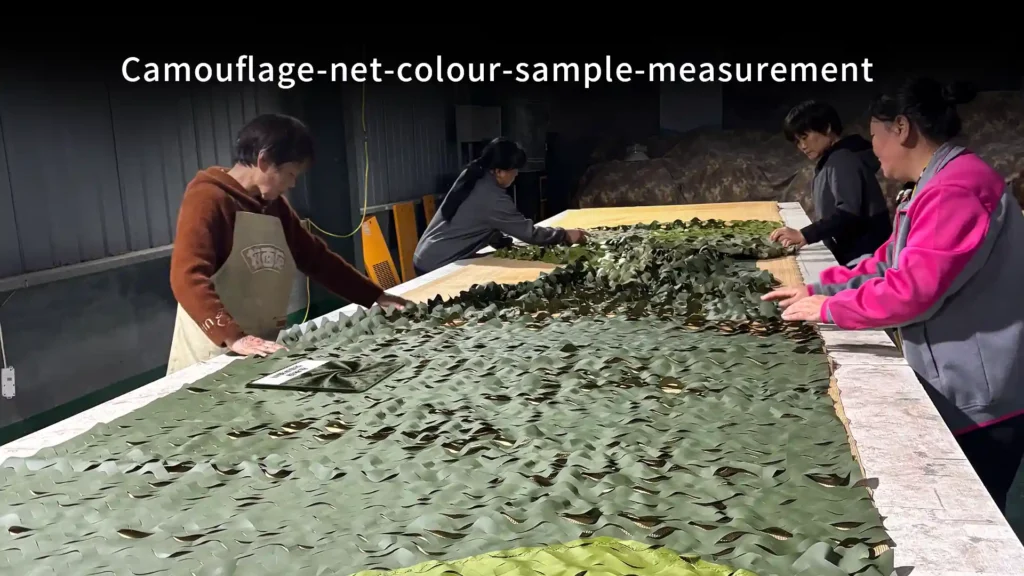
    Camouflage fabric compared with an approved colour reference

    3. Treat Near-Infrared Performance As A Separate Requirement

    Near-infrared, or NIR, performance cannot be confirmed by looking at a green fabric in daylight. Visual appearance and spectral reflectance are different measurements.

    For Military Camouflage Nets with NIR requirements, request the specified reflectance limits across the relevant wavelength range. The report should identify the colour areas tested, measurement method, sample condition, and applicable acceptance criteria.

    A single reflectance percentage is not a complete spectral specification. “Higher than 50%” does not establish suitability for every background or wavelength. A measured curve must be compared with the required limits, which may differ between colours.

    Also distinguish reflectance from emissivity. Reflectance concerns incident radiation reflected by a surface. Emissivity concerns thermal emission relative to a reference. The terms should not be substituted in a requirement or test report.

    If a wavelength interval spans visible light and NIR, identify that correctly. Avoid calling the entire interval exclusively near-infrared.

    4. Define Thermal-Infrared Test Conditions

    Thermal-infrared performance is another separate question. An NIR result does not demonstrate a thermal-camera result.

    A procurement may define a thermal-imaging band and a permitted apparent temperature difference from a reference background. Those values only become meaningful with a complete test procedure.

    For example, a requirement expressed as “within ±4°C” needs a defined comparison. Buyers should confirm the tested assembly, background, environmental conditions, instrument settings, measurement interval, and evaluation method.

    Distinguish apparent radiometric temperature from directly measured physical temperature. A thermal image is not automatically a measurement of the surface’s true contact temperature.

    Request reports for the supplied configuration. Results from one fabric layer, a different support arrangement, or another product should not automatically be applied to the complete net being purchased.

    5. State The Required Radar Behaviour Precisely

    “Radar camouflage” is too broad to define an order. The official ULCANS Increment I scope includes radar-scattering and radar-transparent variants, so buyers must identify which behaviour the application requires.

    Reports should state the applicable frequency range, measured quantity, sample configuration, and test conditions. A marketing label such as “multi-band” does not replace those details.

    Be careful when comparing percentages and decibels. A transmission percentage and an attenuation figure cannot be compared reliably unless the measurement definitions and calculation convention are known.

    Transmission through a material is also a different quantity from a complete object’s radar response. A material result should not be presented as an identical reduction for every covered object.

    SHIJIE lists the CamoNet Multi-Band Y / W / G for project-specific multispectral enquiries. Its product information states that radar attenuation values must be confirmed according to the selected model, specification, and test report.

    6. Separate Flame Test Methods From Pass Limits

    Flame behaviour should be defined by a test method and acceptance criteria, not simply the words “fire-resistant.”

    ASTM D6413/D6413M, for example, is a vertical textile flame test that measures afterflame time, afterglow time, and char length. Naming this method does not itself establish a particular military pass limit.

    If an order requires afterflame time of no more than five seconds, write that limit into the specification together with the agreed procedure and other required results. A report showing a different limit does not prove the stricter requirement has been met.

    Confirm whether results apply to the finished coating and construction. Include any required conditioning, cleaning, or ageing before testing. A treatment description alone is not equivalent to a report for the supplied material.

    7. Specify Colourfastness And Environmental Durability

    Matching an approved colour when new is different from retaining it after exposure. Both can matter, and they need separate checks.

    Two examples of relevant textile methods are:

    • ISO 105-B02:2014: Colourfastness to artificial light using a xenon arc source.
    • ISO 105-X12:2016: Colourfastness to rubbing, with dry and wet tests available.

    The official ISO light-fastness description and rubbing-fastness description explain their respective scopes. Neither method is a complete military-net qualification by itself.

    When a supplier states “Grade 4,” ask which test and rating system produced that result. A light-fastness grade and a rubbing-fastness grade describe different evaluations.

    For environmental durability, define the exposures relevant to the project. These may include temperature, humidity, sunlight, rain, fungal growth, salt exposure, or fluid contact. Also define what must remain acceptable after exposure.

    A fungus-resistance result is not proof of corrosion resistance. Colour retention is not proof of retained strength. An accelerated exposure duration is not automatically equivalent to a stated number of outdoor service years.

    8. Check Mechanical Strength And Finished Construction

    Military Camouflage Nets must be assessed as assemblies, not only as fabric swatches. The relevant mechanical checks may cover surface material, supporting mesh, seams, decorative attachments, edge ropes, and connectors.

    Each result should identify the component, method, units, test direction, and sample condition. Do not compare fabric tear strength directly with rope breaking force or mesh bursting strength.

    Denier describes yarn linear density. It is useful material information, but it does not establish the strength or qualification of the complete system.

    For example, a reinforced outdoor product such as SHIJIE CamoNet Pro 420D has its own defined construction. Its fabric grade should not be used as evidence that it meets an unrelated military specification.

    Finished inspection should also cover dimensions, edge work, attachment locations, appearance, and packing. Where reuse or repairability is required, define the evaluation and allowable condition after the prescribed use cycles.
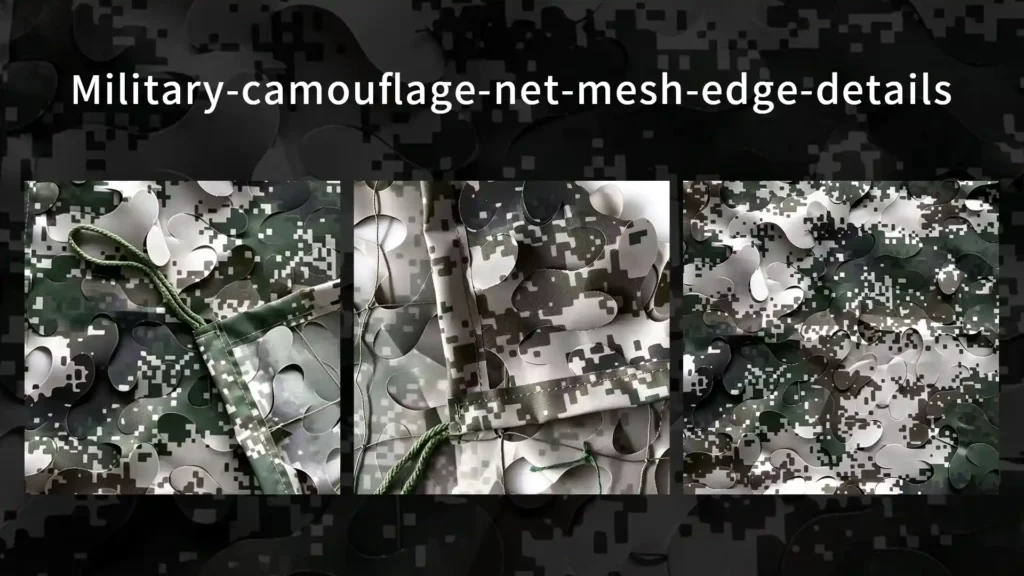
    Camouflage net backing mesh, edge stitching, and attachment ties

    What Documents Should A Buyer Request?

    Create a compliance matrix before comparing quotations. It connects each requirement to its evidence and makes gaps easier to identify.

    Requirement AreaInformation To AgreeEvidence To Review
    Governing specificationDesignation, edition, amendments, and product typeControlled requirements list
    Visual appearanceColour reference, pattern, gloss, and tolerancesApproved sample and applicable measurements
    Spectral functionsRequired bands, measured quantities, and limitsReports for the specified configuration
    Flame behaviourMethod, conditioning, and acceptance limitsResults for all required flame-test measures
    DurabilityExposure conditions and retained propertiesEnvironmental and colourfastness reports
    Mechanical performanceComponent, method, direction, and limitTraceable strength-test results
    Finished deliveryDimensions, accessories, identification, and packingFinal inspection and release records

    Check the sample identity, report date, laboratory, methods, and result pages. Confirm that the tested material and finish match the quotation. Where accredited testing is required, check that the laboratory’s relevant scope covers the requested activity.

    Testing, certification, and production inspection are different forms of evidence. Ask what an offered certificate actually covers rather than accepting the word “certified” on its own.

    How SHIJIE Supports A Specification-Based Enquiry

    At SHIJIE, we start with the buyer’s application and documented requirements. Shandong Shijie New Materials Technology Co., Ltd. supplies camouflage textiles with different materials, structures, colours, dimensions, and specified finishing options.

    Our camouflage net range includes visual-screening products and specialised multi-band configurations. Selection begins by identifying which functions the project requires and which configuration will be evaluated.

    Send the governing specification, required tests, panel dimensions, quantity, background, exposure conditions, and delivery destination. We can review the proposed construction and discuss the sample and evidence needed before production approval.

    No general catalogue description should be read as blanket certification to every military standard. Compliance must be assessed against the actual order, product configuration, and supporting records.

    For broader purchasing preparation, see our guide to choosing and using camouflage netting. A clear enquiry gives both buyer and manufacturer a practical basis for identifying suitable options.
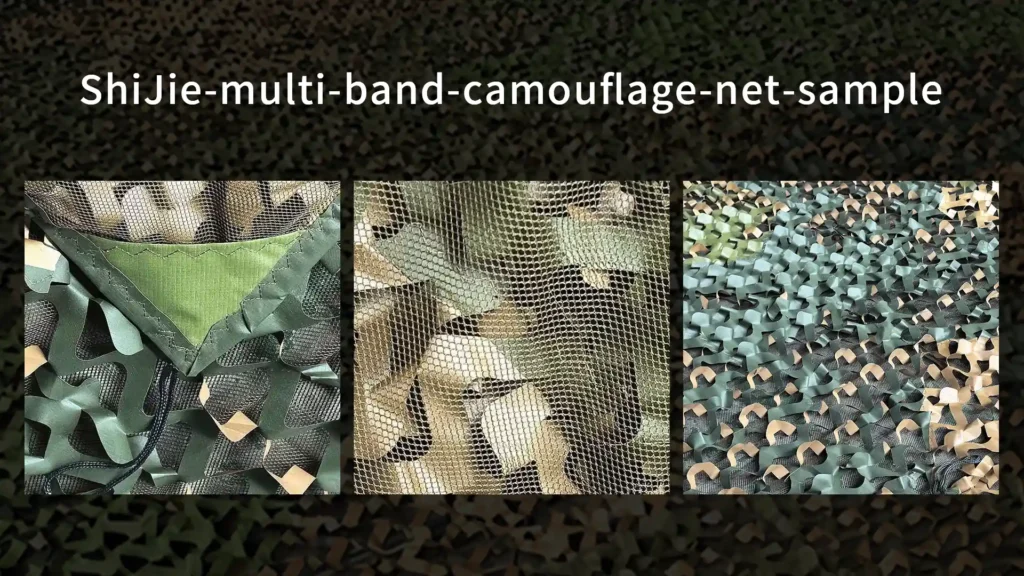
    SHIJIE multi-band camouflage net showing its layered construction

    Frequently Asked Questions

    Is There One International Standard For Military Camouflage Nets?

    No single standard governs every military programme. The applicable requirements depend on the buyer, product type, intended function, and contract. Confirm the exact documents and editions before evaluating compliance.

    Does NIR Performance Prove Thermal Camouflage?

    No. They concern different spectral regions and measurements. Specify and verify each required function separately.

    Does A Five-Second Afterflame Result Prove Full Compliance?

    No. It establishes one result under the stated test conditions. Full acceptance may require other flame measures, spectral tests, strength checks, durability tests, and documentation.

    Is MIL-PRF-53134 Currently Active?

    The official DLA record lists it as Inactive, with a notice dated May 15, 2025. Confirm whether a particular contract invokes that document rather than assuming it is the current default.

    Can SHIJIE Review A Buyer-Supplied Military Specification?

    Yes. Send the applicable requirements and intended product configuration for review. Available production options and the required test evidence should be confirmed for that specific enquiry.

    Define The Requirement Before Comparing The Net

    The key to purchasing Military Camouflage Nets is a traceable specification. Confirm the governing documents, identify the required functions, and connect every acceptance limit with a suitable method and report.

    Then evaluate the finished product and production records against that specification. Learn more about SHIJIE and send your project requirements to begin a focused technical discussion.
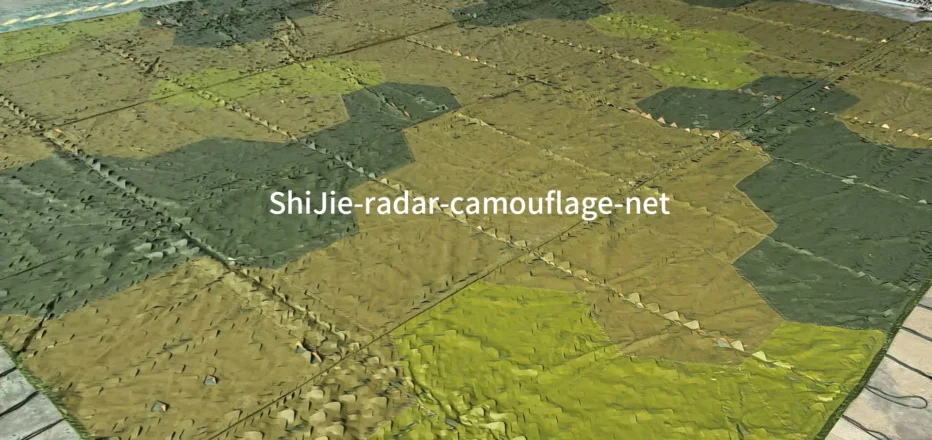
    November 7, 2026 Comments Off on What Are The Key Standards For Military Camouflage Nets? Military Camouflage Nets

    Read more

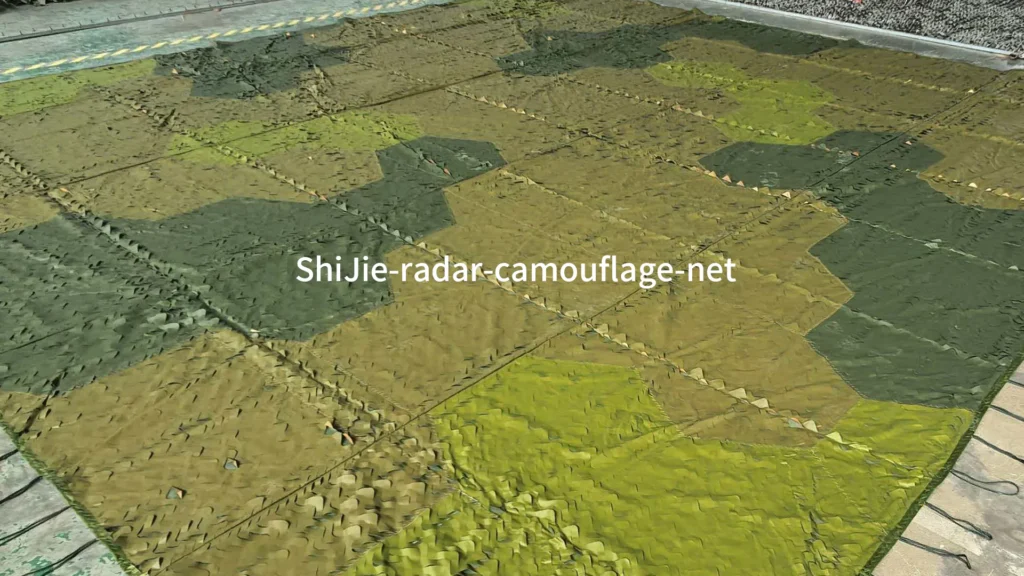
    SHIJIE radar camouflage net showing its decorative surface and supporting mesh

    What Is a Radar Camouflage Net?

    A radar camouflage net is a specialised covering designed to modify the radar signature of the object beneath it. It uses engineered materials and construction to influence how radio waves interact with the covered object, helping reduce its radar contrast or make its signature less recognisable under specified conditions.

    Its function extends beyond the visible appearance of a conventional camouflage net. Green, brown, or desert-coloured fabric can help an object blend into its surroundings, but the printed pattern alone does not establish radar performance.

    SHIJIE produces radar camouflage nets as part of its specialised camouflage material range. These products combine camouflage structures with radar-related functional materials, with the final configuration selected according to project requirements.

    Understanding the difference between visual camouflage and radar signature management helps buyers specify the right product and request meaningful performance documentation.

    SHIJIE radar camouflage net showing its decorative surface and supporting mesh

    Why Radar Camouflage Requires Specialised Materials

    Radar systems transmit radio waves and analyse the returned signals. An object’s shape, dimensions, materials, and orientation affect that return.

    A net that conceals an object from a camera may still allow radio waves to interact with the object underneath. Visual colour matching therefore answers a different question from radar performance.

    Specialised camouflage systems address these different sensor responses separately. Saab’s public explanation of signature management, for example, describes distinct technologies for visible, infrared, thermal, and radar functions, with radar-related materials positioned within the layered construction of its systems.

    For buyers, the practical implication is straightforward: radar camouflage must be specified and evaluated as an electromagnetic function, rather than inferred from a military-looking pattern.

    How Does a Radar Camouflage Net Work?

    Radar camouflage changes the interaction between incoming radio waves, the net, and the covered object.

    Depending on the design, its materials may alter scattering, attenuate transmission, or absorb part of the incident energy. The net and the object together form a system, so the resulting radar response cannot be determined from the net’s appearance alone.

    The purpose is signature management. It does not mean that the object becomes invisible to every radar.

    Performance depends on factors such as:

    • Frequency range
    • Signal polarization
    • Observation angle
    • Net construction
    • Covered object
    • Environmental conditions
    • Test configuration

    A product may perform differently across these conditions. This is why a general claim such as “anti-radar” needs a defined specification and supporting measurements.

    Close-up of a radar camouflage net sample showing decorative and functional layers

    Radar Camouflage, Visual Camouflage, and Infrared Camouflage

    These terms describe different performance requirements.

    Camouflage functionWhat it addressesWhat buyers should verify
    Visual camouflageColour, texture, outline, and visible contrastApproved pattern, surface finish, and appearance
    Near-infrared camouflageReflected near-infrared radiationSpectral reflectance under a specified test
    Thermal camouflageThermal radiation and contrastPerformance in the required infrared bands and conditions
    Radar camouflageInteraction with radio-frequency signalsDefined radar-related measurements across the required frequencies
    Multispectral camouflageSeveral sensor bands within one systemSeparate evidence for each claimed function

    A radar camouflage net may also provide visual or infrared functions, but each capability needs its own evidence.

    Official U.S. Army product information describes ULCANS as a multispectral system addressing visual, near-infrared, short-wave infrared, thermal, and radar signatures. This illustrates the breadth of a specialised system; it does not establish equivalent performance for another manufacturer’s product.

    Radar-Scattering and Radar-Transparent Nets

    Buyers may encounter two terms that sound similar but describe different purposes.

    Radar-scattering nets deliberately modify the interaction with radar signals as part of a concealment system.

    Radar-transparent nets are designed to allow signals to pass through within specified requirements. They may provide other camouflage functions while limiting interference with equipment that needs radio-frequency transmission or reception.

    The U.S. defence specification for ULCANS Increment I explicitly distinguishes radar-scattering and radar-transparent variants. They should therefore be treated as separate configurations when writing a purchase specification.

    Compatibility with radar or communications equipment should be confirmed for the complete system. A product described simply as “radar camouflage netting” does not provide enough information to make that decision.

    What Is a Radar Camouflage Net Made Of?

    The construction varies by manufacturer and product. It can include a supporting mesh, decorative elements, engineered functional materials, reinforced edges, and connecting components.

    Supporting Mesh

    The mesh carries the decorative and functional components and provides structure during handling. Its material, connections, and reinforcement affect the assembled net’s physical condition.

    Decorative Surface

    Printed fabric or three-dimensional elements provide visible colour and texture. This surface helps the product resemble a selected background while changing its manufactured appearance.

    Functional Materials

    Radar-related performance comes from the electromagnetic properties of the materials and their arrangement. Buyers should confirm which component provides the specified function and which measurements support it.

    Edges and Connections

    Binding, connecting ropes, and attachment points form part of the finished product. Their strength and condition matter because damage can change the net’s construction and continuity.

    SHIJIE Radar Camouflage Net Production

    Shandong Shijie New Materials Technology Co., Ltd. manufactures radar camouflage nets and related multispectral camouflage products.

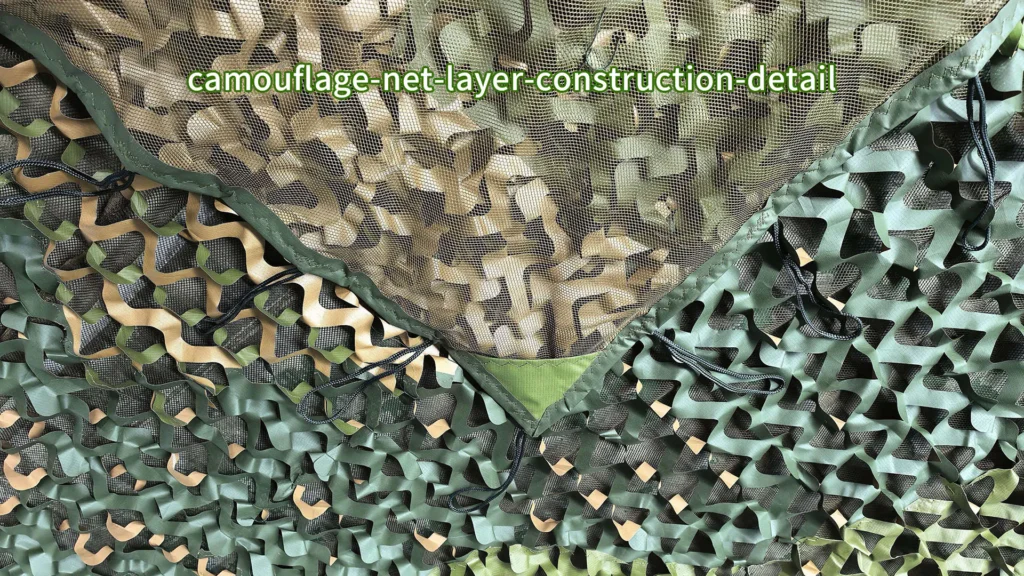
    The supplied product handbook describes a specialised system combining a supporting mesh, three-dimensional decorative elements, and a separate functional attenuation layer. It also presents radar-related specifications for this product family.

    This construction is distinct from ordinary printed netting. The decorative surface contributes to visible camouflage, while the functional components address additional requirements.

    For a SHIJIE order, the technical discussion should establish:

    • Required radar-related function
    • Relevant frequency range
    • Test method and acceptance criteria
    • Finished panel dimensions
    • Layer arrangement
    • Pattern and colour
    • Mesh and edge construction
    • Environmental requirements
    • Packaging and identification

    Handbook values should be confirmed against the current product specification and applicable test documentation before being incorporated into a purchase contract.

    More company information is available through the SHIJIE manufacturing capabilities page.

    How Should Radar Camouflage Performance Be Verified?

    A test report needs to explain what was measured.

    Transmission attenuation, reflection behaviour, and radar cross-section are different quantities. A value stated in decibels is meaningful only when its measurement method, reference, and conditions are clear.

    For example, a transmission measurement on a material sample does not automatically establish the radar-signature reduction of a complete covered object.

    Ask the manufacturer to identify:

    Test detailWhy it matters
    Measured quantityEstablishes what the result actually represents
    Frequency rangeDefines where the reported performance applies
    Polarization and geometryIdentifies the measurement conditions
    Sample constructionConnects the report to the supplied product
    Reference or baselineExplains what the result is compared with
    Environmental conditioningShows whether the sample was new, aged, wet, or otherwise conditioned
    Acceptance criteriaProvides a clear pass or fail requirement

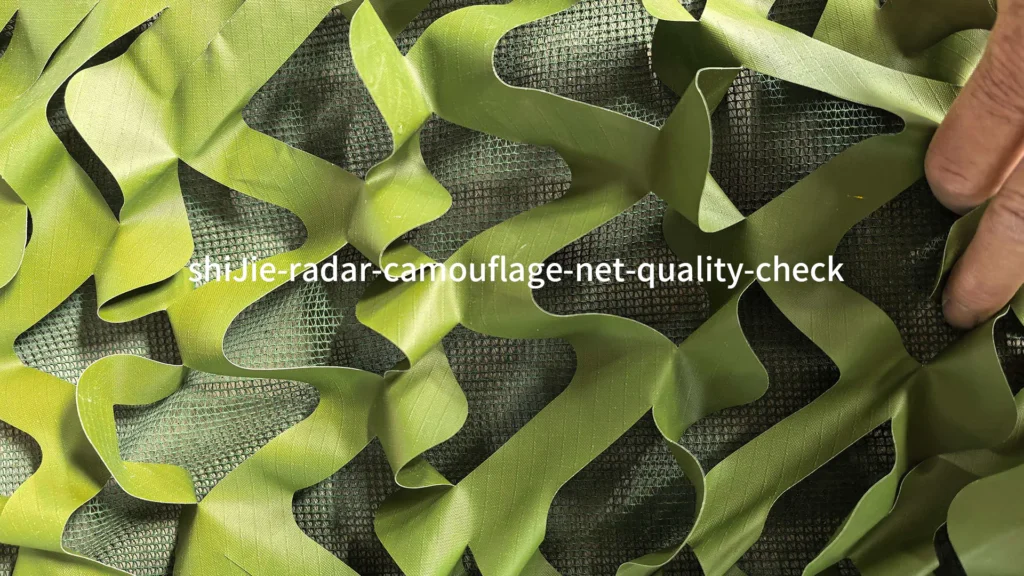
    A sample can demonstrate colour, mesh, edge finishing, and handling. Instrumental measurements are needed to establish radar-related performance.

    Buyers can also review the SHIJIE quality control page when discussing inspection and documentation requirements.

    Technician inspecting the layers and edge connections of a SHIJIE radar camouflage net

    Frequently Asked Questions

    Can ordinary camouflage netting reduce radar detection?

    Ordinary printed netting should not be assumed to provide radar camouflage. Its colour and pattern do not establish electromagnetic performance.

    Is radar camouflage the same as thermal camouflage?

    No. Radar and thermal sensors operate through different mechanisms and wavelength ranges. A product intended to address both needs separate performance evidence.

    Does SHIJIE manufacture radar camouflage nets?

    Yes. SHIJIE produces radar camouflage nets within its specialised camouflage range. Buyers should confirm the construction, required bands, and supporting documentation for the selected configuration.

    Can one radar camouflage net work equally well at every frequency?

    Performance varies with frequency and other conditions. The specification should identify the required range rather than rely on an unrestricted “all-band” claim.

    Choosing a Radar Camouflage Net

    A radar camouflage net is an engineered signature-management product whose performance depends on its materials, construction, and specified conditions.

    For buyers sourcing from SHIJIE, the starting point is a clear technical requirement supported by an approved product configuration and relevant measurements.

    To discuss production or customization, contact SHIJIE with your dimensions, pattern requirements, intended application, quantity, and radar-related acceptance criteria. This gives the factory a concrete basis for proposing a product and preparing a quotation.

    October 30, 2026 Comments (0) Radar Camouflage Net

    Read more

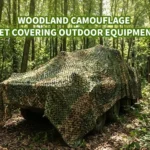
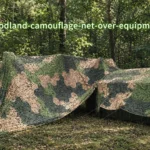
    Woodland camouflage net suspended over equipment among trees

    What Is a Camouflage Net?

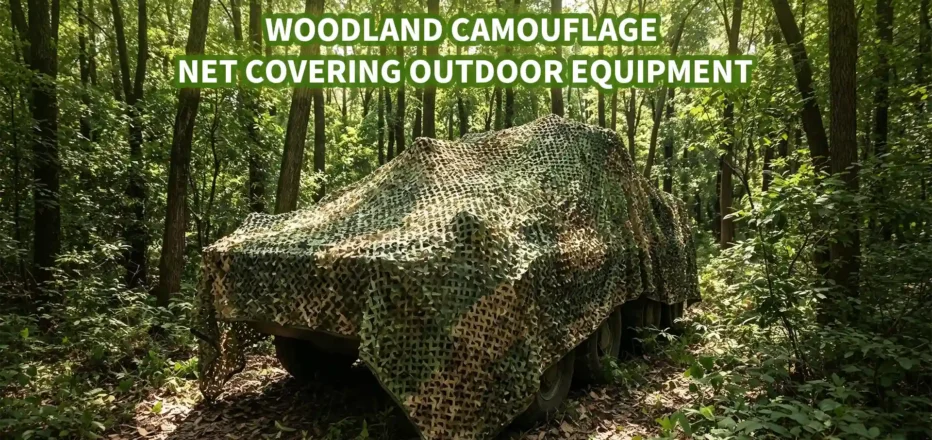
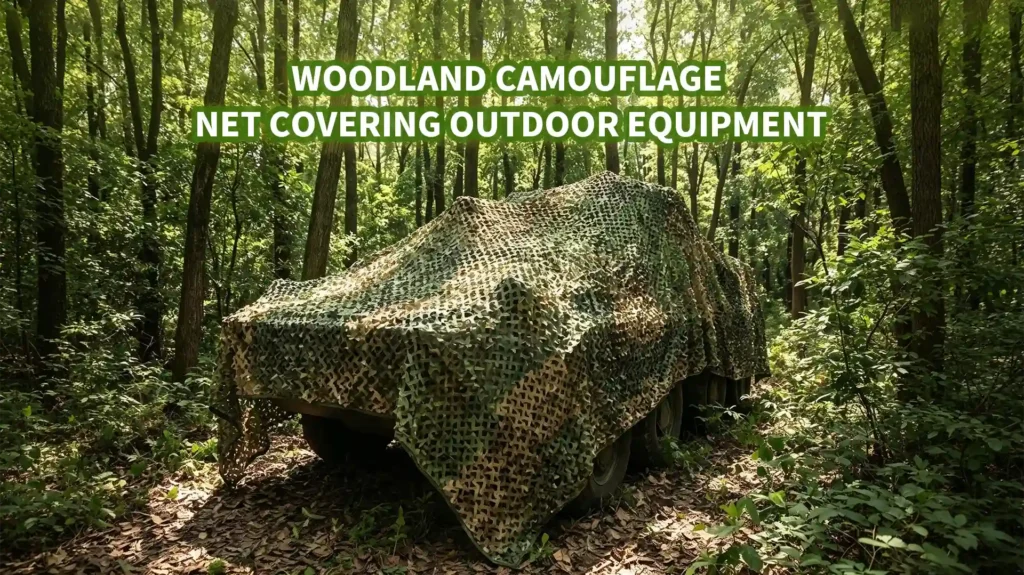
    A camouflage net is a flexible covering designed to make an object less conspicuous against its surroundings. It can cover equipment, vehicles, temporary structures or open areas, changing their visible colour, texture and outline.

    A net does not make the object underneath disappear. Its effect depends on the background, viewing angle, lighting and the way it is installed. A woodland pattern may blend into vegetation but stand out against pale sand. Even a well-chosen pattern can leave an obvious shape if the net is pulled into a flat rectangle.

    Camouflage nets are also used outside defence projects. They can create visual screening, partial shade or a textured backdrop for outdoor spaces, training areas and film sets. The right construction depends on the job: a decorative covering and a reusable equipment screen need different specifications.

    Woodland camouflage net suspended over equipment among trees

    How Does a Camouflage Net Work?

    A camouflage net reduces the visual clues that make an object easy to notice or recognise.

    Colour and pattern help the covering relate to the surrounding vegetation, soil, rock or snow. Irregular shapes interrupt straight edges and familiar silhouettes. Surface texture adds depth and broken shadows that a smooth sheet cannot create.

    Installation matters as much as the printed pattern. A net suspended above an object can create a different outer profile from one draped tightly over it. The edges should also blend with the site: a neat square of camouflage material can still be easy to spot from above.

    These principles have limits. A visual camouflage net should not be assumed to reduce detection by infrared sensors or radar. The U.S. Army describes specialised net systems that address visible and other sensor bands, which illustrates why those capabilities require a defined product and testing.

    What Is a Camouflage Net Made Of?

    There is no single construction used for every camouflage net. A product may include several layers and components:

    ComponentWhat it does
    Camouflage fabricProvides the printed colour and visible pattern; it may be cut or shaped to create an irregular surface.
    Supporting meshCarries the fabric and provides a framework for handling and installation.
    Edge bindingReinforces the perimeter, where handling and fixing can concentrate stress.
    Tie ropes or attachment pointsConnect the panel to anchors, supports or another panel.
    Optional additional layerAdds a specified function or changes how the net behaves in use.

    In SHIJIE’s supplied product information, common fabric options are described as 150D, 210D and 420D, with single and double-layer arrangements and different supporting meshes. “D” means denier, a measure of yarn linear density. A higher denier identifies a heavier yarn at the same length; it does not, by itself, establish the finished net’s thickness, strength or service life.

    The supplied range also describes single-sided printing, selected double-sided constructions, straight edge binding and a curved “W” edge. These are configuration choices. Buyers should confirm the construction of the particular item being quoted rather than assume that every colour is available in every fabric and layer combination.

    Close-up of printed camouflage fabric attached to supporting mesh with a reinforced edge

    Common Types of Camouflage Net

    Visual camouflage nets

    These products use colour, pattern and physical texture to reduce visible contrast. Patterns may be designed for woodland, grassland, desert, snow or another specified background. Some are reversible, allowing a different appearance on each side.

    A “military-style” print describes appearance. It does not establish compliance with a military specification.

    Shade and screening nets

    A camouflage-pattern net may be selected for partial shade, privacy or decoration. Suitable applications include campsites, outdoor activity areas, gardens and temporary displays. The amount of shade depends on the material, coverage and openings; it should be measured or specified if it is a purchasing requirement.

    Specialised signature-management nets

    Some engineered systems are designed to reduce signatures in bands beyond visible light, such as near-infrared, thermal infrared or radar. These functions vary by product and must be checked separately. For example, a current U.S. defence specification distinguishes radar-scattering and radar-transparent variants, so “radar camouflage” alone is not a precise specification.

    If a project needs one of these capabilities, ask for the relevant frequency or wavelength range, test method, acceptance criteria and report for the exact product configuration.

    Where Are Camouflage Nets Used?

    Camouflage netting can be configured for equipment covers, temporary field structures, training sites, hunting or wildlife observation where permitted, photography sets, outdoor recreation and visual screening.

    The application changes the buying priorities. A film backdrop may be chosen mainly for appearance and ease of installation. A net deployed repeatedly outdoors may need stronger edges, reliable attachment points and a practical repair method. A technical procurement may require physical and spectral test results.

    Camouflage net used for equipment screening, an outdoor shelter and a photography backdrop

    How Do You Choose the Right Camouflage Net?

    Start with what the net must cover and where it will be used. Then give the supplier enough information to specify a complete product:

    1. Background and season: Share site photographs and identify the main colours and textures.
    2. Object and coverage: Provide length, width and height, allowing for side coverage, overlap and fixing points.
    3. Installation: State whether the net will be draped, wrapped or suspended, and whether it will be installed repeatedly.
    4. Construction: Confirm the fabric, supporting mesh, layer arrangement, edge finish and attachment points.
    5. Operating conditions: Describe expected sun, rain, wind, abrasion and storage conditions.
    6. Required performance: Identify any shade, flame, weathering or spectral requirement and the evidence needed to verify it.

    The supplied product notes describe a 6.8 m × 6.8 m standard panel alongside custom dimensions. They also give example weights for particular fabric and mesh combinations. Treat these as configuration examples: the finished size, mass and tolerances should appear on the quotation or approved sample for the product you order.

    For installation, keep the covering clear of hot exhausts, moving parts, ventilation openings and electrical lines. Secure it for the site’s expected conditions, and inspect its mesh, edges and anchors after use or severe weather. Official U.S. equipment guidance likewise calls for a clear setup area and warns against contact between support poles and overhead power lines.

    What Can SHIJIE Supply?

    Shandong Shijie New Materials Technology Co., Ltd. describes a range of camouflage net fabrics, patterns, mesh structures, edge treatments and custom sizes in its supplied materials. Buyers can discuss single or double-sided designs and provide a reference pattern or technical specification for a customised project.

    The most useful first inquiry includes the intended use, background, dimensions, preferred construction, order quantity and any test requirements. This lets the supplier quote a defined configuration and provide a sample for review.

    Conclusion

    A camouflage net is a covering that changes how an object looks against its background. Its performance comes from the combination of pattern, fabric, supporting mesh, shape and installation.

    Choose it by application and complete construction, not by a pattern photograph alone. When infrared, thermal, radar, flame or weathering performance is essential, specify the required test and confirm the results for the product being purchased.

    October 11, 2026 Comments (2) Camouflage Nets

    Read more

    Woodland camouflage net draped over outdoor equipment to break up its visible outline

    How to Choose and Use Camouflage Netting: A Complete Buyer’s Guide

    Camouflage netting is used to reduce the visual contrast between an object and its surroundings. It can break up recognisable outlines, cover reflective surfaces, add an irregular texture, and help equipment or temporary structures blend into a selected background.

    The basic idea appears simple, but effective camouflage requires more than placing a patterned sheet over an object. The colour, pattern scale, material, construction, size, installation method, and surrounding terrain all influence the result.

    A net designed for a woodland film set may not be suitable for long-term outdoor storage. A lightweight decorative net cannot automatically provide infrared or radar signature reduction. A product that matches a dry desert environment may create a strong contrast in green vegetation.

    This guide explains the main camouflage net parameters and shows buyers how to select, install, inspect, maintain, and store the product. It also explains the difference between standard visual camouflage and specialised multispectral systems.

    Woodland camouflage net draped over outdoor equipment to break up its visible outline

    How Does Camouflage Netting Work?

    Camouflage netting works by changing the visible characteristics of the object beneath it. It does not make an object physically disappear. Instead, it makes detection or recognition more difficult by reducing the differences between the object and its background.

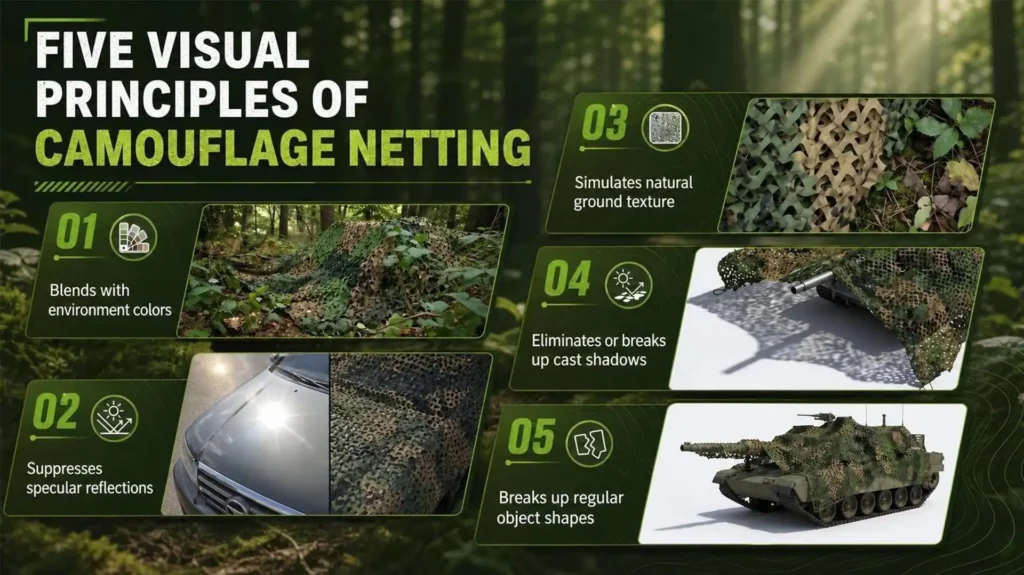
    Several visual factors affect this process.

    Colour

    The net’s dominant colours should be close to the colours found in the operating environment. Green, olive, brown, and black combinations are commonly used around vegetation. Tan, beige, light brown, and earth tones are more suitable for dry terrain.

    Colour matching should be based on the actual site rather than a broad label such as “woodland” or “desert.” Forests can change from bright green in spring to dark green in summer and brown in autumn. Desert surfaces can include pale sand, red soil, grey stone, and dark gravel.

    Shape and Silhouette

    Vehicles, storage containers, shelters, and other manufactured objects often have straight edges, regular corners, and symmetrical shapes. These features can stand out in a natural environment.

    A three-dimensional camouflage net creates an irregular outer surface. When it is supported above or around the object, it can soften straight lines and break up the recognisable silhouette.

    Texture

    Natural terrain contains leaves, branches, grass, rocks, shadows, and uneven surfaces. A smooth painted panel may still remain noticeable even when its colour is reasonably close to the background.

    Cut patterns, three-dimensional leaves, strips, and irregular openings help a net imitate the visual complexity of natural terrain.

    Shadow

    A solid object can create a clear and recognisable shadow. A properly arranged net can change the shadow pattern and make its edges less regular.

    The net should not create a new geometric outline that is as obvious as the original object. Flat roofs, straight support lines, and perfectly rectangular edges may still attract attention.

    Shine

    Glass, polished metal, wet surfaces, and some coated fabrics can reflect light. These reflections may remain visible even when the rest of the object is covered.

    The camouflage system should conceal or reduce exposed reflective areas. Buyers should also check whether the decorative material itself has an unwanted gloss.

    Official camouflage guidance from the United States Army and Marine Corps describes blending as changing a target’s appearance so that it becomes part of the background. It identifies size, shape, texture, colour, electromagnetic signature, terrain pattern, and background as important factors.

    Diagram showing how colour, shape, texture, shadow, and shine affect camouflage

    Important Camouflage Net Specifications

    A professional quotation should include more than a colour name and roll size. Buyers need specifications that can be measured, compared, and confirmed before production.

    Size and Coverage

    Camouflage nets are available in individual panels, modular units, rolls, and customised dimensions. The correct size depends on the object, supporting structure, overlap, ground clearance, and installation method.

    The net should be larger than the object’s simple top-view dimensions. Extra material may be required to cover the sides, create an irregular profile, connect adjacent sections, and reach the fixing points.

    For example, a vehicle that measures 5 metres long and 2 metres wide may need considerably more than 10 square metres of netting. The final requirement depends on the height of the vehicle and whether the net will be draped directly over it or supported on poles.

    Buyers should confirm:

    • Finished net length and width
    • Dimensional tolerance
    • Panel shape
    • Connection method
    • Edge reinforcement
    • Rope loops or fixing points
    • Packed size
    • Unit weight
    • Number of panels per set

    Modular panels are useful when users need to combine several units into different shapes. They may also make damaged sections easier to replace.

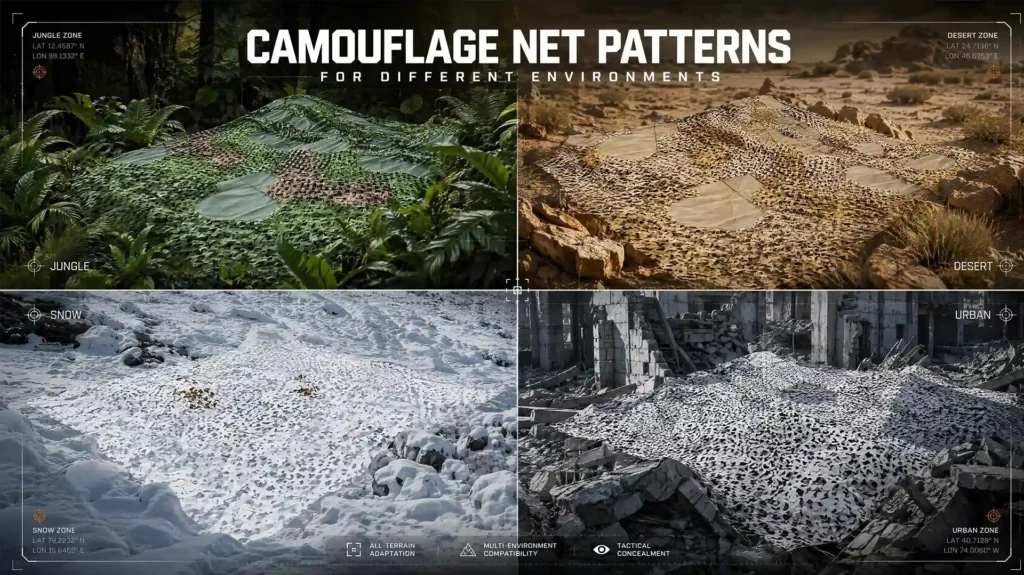
    Colour and Pattern

    The colour arrangement should match the intended background and season. Common options include:

    • Woodland green and brown
    • Grassland green
    • Dry grass and earth tones
    • Desert tan and brown
    • Snow white and grey
    • Urban grey and dark tones
    • Custom camouflage patterns

    Pattern scale also matters. A small, dense print may work at short viewing distances, while larger contrasting shapes can help disrupt the outline at longer distances. A well-designed system may combine colour areas of different sizes.

    A printed pattern and a three-dimensional cut-leaf structure perform different functions. The printed surface changes colour distribution. The cut or attached pieces add physical depth, texture, and irregular shadow.

    Woodland, desert, snow, and urban camouflage net patterns displayed side by side

    Material Selection

    Camouflage netting can include a supporting mesh, decorative layer, coating, connecting ropes, reinforced edges, and other functional components. These parts may use different materials.

    Polyethylene

    Polyethylene is lightweight, flexible, resistant to moisture, and widely used for outdoor netting. It can be processed into mesh, film, strips, and three-dimensional decorative pieces.

    Outdoor polyethylene products normally require an appropriate UV-stabilisation system. UV exposure and temperature gradually change the properties of HDPE. NIST research has shown that both UV intensity and temperature affect HDPE photodegradation.

    A statement such as “UV resistant” is not enough for a technical purchase. Buyers should ask what test method, exposure conditions, and acceptance criteria support the claim.

    Polyester

    Polyester can provide good strength and resistance to abrasion. It may be used in supporting fabrics, mesh, sewing thread, webbing, and reinforced sections.

    Its suitability still depends on yarn construction, coating, thickness, and outdoor treatment. The name of the fibre alone does not define the complete product performance.

    Composite Structures

    A camouflage net may combine a structural carrier net with printed or coated decorative elements. Specialised products may add flame-retardant, thermal-management, infrared-control, or radar-related layers.

    Every added function needs a suitable test method. A composite appearance does not prove multispectral performance.

    Supporting Mesh and Decorative Layer

    The supporting mesh carries the load and provides connection points. It affects tensile strength, tear behaviour, stability, and ease of installation.

    The decorative layer changes the colour, texture, light reflection, and visible outline. It may use irregular cuts, attached leaves, printed film, coated fabric, or three-dimensional pieces.

    Buyers should inspect how the decorative material is connected to the carrier net. Weak attachment points may fail during wind, transportation, repeated deployment, or storage.

    Useful purchasing questions include:

    • What is the supporting mesh material?
    • What is the mesh size?
    • What is the breaking strength of the net or rope?
    • Are the decorative pieces printed, dyed, or coated?
    • Can both sides be used?
    • How are individual panels connected?
    • Can damaged decorative pieces be replaced?
    • Are edges and corners reinforced?
    • Is the material treated for outdoor UV exposure?
    • Is flame-retardant performance available and tested?

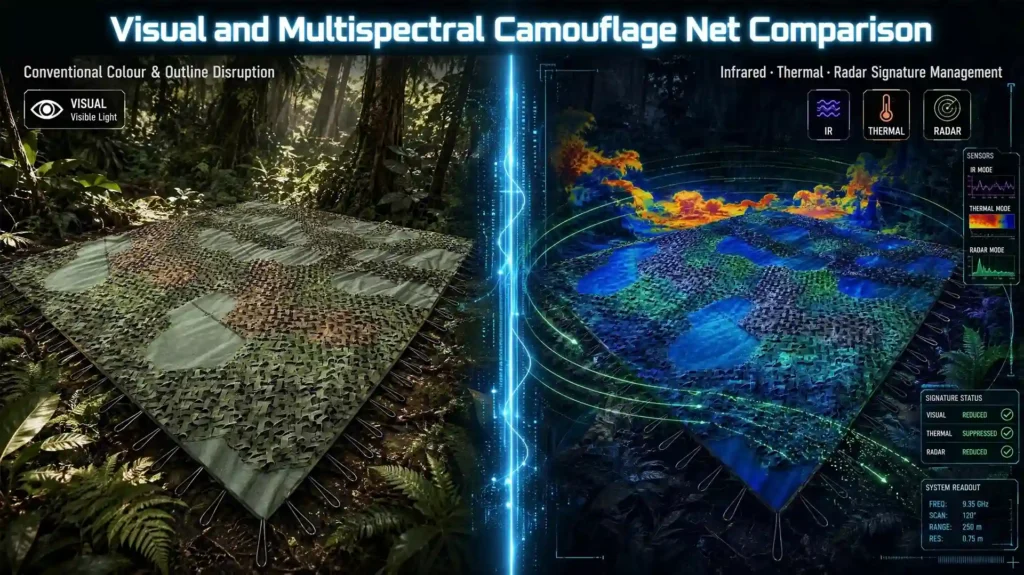
    Visual Camouflage and Multispectral Camouflage Are Not the Same

    This distinction is essential for buyers.

    Standard camouflage netting is mainly designed to reduce visual contrast. It uses colour, pattern, texture, and shape disruption to help an object blend with the visible background.

    Specialised multispectral camouflage is designed to manage signatures across more than the visible spectrum. Depending on the product, this may include:

    • Visible light
    • Near-infrared
    • Short-wave infrared
    • Thermal infrared
    • Radar bands

    A green or brown net should never be described as infrared, thermal, or radar camouflage only because it looks military.

    Colour matching in visible light also does not prove near-infrared matching. The US Defense Logistics Agency notes that merely matching a camouflage colour sample does not ensure the required infrared reflectance.

    Official information about the Ultra-Lightweight Camouflage Net System also identifies separate visual, near-infrared, short-wave infrared, thermal, and radar signature-reduction functions. These functions depend on engineered materials and tested system performance.

    Therefore, a buyer who requires multispectral performance should define:

    • Relevant spectral or frequency bands
    • Test method
    • Transmission or reflection requirements
    • Viewing or test geometry
    • Environmental conditions
    • Product configuration
    • Required test report
    • Applicable military or national standard

    SHIJIE should only state a specific infrared, thermal, or radar performance when the supplied product has been tested for that requirement. This protects the buyer from selecting a visual-grade product for a technical application it cannot support.

    Comparison between standard visual camouflage netting and tested multispectral netting

    How to Select the Correct Camouflage Net

    Step 1: Define the Application

    Start with the actual use rather than selecting a product from a photograph.

    Camouflage netting may be required for:

    • Outdoor equipment coverage
    • Temporary shelters
    • Training environments
    • Film and television sets
    • Photography
    • Hunting hides where legally permitted
    • Camps and recreational spaces
    • Themed decoration
    • Paintball or outdoor activity sites
    • Storage yards
    • Defence-related projects

    A decorative film-set net may prioritise appearance and price. A reusable field net may require stronger edges, repairability, low weight, and compact packaging. A defence procurement may require formal test data and complete technical documentation.

    Step 2: Study the Background

    Review the site from different positions and under different lighting conditions. Identify its dominant colours, common textures, vegetation density, shadow patterns, and seasonal changes.

    The best colour is not always the one that matches a single leaf or soil sample. It should fit the wider visual pattern of the area.

    Avoid choosing a pattern only from a studio photograph. Screen settings and indoor lighting can change how colours appear.

    Step 3: Measure the Target and Installation Area

    Record the target’s length, width, and height. Include space for supports, slopes, attachment points, air gaps, and panel overlaps.

    For irregular objects, a drawing or photograph with dimensions can help the supplier estimate the required area.

    Step 4: Establish the Performance Level

    Determine whether the project needs:

    • Visual concealment only
    • Outdoor UV resistance
    • Flame-retardant treatment
    • Repeated installation and removal
    • Reversible colours
    • Lightweight transportation
    • Low-temperature flexibility
    • Infrared-related performance
    • Thermal signature management
    • Radar-related performance

    Do not pay for specialised functions that the project does not need. At the same time, do not assume that a basic product provides technical functions that were never specified or tested.

    Step 5: Review Samples and Documents

    A production sample allows the buyer to examine colour, pattern, gloss, flexibility, mesh construction, edge finishing, and packaging.

    Technical projects may also require:

    • Technical data sheet
    • Material declaration
    • Inspection report
    • Flame-retardant test report
    • UV or accelerated-weathering report
    • Colour measurement
    • Spectral reflectance data
    • Tensile or breaking-strength data
    • Lot identification
    • Certificate of conformity

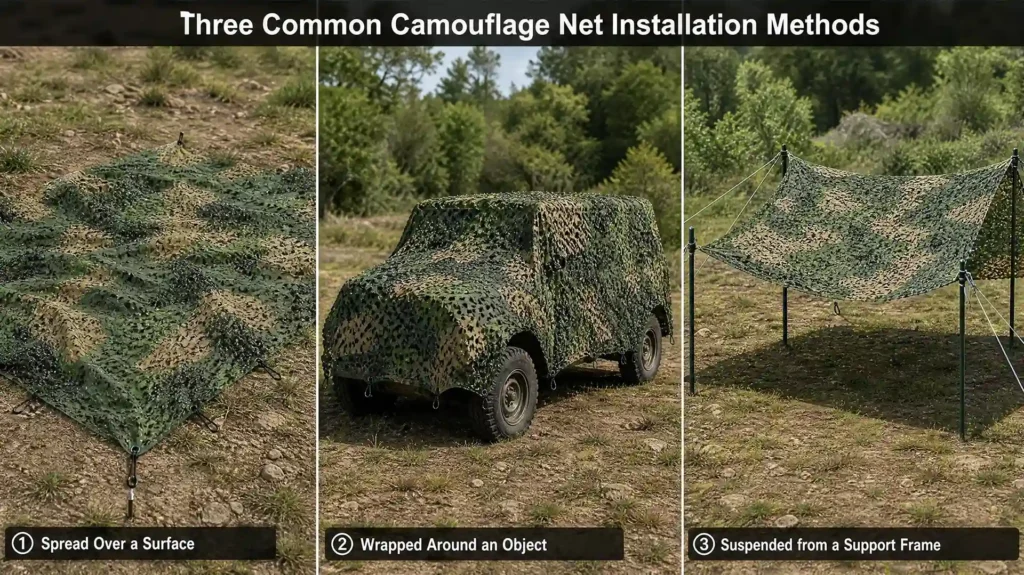
    Three Common Installation Methods

    The installation method should suit the object, terrain, wind exposure, and expected duration of use.

    1. Draping or Surface-Covering Method

    The net is spread over a relatively flat surface, temporary roof, shelter, equipment pile, or ground area.

    Remove sharp branches, stones, wire ends, and other objects before installation. Unfold the net gradually and avoid dragging its decorative surface across abrasive ground.

    Do not always pull it completely flat. A perfectly smooth rectangular surface may preserve the outline that the net is intended to disrupt. Controlled irregularity can create a more natural appearance, but the material must still be secured against wind.

    2. Wrapping Method

    Wrapping can be used for poles, supports, containers, props, and objects with narrow or irregular shapes.

    Begin at a stable point and work around the object with a controlled overlap. Avoid covering moving parts, hot surfaces, ventilation openings, identification plates, lights, or safety equipment unless the project specifically permits it.

    Do not attach a net to sharp rotating parts, exhaust systems, or equipment that will operate while covered.

    3. Suspended Method

    A suspended net is supported above or around the target with poles, frames, ropes, or other approved structures.

    This method can break up the target’s outline more effectively than direct draping because it creates a separate irregular profile. It can also provide an air gap between the net and the covered object.

    Support points must be strong enough for the anticipated wind load. Straight, evenly spaced poles and tight rectangular rooflines should be avoided where visual blending is important.

    Draping, wrapping, and suspended camouflage net installation methods

    How to Fix Camouflage Netting Securely

    Common fixing methods include ground stakes, ropes, elastic cords, cable ties, hooks, sandbags, webbing, and approved anchors.

    The correct option depends on the ground, structure, expected wind, operating time, and need for rapid removal.

    Ground Stakes

    Ground stakes are suitable for soil, grass, and other penetrable surfaces. Stake length and spacing should be selected for the ground condition and wind exposure.

    Check for underground services before driving stakes. Soft, sandy, wet, or loose soil may require larger anchors or a different fixing method.

    Rope Connections

    Rope can connect the net to frames, vehicles that are not operating, trees where permitted, or dedicated anchor points.

    Use distributed fixing points instead of concentrating the entire load on a few corners. Local overload can damage the edge or supporting mesh.

    Weighted Edges

    Sandbags or other stable weights can secure netting where ground penetration is not allowed. The weights should not contain sharp edges that can cut the material.

    Temporary Adhesive Fixing

    Adhesive systems may be used for lightweight decorative applications on suitable smooth surfaces. They are not a general replacement for structural anchoring.

    The adhesive must be compatible with both the net and the surface. Buyers should test a small area first because some products may leave residue, damage paint, or lose adhesion under heat, moisture, or dust.

    Installation Safety

    Camouflage netting can create visibility, access, ventilation, and entanglement hazards if it is installed carelessly.

    Before use:

    • Check the area for overhead electrical lines.
    • Confirm that the support structure can carry the expected load.
    • Use suitable fall protection for work at height.
    • Keep the net away from open flames and hot exhausts unless the product has an appropriate tested fire performance.
    • Do not block emergency exits, signs, lights, cameras, vents, or access points.
    • Do not allow loose ropes or net sections to enter walkways or moving equipment.
    • Stop installation during unsafe wind conditions.
    • Follow local laws and site-specific safety procedures.

    Products used for events, public spaces, construction sites, or enclosed areas may need specific fire, building, or safety approvals. The buyer should confirm the applicable regulations before purchase.

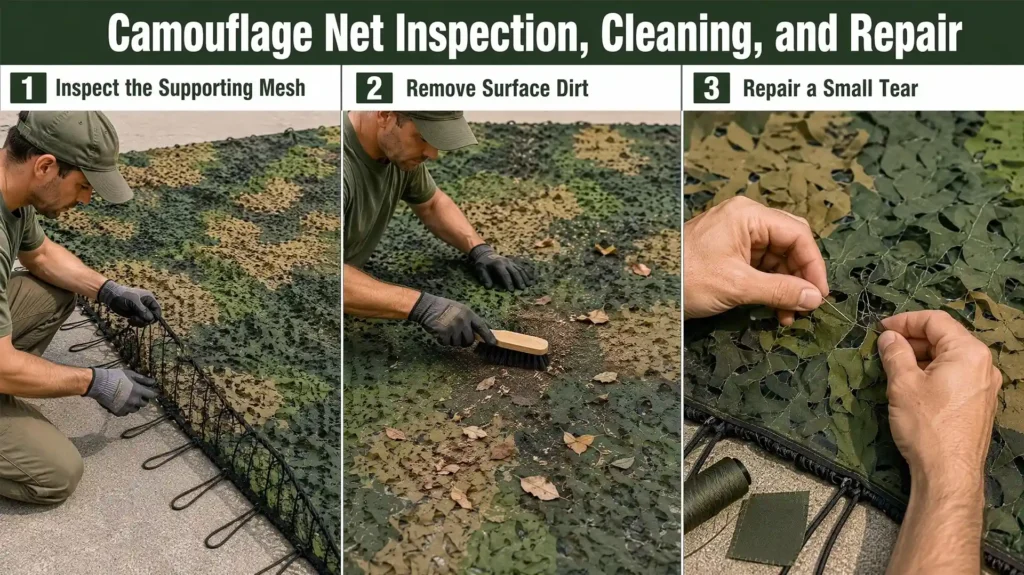
    Inspection and Maintenance

    Regular inspection helps prevent small defects from becoming large failures.

    Check the net after installation and at planned intervals. An additional inspection is advisable after strong wind, heavy rain, transportation, or repeated handling.

    Look for:

    • Loose anchors
    • Worn ropes
    • Damaged edge webbing
    • Torn supporting mesh
    • Detached decorative pieces
    • Faded or discoloured areas
    • Abrasion against frames
    • Water collection
    • Mould or persistent contamination
    • Heat or chemical damage

    A net that has changed colour may no longer match the background. A structurally intact product can still lose camouflage effectiveness when its appearance no longer suits the site.

    How to Clean Camouflage Netting

    Remove loose leaves, mud, sand, and dust with a soft brush or low-pressure air where appropriate.

    For washable products, use clean water and a mild cleaning agent that is compatible with the material and coating. Test a small hidden area before cleaning the full net.

    Avoid:

    • Sharp scrapers
    • Stiff metal brushes
    • Strong solvents
    • Chlorine bleach unless approved
    • High-pressure water at close range
    • High-temperature drying
    • Unapproved coating or paint

    Aggressive cleaning may remove printed colour, damage functional coatings, weaken the decorative film, or change spectral properties.

    Allow the net to dry completely before folding and storage.

    Worker checking camouflage net mesh and repairing a small damaged section

    Repairing Damaged Camouflage Netting

    Small tears can often be repaired with compatible mesh, thread, ties, patches, or a manufacturer-approved repair kit.

    The repair material should be close to the original product in colour, flexibility, strength, and outdoor behaviour. A bright tie, glossy patch, or large regular repair can create a new visible feature.

    For structural mesh damage:

    1. Remove the load from the damaged area.
    2. Trim only loose material that cannot be reused.
    3. Bridge the tear with compatible mesh.
    4. Distribute the connection beyond the damaged edge.
    5. Restore decorative pieces where required.
    6. Inspect both the strength and appearance of the repair.

    Large damaged areas may require replacement of one panel rather than repeated patching.

    A repaired multispectral net may also require performance verification. A visually acceptable patch does not prove that infrared, thermal, or radar-related properties have been restored.

    Correct Storage Methods

    Storage conditions influence product life and readiness for future use.

    Before storage:

    • Clean the net.
    • Dry it completely.
    • Inspect and repair damage.
    • Remove incompatible temporary fasteners.
    • Fold or roll it without creating excessive stress.
    • Label the colour, size, batch, and condition.

    Store the net in a dry, ventilated area away from direct sunlight, standing water, heat sources, sharp objects, oils, fuels, and aggressive chemicals.

    Heavy equipment should not be placed on top of packaged nets. Long-term compression can crease decorative pieces, damage coatings, and make the material difficult to deploy.

    A dedicated bag or container can protect the net during transportation and storage. It can also keep individual panels, ropes, stakes, and repair parts together as a complete set.

    Common Purchasing and Usage Mistakes

    Buying by Photograph Alone

    A photograph cannot confirm dimensions, strength, UV resistance, flame performance, or infrared properties. Request a specification and sample.

    Treating Every Camouflage Net as Military Grade

    “Military style” usually describes appearance. It does not establish compliance with a defence standard.

    Assuming Colour Matching Equals Infrared Matching

    Visible colour and infrared reflectance are separate performance factors. A product needs relevant test data if infrared performance is required.

    Selecting the Exact Object Dimensions

    This leaves no allowance for height, overlap, irregular shaping, support structures, or fixing points.

    Ignoring Wind Load

    Even an open net creates wind resistance. Weak anchoring can damage the net, the support, or nearby property.

    Blocking Heat and Ventilation

    A net should not cover hot exhausts, cooling inlets, or essential ventilation openings.

    Storing the Net While Wet

    Moisture and trapped dirt can cause odour, staining, mould growth, and surface damage.

    Applications Beyond Defence

    Camouflage netting is used in many civilian and commercial projects.

    Film and television crews use it to build temporary scenes, cover modern objects, and add layered background texture. Photographers use it for nature-themed sets and wildlife observation hides where local rules allow.

    Outdoor activity centres, camps, paintball fields, and themed venues use camouflage nets for decoration and visual zoning. Event companies may use them for temporary backdrops, but they must confirm the required fire and public-safety performance.

    Camouflage-pattern nets can also provide partial shade and visual screening for gardens, patios, exhibitions, and outdoor work areas. These uses normally need a lightweight visual-grade product rather than a specialised multispectral system.

    Camouflage Netting Solutions From SHIJIE

    Shandong Shijie New Materials Technology Co., Ltd. supplies camouflage netting for outdoor, commercial, training, display, and project-based applications.

    SHIJIE can discuss different colours, patterns, supporting mesh structures, panel dimensions, roll dimensions, edge treatments, packaging methods, and customised identification. For technical projects, requirements should be confirmed before quotation and production.

    Buyers can help SHIJIE recommend a suitable configuration by providing:

    • Intended application
    • Operating environment
    • Required colours or reference sample
    • Target dimensions
    • Installation method
    • Required panel or roll size
    • Outdoor exposure period
    • Expected wind conditions
    • Flame-retardant requirements
    • Visual or multispectral performance requirements
    • Applicable test method or standard
    • Order quantity
    • Packaging and labelling requirements

    Clear requirements reduce the risk of comparing visually similar products that have very different performance levels.

    [Image 7 – Place before the conclusion]

    • File Name: shijie-camouflage-net-production-quality-inspection.jpg
    • Image Title: SHIJIE Camouflage Net Production and Quality Inspection
    • Alt Text: SHIJIE camouflage net panels undergoing mesh, colour, and dimension inspection
    • Image Description: Finished SHIJIE camouflage net panels are inspected for colour consistency, supporting mesh condition, dimensions, edge finishing, and packaging before shipment.

    Conclusion

    Effective camouflage netting depends on the relationship between the product, the covered object, and the surrounding environment.

    Colour and pattern help reduce visual contrast. The three-dimensional structure changes texture, shape, shadow, and silhouette. The supporting mesh, decorative layer, edge treatment, and fixing system determine whether the product can withstand handling and outdoor use.

    Buyers should define the required size, material, colour, pattern, strength, weather resistance, installation method, and safety performance before ordering. They should also clearly separate standard visual camouflage from tested multispectral camouflage.

    Correct installation, regular inspection, gentle cleaning, timely repair, and dry storage can help the net retain its appearance and physical condition. For customised camouflage netting and project-specific supply, buyers can provide SHIJIE with the intended environment, dimensions, required performance, and applicable standards.

    July 26, 2026 Comments (1) Application Guides

    Read more

    • Popular
    • Latest
    • Traditional, realistic vegetation, and digital camo patterns

      What Are The Three Main Types Of Camo?

      November 8, 2026

      Black HDPE shade net installed above crops to reduce direct sunlight

      How Does Shade Net Work? Materials, Structure, Shade Rate,...

      July 22, 2026

      Close-up of a camouflage net showing cut fabric and backing mesh

      What Is Camouflage Netting Meaning?

      November 8, 2026

      Woodland camouflage net draped over outdoor equipment to break up its visible outline

      How to Choose and Use Camouflage Netting: A Complete...

      July 26, 2026

      Person wearing woodland camouflage clothing among trees, leaves, and natural shadows

      How Biomimicry Shapes Modern Camouflage Clothing and Pattern Design

      July 26, 2026

      Woodland camouflage net suspended over equipment among trees

      What Is a Camouflage Net?

      October 11, 2026

    • Close-up of a camouflage net showing cut fabric and backing mesh

      What Is Camouflage Netting Meaning?

      November 8, 2026

      Traditional, realistic vegetation, and digital camo patterns

      What Are The Three Main Types Of Camo?

      November 8, 2026

      Camouflage net sample beside a product specification checklist

      What Are The Key Standards For Military Camouflage Nets?

      November 7, 2026

      Green camo netting used as an outdoor screen

      What Is The Purpose Of Camo Netting?

      November 4, 2026

      Hunting camo netting used as a woodland screen

      What Is The Best Camo Netting For Hunting?

      November 1, 2026

      SHIJIE radar camouflage net showing its decorative surface and supporting mesh

      What Is a Radar Camouflage Net?

      October 30, 2026

      Shandong Shijie New Materials Technology Co., Ltd. — A manufacturer of concealment, shade, protective cover, functional camouflage fabric, tactical-support gear, and outdoor textile solutions.

      Projects

      Cultural Heritage Protection Industrial & Infrastructure Military Camouflage Applications Wildlife & Environmental

      Latest News

      • What Is Camouflage Netting Meaning? November 8, 2026
      • What Are The Three Main Types Of Camo? November 8, 2026

        Request a Quote


        Tell us what you need. Our team will reply within one business day.

        © 2026 Shijie New Materials • Designed by Shijie New Materials